Unwrapping Love: The Hidden Symbolism of Valentine
A Journey Through Hearts, Roses, and the Secret Language of Romance
Article · 10 min read · ·
Valentine’s Day is more than cards, chocolates, and red roses. Beneath its cheerful surface lies a tapestry woven with centuries of symbolism, secret meanings, and subtle magic. Every petal, every heart, every gesture carries echoes of old beliefs, whispered rituals, and the human desire to understand love’s mysterious power.
The red rose, for example, is not merely a token of romance. In its deep crimson, it holds the energy of passion, courage, and sacrifice, traced back to the goddesses of love in ancient mythologies. The heart shape, so ubiquitous today, was once less an anatomical symbol and more a mystical emblem, representing the seat of emotion, intuition, and the soul’s longing. Even chocolate, now the sweet centerpiece of Valentine’s indulgence, has roots in sacred rituals, once consumed by Aztec priests to awaken energy, desire, and connection.
This Valentine’s Day, we peel back the layers of tradition. We explore the symbols that have carried love across centuries, cultures, and magical practices, and uncover the hidden meanings that still resonate in the language of the heart. From mythic lore to mystical correspondences, the story of love is richer, stranger, and far more enchanting than the cards suggest.
The Language of Love: Symbols and Their Hidden Meanings
Valentine’s Day is a festival of symbols, each carrying whispers of love’s mysteries through time. To understand these symbols is to glimpse the many faces of love itself, passionate, playful, sacred, and sometimes even perilous. What appears simple on the surface is, in truth, a coded language shaped by myth, ritual, and centuries of human longing.
Roses:
The red rose reigns supreme as a token of romance, yet its significance stretches far beyond modern courtship. In Greek and Roman mythology, the rose was sacred to Aphrodite and Venus, goddesses of love, beauty, and desire. According to legend, red roses sprang from the blood of Adonis, binding love forever to sacrifice and loss. Its thorns serve as a reminder that devotion is rarely without pain, and that passion often demands vulnerability.
Different rose colors have long carried distinct meanings. White roses symbolize purity, spiritual devotion, and sacred unions, often appearing in rites of marriage and divine love. Pink roses express gratitude, tenderness, and gentle affection, while yellow roses, once associated with jealousy, have evolved into symbols of friendship, warmth, and joy. Together, roses speak a nuanced language, allowing love to be expressed in many forms, not solely romantic or erotic.
Hearts:
The heart shape, now nearly synonymous with love itself, predates Valentine’s Day by centuries. Medieval scholars and artists understood the heart as the seat of emotion, moral judgment, and spiritual truth rather than merely a physical organ. In Christian symbolism, the Sacred Heart represented divine love and sacrifice, while in alchemical traditions, the heart signified the union of opposites, the meeting place of body and soul.
To offer a heart, symbolically, was to offer one’s inner truth. Even today, heart-shaped tokens echo this ancient belief, quietly affirming trust, vulnerability, and emotional surrender.
Chocolate:
Sweet, indulgent, and sensual, chocolate carries a history steeped in reverence and desire. Among the ancient Aztecs and Maya, cacao was considered a sacred substance, consumed during rituals to stimulate vitality, passion, and spiritual awareness. It was believed to strengthen the heart and awaken the life force within the body.
When chocolate arrived in Europe, it quickly became associated with luxury and romance. By the 17th century, it was exchanged as a gift of courtship, its richness symbolizing indulgence, temptation, and intimacy. To gift chocolate is to invite pleasure, sensory delight, and emotional closeness, a ritual of sweetness rooted in ancient belief.
Colors:
Valentine’s Day is awash in color, each shade carrying energetic and symbolic resonance. Red, the most dominant hue, represents passion, desire, courage, and life force. It stimulates the heart and awakens intensity, making it the color most associated with romantic love and erotic attraction.
Pink softens red’s intensity, symbolizing affection, compassion, nurturing, and emotional safety. It reflects love that is tender rather than consuming. White, often overlooked, represents purity, honesty, and spiritual connection. It signifies love untainted by expectation, devotion rooted in sincerity and trust.
Purple, long associated with royalty and mysticism, adds a layer of enchantment. It speaks to sacred love, devotion, and the blending of passion with higher purpose. Together, these colors form a visual spell, an intentional palette that shapes the emotional tone of the day.
Cupid:
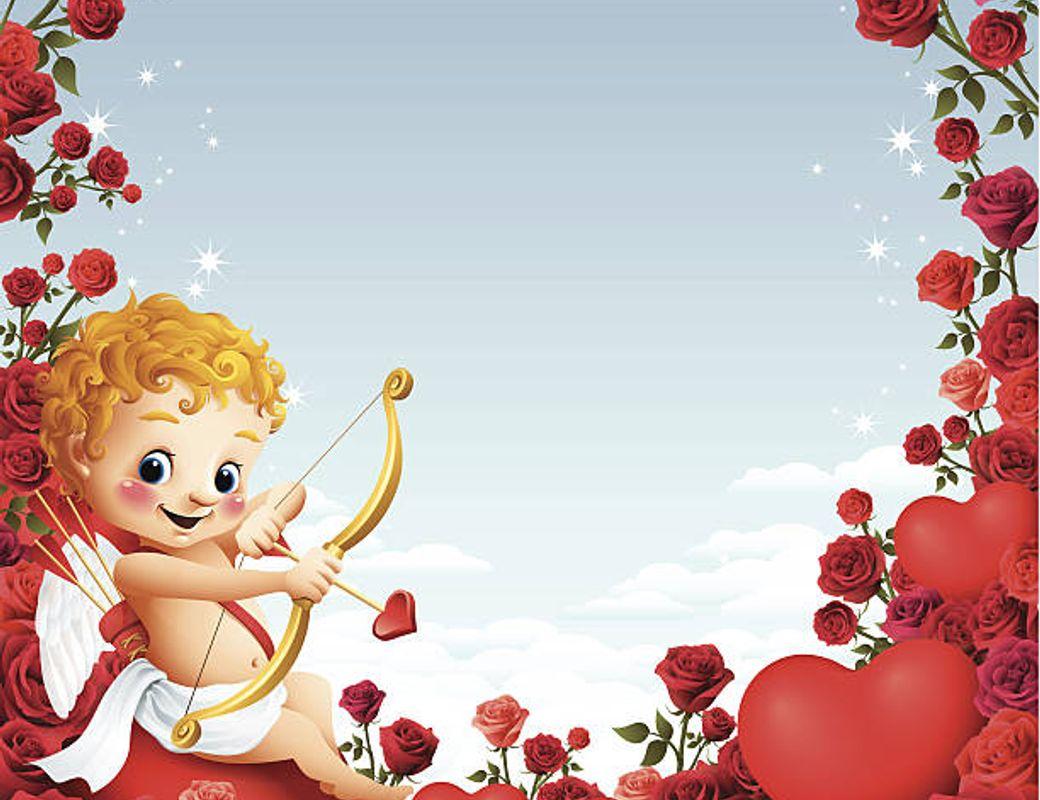
No exploration of Valentine’s symbolism is complete without Cupid, the winged archer of love. Rooted in the Roman god of desire and the Greek Eros, Cupid represents love’s irrational, uncontrollable nature. His arrows strike without warning, reminding humanity that love is rarely logical and often transformative.
In ancient myth, Cupid’s power extended beyond romance, his arrows could inspire obsession, devotion, or even chaos. Over time, his image softened into that of a playful cherub, yet his symbolism remains potent. Cupid embodies love as fate, instinct, and divine interference, reinforcing the idea that the heart does not always obey reason.
Saint Valentine:
At the quiet center of the holiday stands Saint Valentine himself, a figure shrouded in legend rather than certainty. Thought to be a Christian martyr of the third century, Valentine is said to have defied imperial decree by performing secret marriages, honoring love in a time when it was forbidden. His acts were believed to be rooted in compassion, devotion, and the sanctity of emotional bonds.
Over time, Valentine became less a historical figure and more a symbol, love as resistance, tenderness as rebellion, and devotion as sacred duty. His legacy transformed personal affection into something worthy of ritual remembrance, anchoring Valentine’s Day in themes of sacrifice, courage, and enduring emotional truth.
Gifts and Cards:
Beyond flowers and sweets, Valentine’s Day has long been marked by the exchange of tangible tokens, objects imbued with intention and emotion. Traditional gifts act as modern talismans, carrying meaning from giver to receiver. Jewelry, perfumes, and keepsakes have historically symbolized devotion, memory, and promise. Lockets once held hair or portraits, rings signified binding vows, and scented oils were believed to enchant both the senses and the spirit.
The Valentine’s card, perhaps the most underestimated symbol of all, holds profound power. Written declarations of love date back to the Middle Ages, when lovers exchanged poetry as acts of courage and vulnerability. Words themselves were believed to shape reality. To write one’s feelings was to give them form, to transform emotion into something lasting.
A Valentine’s card functions as a spell: symbols on the page, intention in the words, emotion sealed within. Long after flowers fade and chocolates are gone, the message remains, a vessel of memory and meaning.
Together, these symbols form a secret language of love, one whispered across centuries, preserved through myth, ritual, and tradition. Each rose, heart, color, arrow, saint, gift, and handwritten word acts as a cipher, a story, a quiet enchantment. To understand them is to step into the hidden currents of devotion and desire that Valentine’s Day conceals beneath its familiar, rosy surface.
Why These Symbols Endure
Symbols endure because they speak where words often fail. Long after the original myths fade and the historical details blur, symbols remain, quietly carrying emotional truth from one generation to the next. Valentine’s Day symbols persist not because of marketing or tradition alone, but because they tap into something deeply human: the desire to express love in ways that feel meaningful, embodied, and real.
Roses still bloom in February imagery because they mirror love’s contradictions, beauty and pain, tenderness and risk. Hearts endure because they represent vulnerability, the offering of one’s inner self. Cupid survives as a reminder that love is rarely rational, often sudden, and always transformative. Even chocolate, ephemeral as it is, speaks to indulgence, pleasure, and the sacredness of sensory experience.
These symbols work because they are flexible. They adapt across cultures, belief systems, and eras while retaining their emotional core. A medieval love letter and a modern Valentine’s card are separated by centuries, yet both rely on the same symbolic language, gesture, intention, and emotional exposure. The endurance of these symbols reveals a quiet truth: while society evolves, the human heart does not change nearly as much as we imagine.
In this way, Valentine’s Day becomes less about a single date and more about continuity. The symbols persist because they still work. They still move us, still communicate longing, devotion, hope, and desire. They endure because love itself endures, and because we continue to need ways to make the invisible visible.
Valentine’s Day as Ritual and Modern Spellwork
Whether consciously or not, Valentine’s Day functions as a ritual. The preparation, the exchange of symbols, the timing, all mirror the structure of ceremonial acts practiced throughout history. There is intention (expressing love), symbolic tools (gifts, cards, colors), a liminal moment (the day itself), and an exchange of energy between individuals. Strip away the commercial packaging, and what remains is ritual behavior at its core.
Lighting candles, choosing specific colors, selecting flowers, writing words with care, these acts closely resemble spellwork. They focus emotion, channel desire, and give form to intention. When someone carefully selects a card, writes from the heart, or offers a meaningful gift, they are participating in a form of modern magic: directing feeling into matter and releasing it into relationship.
Even self-love rituals on Valentine’s Day follow this same pattern. A ritual bath, intentional rest, journaling, or meditation becomes a spell of restoration and devotion to the self. Love magic does not require another person to be complete; it begins with recognition, worth, and emotional presence. In this sense, Valentine’s Day offers an annual opportunity to recalibrate one’s relationship with love in all its forms, romantic, platonic, and personal.
Seen through this lens, Valentine’s Day is not shallow or frivolous. It is a contemporary echo of ancient practices, love charms disguised as chocolates, invocations hidden in handwritten notes, devotional offerings wrapped in red and pink. The magic lies not in the objects themselves, but in the intention infused within them.
When approached with awareness, Valentine’s Day becomes more than a celebration. It becomes a ritual of connection, a spell of remembrance, and a reminder that love, when honored with intention, has always been one of humanity’s most powerful forms of magic.
A Love Remembered
Valentine’s Day, when stripped of its surface gloss, reveals itself as something far older and far more intimate than a single day of celebration. It is a remembering. A gathering of symbols that have survived centuries because they continue to speak the truth of the human heart. Roses, hearts, colors, saints, arrows, words, and offerings, all converge to tell the same story in different forms: love seeks expression, and meaning gives it power.
These symbols endure not because they are perfect, but because they are imperfect in the same ways love is, fragile, bold, fleeting, and eternal all at once. They remind us that love has always been both sacred and dangerous, tender and transformative. That to love is to risk being changed.
When we exchange these tokens, we participate in an ancient rhythm. We become part of a lineage that stretches backward through myth and memory, through whispered vows and written prayers. Each gesture becomes a small act of devotion, a quiet spell cast in the language of the heart.
And so Valentine’s Day does not ask for extravagance. It asks for intention. For presence. For the courage to feel deeply and to honor that feeling in whatever form it takes. Whether love is shared, remembered, mourned, or reclaimed within the self, it is still worthy of ritual, still deserving of reverence.
In the end, love is not contained within roses or cards or colors, it moves through them. These symbols are not the magic; they are the vessels. And when approached with awareness, even the simplest Valentine becomes an offering, a blessing, a reminder that love, like all true magic, has always lived in the space between the seen and the felt.
Responses
No responses yet — start the conversation.