The Wild Hunt: Riders Between Worlds
Ancient Legends, Magical Symbolism, and the Mystical Connection to Samhain
Article · 7 min read · ·
Imagine an autumn night. The wind bends the branches of trees, mist drifts across the fields, and somewhere in the distance, you hear the pounding of hooves and the barking of unseen hounds. It seems as though a procession of ghostly riders is racing through the darkness. They never stop, never stray from their path, and do not belong to the ordinary human world.
In European folklore, this eerie phenomenon is known as the Wild Hunt - a mysterious procession of supernatural hunters, horses, and hounds associated with storms, the night sky, and the otherworld.
Today, the Wild Hunt can be understood as more than a ghostly legend. It reminds us of the power of natural cycles, the inevitability of change, and our encounters with things we do not always understand. In the context of Samhain, the Wild Hunt becomes a particularly evocative symbol of the transition into the darker half of the year.
Who Leads the Wild Hunt?
The Wild Hunt is not a single, specific myth but a motif found in various European folklore traditions. Its details vary from region to region: in some stories, the procession is led by a ghostly hunter; in others, by a powerful supernatural figure. Sometimes, its participants resemble the souls of the dead.
In Germanic and Scandinavian traditions, the Wild Hunt is often associated with Odin, a god connected with wisdom, war, magic, and the dead. However, Odin should not be regarded as the universal leader of every version of the Wild Hunt. Folk beliefs differed across regions, and the legend itself developed over a long period.
Ghostly riders, tireless horses, hounds, and a furious rush through the night are among the most recognizable elements of the legend. Together, they evoke a force that cannot be stopped by ordinary human means.
In the past, such stories helped people make sense of mysterious natural phenomena, their fear of winter, and the strange sounds of the night. Today, they can also serve as metaphors for inner processes we may ignore for a long time but eventually have to face.
Why Is the Wild Hunt Associated with the Darker Time of Year?
In many tales, the Wild Hunt appears during storms and cold nights. Some regional traditions associated it with the winter festive season, particularly the Twelve Nights between Christmas and Epiphany. Other regions had their own variations regarding when the Hunt appeared and how it was described.
As the days grow shorter and nature prepares for winter, the world seems to change its rhythm. Summer’s activity gives way to silence, darkness, and anticipation. It is during this time that legends of invisible riders feel especially fitting: they embody the sense that something beyond ordinary life exists, something that cannot be controlled by human will.
Symbolically, the Wild Hunt reminds us of the forces of change. They can be frightening because they do not ask whether we are ready to let go of the old. Yet the end of one cycle does not necessarily mean loss. Sometimes, it creates space for something that has been waiting for its turn.
The Wild Hunt and Samhain: Where Two Traditions Meet
Samhain is an ancient Celtic seasonal festival associated with the end of the agricultural year and the transition into the darker half of the year. In modern Neopagan practices, it is commonly celebrated in late October or early November.
Samhain is associated with remembering the dead, reflecting on the cycles of life and death, and contemplating the nearness of the otherworld. In some traditions, this time was considered especially meaningful for honoring ancestors and reflecting on the unseen.
It is important to remember that the Wild Hunt belongs to European folklore, particularly Germanic and Scandinavian traditions, while Samhain has Celtic origins. They are not two names for the same festival. However, they can be symbolically connected through shared themes of transition, endings, and encounters with the unknown.
Seen together, the Wild Hunt becomes an image of movement through darkness, while Samhain offers an opportunity to pause and recognize which chapter of life is coming to an end. Together, they invite us not to run from change but to meet it with awareness and intention.
The Magical Symbolism of the Wild Hunt
In modern magical and spiritual practices, the Wild Hunt can be explored as a symbol without taking the legend literally.
The Power of Inevitable Change. The ghostly procession reminds us of processes we cannot postpone forever: ending outdated relationships, changing our beliefs, or releasing habits that no longer serve us. Sometimes, the best choice is not to try to bring the past back but to find our own way forward.
Encountering the Shadow. The nocturnal riders can symbolize fears, hidden desires, and feelings we would rather avoid. Psychologically, this theme echoes the concept of the shadow - the aspects of ourselves we find difficult to acknowledge. The question is not how to defeat our fears but what they might be trying to show us.
Respect for the Wild. Wind, storms, night, and animals represent forces that exist independently of our plans. This symbol reminds us that not everything needs to be controlled. Sometimes, it is more helpful to slow down, reconnect with our own rhythm, and allow the cycles of nature to inspire us.
Personal Boundaries. The legend also reminds us that not every mystery needs to be solved, and not every experience has to become a trial. In spiritual practice, it is important to maintain a sense of safety, distinguish curiosity from obligation, and avoid turning symbols into sources of anxiety.
Wild Hunt Practices for Samhain
You do not need to venture into a dark forest or attempt to summon ghostly riders to explore the symbolism of this legend. Instead, you can turn its imagery into a tool for self-discovery.
- Let Go of What Has Ended
Take a piece of paper and write down three things you want to leave behind: a habit, a belief, a resentment, or a pattern of behavior. Next to each one, note what the experience has taught you. Finish by listing three things you want to carry into your next life cycle.
You can keep the paper in your journal or dispose of it safely. What matters most is not the gesture itself but the conscious decision to stop holding on to what drains you.
- Meet Your Inner Hunter
Find a quiet place and close your eyes. Imagine a dark forest through which a ghostly rider is racing. You do not need to interpret the figure as a real supernatural being. Instead, allow it to become a metaphor for something you have been avoiding.
Ask yourself: “What am I running from? What keeps returning to my thoughts? What truth about myself am I ready to acknowledge?”
Write down your answers without judging yourself. You do not have to find a solution immediately. Sometimes, the first step is simply naming the problem.
- Create a Personal Boundaries Ritual
Light a candle, following basic fire safety precautions, or simply spend a few minutes in silence. Set two intentions: what you are ready to welcome into your life and what you no longer wish to tolerate.
For example: “I welcome new experiences, but I will not abandon my own needs to gain someone else’s approval.”
This simple symbolic practice can help turn an abstract wish into a clear personal commitment.
Listen to the Night, but Do Not Fear the Darkness
The Wild Hunt is a story about a force that cannot be completely controlled. In the context of Samhain, it can remind us of the naturalness of endings, the importance of inner honesty, and the value of transitions that are not always easy.
The darker half of the year does not demand constant activity from us. It invites us to slow down, remember those who came before us, give thanks for what we have experienced, and make room for what lies ahead.
Perhaps the true meaning of the Wild Hunt is not about escaping ghostly riders but about understanding what in our own lives is ready to be released. Sometimes, darkness is not an enemy but a space in which we can finally hear ourselves.
Responses
No responses yet — start the conversation.
More from the Magazine
Samhain: Honoring the Season of Shadows
Explore the traditions, symbolism, and quiet magic of the season between endings and beginnings.
SAMHAIN NIGHT
THE NIGHT THE VEIL WHISPERS OUR SECRETS
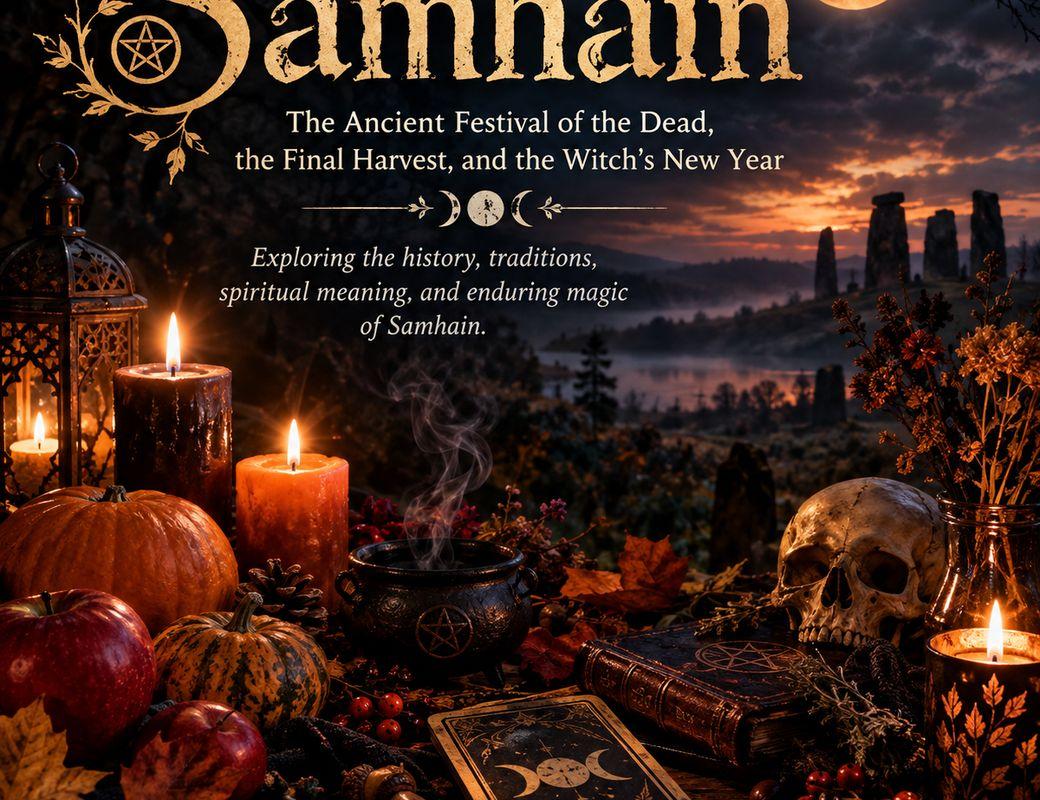
Samhain: The Ancient Festival of the Dead
Exploring the history, traditions, spiritual meaning, and enduring magic of Samhain.