The Old Winter Ways
How Pagan Traditions Shaped Christmas
Article · 25 min read · ·
Each December, when the cold deepens and the light grows thin, we return to a familiar rhythm that feels older than our own memories. We hang stockings by the fire, decorate trees in shimmering colors, gather beneath mistletoe, and wait for a figure who travels across the hushed winter sky. These gestures come so easily to us that we rarely pause to wonder why we cherish them or what ancient story they quietly retell.
These traditions seem simple, yet each one carries a shadow of something older, something shaped long before Christianity, when the solstice marked the turning of the year and people greeted the dark with symbols of hope and protection. To understand the true depth of the Christmas season, we must follow these familiar customs back to the people who first created them. They lived in a world where winter was both a threat and a sacred threshold, and every branch, flame, and charm served a purpose.
When we trace the path of these traditions, we find the fingerprints of ancestors who met the longest night with reverence, celebration, and a belief that light always returns.
The Evergreen and the Light That Never Dies
The story of the evergreen begins long before the first Christmas morning and long before the Christian world placed it beside the hearth as a symbol of the season. For ancient peoples, the evergreen was a quiet miracle standing defiantly in a world stripped bare by winter. When other trees surrendered their leaves and the earth curled inward beneath frost, the evergreen remained green, breathing, and alive. Its needles whispered the promise that life endures, even in the deepest cold, and its steady color became a sign of resilience in cultures that feared the long night would swallow the world whole.
Across the northern landscapes of Europe, early communities watched the turning of the seasons with anxious devotion. The winter solstice, the longest night of the year, was more than a date on a calendar, for it marked a cosmic threshold when darkness seemed to reach its greatest strength. In this delicate moment, people turned to the evergreen as a sacred companion. They brought boughs into their homes to protect against wandering spirits and chilling winds. They hung them above doorways to keep misfortune from entering and to bless the household with vitality. The tree’s unchanging color reminded everyone gathered inside that even when sunlight felt distant, the cycle of renewal had already begun.
In the northern Germanic and Norse worlds, the evergreen held an even deeper meaning. Winter was not simply a season; it was a force that tested survival, faith, and spirit. To these cultures, the evergreen became an emblem of the world tree Yggdrasil, whose branches held the nine realms together and whose roots reached into the mysteries of fate. During the twelve nights of Yule, families honored this cosmic tree through its earthly mirrors. They gathered evergreens from nearby forests and placed them near hearths or beside altars where the old gods were invoked. Many believed that ancestral spirits returned to the home during midwinter, and evergreen branches were set out to welcome them with a symbol of continuity and warmth.
The custom of decorating evergreens with lights grew from these beliefs. In Norse tradition, it was thought that during Yule the sun goddess and the returning light were at their most fragile point. People lit candles and placed them among the branches to strengthen her journey back across the sky. Each flame shimmered like a small star held close to the earth. It illuminated the tree as if it were a living pillar that bridged the mortal world with the divine. In some regions, families positioned candles at the tips of branches to honor wandering spirits who traveled between realms during the long solstice night. The lights guided protective beings toward the home and kept harmful forces away.
Decorations also carried ancient meaning. Long before glass ornaments glittered on modern trees, Germanic households adorned evergreen branches with carved runic charms. These symbols were etched for prosperity, protection, health, and victory. Offerings of fruit and nuts hung from the boughs as reminders of the harvest just passed and as hopeful prayers for the harvest yet to come. Brightly colored cloth strips, bits of metal shaped into small talismans, and woven tokens caught the firelight and were believed to delight the gods, especially Odin, who was honored throughout the Yule season as he traveled the sky with his wild hosts.
Centuries later, Christian communities adopted these customs and reshaped them with new meaning. The evergreen tree became a symbol of eternal life, while the lights placed upon its branches echoed the radiant star said to have guided travelers across unfamiliar lands. Yet even with this transformation, the heart of the tradition remained the same. People continued to decorate their trees with fruits, small tokens, ribbons, and glittering ornaments that carried the spirit of the old rites. Each decoration held a quiet wish for abundance, protection, health, or blessing as the year turned toward renewal.
The modern holiday tree still carries these memories. It stands in living rooms across the world as a direct descendant of ancient solstice guardians. Every light that glows upon its branches continues the practice of setting flames against winter darkness. Every ornament reflects the charms once tied to evergreen boughs for fortune and protection. And every family gathered around the glow participates in a tradition far older than it appears. The evergreen has always offered the same promise: life persists, light returns, and even in the coldest season, the world prepares to awaken again.
The Hearthside Stocking and the Gifts of Winter Kindness
The tradition of hanging stockings beside the fire reaches deep into the old winter world, where the hearth stood at the center of every home. It was the heart of the household, the place where warmth gathered, where stories were told, and where the boundary between the seen and unseen grew thin during the dark months of the year. Many winter customs grew around this glowing center, and the origins of the stocking belong to this ancient circle of firelight, charity, and household magic.
Long before the stocking appeared in its familiar modern form, families across Europe placed small offerings near the hearth during midwinter festivals. The fire was viewed as a living presence that carried prayers upward, and spirits or ancestral beings were believed to pass near the chimney during the longest nights. Children left simple gifts of grain or dried fruit to honor these unseen visitors and to call blessings into the home. The hearth was a place of generosity, and the act of giving something small in the quiet of winter was a way of inviting prosperity and goodwill into the returning year.
The earliest recognizable stocking tradition is tied to a story that traveled from household to household in late antiquity. According to legend, a widowed father of three daughters struggled to provide dowries for his children. In the midst of this hardship a figure later known as Saint Nicholas heard of their misfortune and wished to help without drawing attention to himself. One night he dropped small bags of gold into the home, letting them fall through the chimney where they landed in the stockings the daughters had hung to dry near the fire. By morning the family found the unexpected gifts and believed they had been touched by a blessing that had slipped gently through the winter darkness.
This tale spread across regions shaped by Germanic, Dutch, and Scandinavian culture, where winter gift bringers already played an important role during Yule. Figures such as Odin, who rode the winter sky with his spectral hosts, and various household spirits who visited homes at the turning of the year, were believed to leave tokens for well behaved children. Families placed shoes or small sacks near the hearth for these beings, hoping to receive sweets, nuts, or carved toys in return. Children often left something in exchange, such as hay for Odin’s horse or bread for wandering spirits, creating an early form of reciprocal gift giving that echoed the older solstice customs of offering and blessing.
As the story of Saint Nicholas blended with northern folklore, the habit of leaving stockings by the fire became more structured. Households hung socks or small cloth bags near the chimney so the winter visitor could fill them. In some regions the practice was connected to local figures who rewarded kindness or punished mischief, weaving moral lessons into the magic of the season. The stocking became a personal token, filled with modest treasures meant to delight, encourage, or comfort during the coldest part of the year.
The tradition grew steadily through medieval Europe, carried by stories told around the hearth and shaped by local customs. Small fruits, sweetened nuts, hand carved toys, and bright ribbons appeared in stockings as communities developed their own winter rituals. When European immigrants brought these practices to the Americas, the old custom blended with the emerging image of Santa Claus, a figure who combined Saint Nicholas with northern winter spirits. By the nineteenth century the stocking had become a cherished symbol of Christmas morning, especially in households where the fireplace still stood as the heart of the home.
Publications of the era helped the practice become mainstream. Illustrations in seasonal magazines, poems recited in schoolhouses, and children’s books that showed stockings waiting for a midnight visitor all pushed the tradition into popular celebration. The fireplace remained the natural place for them, not only because it echoed the ancient story of gifts dropped through the chimney but because it preserved the older belief that blessings entered the home through the warm center of the hearth.
Today the Christmas stocking continues to carry these forgotten layers of meaning. Every small gift tucked inside reflects an echo of ancient hearth offerings, the quiet generosity of winter spirits, and the old tale of unexpected kindness delivered in the night. Families hang them with a sense of anticipation, honoring a tradition that began with simple acts of hope in the darkest season and grew into a ritual of warmth, wonder, and generosity.
Mistletoe and the Winter Kiss of Blessing
Among all the greenery that appears during the winter season, mistletoe holds the strangest and most enchanted reputation. It is neither tree nor vine, yet it clings to branches high above the earth, suspended between sky and soil. It grows even in the coldest months, bright with pale berries that seem to shine stronger against leafless forests. Ancient peoples saw this unusual plant as something touched by mystery. It lived where roots could not reach, thrived when other plants withered, and appeared in places that seemed beyond human grasp. For many cultures, mistletoe became a spirit plant, a messenger of luck, healing, and sacred protection during the darkest part of the year.
Its most powerful legacy begins in pre-Christian Europe, where the Druids of the Celtic world held mistletoe in great reverence. They believed it carried divine life force because it never touched the ground. When found growing on sacred oak trees, it was cut with a golden blade during midwinter rites and caught in a white cloth so it would not fall. The plant was used in blessings, healing charms, and rituals meant to ensure peace during the turning of the year. Its berries symbolized life and renewal, while its evergreen leaves represented resilience. Villages hung mistletoe above doorways to keep evil spirits away and to invite good fortune into the home.
In the Nordic world, mistletoe entered myth through the tragic story of Baldr, the beloved god of light and beauty. According to legend, every plant and creature swore an oath never to harm him. However, the goddess Frigg overlooked the small and seemingly harmless mistletoe. Loki used it to create a weapon that brought Baldr’s death and plunged the world into mourning. When Baldr was eventually restored, Frigg declared mistletoe a symbol of love rather than sorrow. She vowed that anyone who passed beneath it would receive a kiss of peace in honor of her son. This myth formed the earliest link between mistletoe and the act of kissing, a gesture meant to heal old wounds and to reaffirm bonds during the cold months.
As winter celebrations blended across Europe, mistletoe moved from sacred groves into household custom. Communities hung it in places where families gathered, particularly near the hearth or doorways that welcomed guests from the cold. It was believed to offer protection, to encourage harmony, and to bring a sense of unity as people shared warmth during the long nights of winter. The kiss exchanged beneath it was not originally romantic. It was a blessing, a promise of friendship, peace, and renewed goodwill as the year shifted toward the returning light.
Over time the custom softened, taking on the gentle playfulness we now associate with holiday gatherings. During medieval and early modern festivals, young people stood under mistletoe as part of courtship games, and each kiss was said to grant good luck for the coming year. In some places men plucked a berry for each kiss they claimed, and when the last berry was gone, the kissing had to cease. This practice tied the kiss directly to the plant’s magic, for the berries represented the blessings mistletoe was believed to hold.
The tradition became truly mainstream in the eighteenth and nineteenth centuries. Christmas gatherings grew more formal, holiday parties became more common, and mistletoe appeared in poems, plays, and illustrated magazines that defined seasonal customs for a rapidly changing world. What had once been a sacred plant of druids and a symbol of Nordic myth became a charming expectation at winter festivities. Hanging it in a doorway invited a shared moment of warmth during the darkest season, and the kiss beneath it carried a lingering echo of the old promise of peace.
Today mistletoe still hangs quietly above doorways as it did centuries ago. Each time two people pause beneath it, they participate in a tradition shaped by ancient rituals of protection, myths of divine love, and winter’s longing for connection. The kiss given under its pale berries continues to reflect the older magic: a blessing for harmony, a gesture of unity, and a spark of warmth that brightens the cold season.
The Yule Log and the Fire That Guards the Season
The Yule log stands as one of the oldest and most evocative symbols of winter celebration, a living ember of ancient ritual that survived centuries of change. Long before it was carved from oak or birch and carried into the hearth of a cozy home, the Yule log was a ritual object, carefully selected and imbued with protection, blessing, and a tangible connection to the turning of the year. Its arrival in the home was not a simple act of lighting a fire; it was a ceremony, a sacred acknowledgment of the darkness retreating and the light returning.
Across northern Europe, families would select the largest, sturdiest log available, often cutting it with great care and sometimes marking it with symbols of protection. In some traditions, the log was chosen from an oak or ash tree believed to be inhabited by spirits, or one that had grown near a sacred grove. The cutting itself was accompanied by prayers, invocations, or offerings, for it was thought that the fire born from this log would carry the energy of life, protection, and abundance into the home. Some communities preserved a small piece of last year’s Yule log, placing it in the new one to ensure continuity and to honor the ancestors who had witnessed the cycles before.
The lighting of the Yule log was a central event. The first spark was carefully nurtured, and the fire was kept burning throughout the night or for several days, depending on local custom. Flames were seen as a bridge between the mortal and supernatural worlds; they drove away malevolent spirits, illuminated the household against winter’s darkness, and symbolized the sun’s slow return. Sparks and embers that leapt from the log were sometimes collected as charms or sprinkled in the fields to bless the coming crops. The smoke carried prayers upward, and the glow reminded everyone that even in the longest nights, the light would not fail.
Decoration and ritual surrounded the Yule log as well. In some regions, the log was carved with runes, inscribed with wishes, or rubbed with oils and herbs meant to attract luck, fertility, and protection. Nuts, fruits, and small coins might be tucked into the crevices, offering both a tangible bounty and a symbolic gesture to the household spirits and ancestors. Children were often allowed to feed small offerings to the fire, participating in a practice that combined joy with reverence, and that helped ensure the household’s prosperity and safety through the year’s darkest days.
As Christianity spread across Europe, the Yule log was absorbed into holiday tradition and reshaped with new symbolic meaning. It became linked to Christmas Eve or Christmas Day, carried ceremoniously into the home, and often decorated with ribbons, greenery, or small ornaments. The log’s fire now symbolized warmth, home, and family unity, yet it retained the echoes of its older power: protection, blessing, and the celebration of light returning after the solstice. Even the ashes were considered sacred, preserved to protect the house, feed the hearth, or mix into the soil for fertility in the coming year.
In the modern holiday season, the Yule log continues to flicker in hearths or on television screens, its presence a reminder of the enduring connection between fire, family, and ritual. Every crackle and glowing ember carries centuries of human effort to confront the darkness with light, to invite abundance through careful ceremony, and to honor both the ancestors and the natural cycles that shape life. The Yule log is more than a piece of wood; it is a living relic, a guardian of the season, and a flame that binds the present with the ancient winter ways.
The Flying Reindeer and the Winter Sky
Among the most fantastical elements of the Christmas season, the flying reindeer carry a story that stretches far beyond modern sleigh rides. These creatures of legend are rooted in northern folklore, where deer and elk were closely tied to the winter landscape, the movement of the sun, and the mysteries of the long night. In cultures across Scandinavia and northern Europe, deer were seen as liminal animals, able to travel between worlds, between the mortal forest and the realm of spirits, carrying both blessings and messages from the unseen.
In pre-Christian times, the reindeer and other horned animals were central to winter rites. The Sami people of Lapland revered the reindeer as sacred and essential to survival, guiding them through frozen landscapes and linking them to the cycles of life. Meanwhile, in Norse mythology, the stag was connected to cosmic trees and the movement of the seasons, and images of leaping deer appeared in carvings and ritual objects as symbols of guidance and protection. These animals were believed to carry the light of the returning sun across the sky, helping mortals endure the darkest nights and reminding communities that life persisted even in frozen wilderness.
When Yule and midwinter celebrations became intertwined with local folklore, stories of magical reindeer evolved alongside the figures who delivered gifts or blessings. Odin, traveling the winter sky on his eight-legged horse Sleipnir, became a key inspiration. The horse’s incredible speed and ability to cross realms offered a template for creatures that could traverse air and ice. As centuries passed, these ideas merged with emerging Christian and secular customs, gradually transforming the legendary horse into the now-iconic team of flying reindeer pulling a sleigh across the night. Each animal came to embody the swiftness of light returning, the generosity of the season, and the wonder of winter magic made manifest.
The number and names of the reindeer carry symbolic weight, reflecting both literary creativity and older folklore. The modern names—Dasher, Dancer, Prancer, Vixen, Comet, Cupid, Donner, Blitzen, and, later, Rudolph—first appeared in the 1823 poem A Visit from St. Nicholas, also known as The Night Before Christmas, by Clement Clarke Moore. Each name evokes motion, personality, or elemental power, emphasizing the magical vitality of the animals. Scholars suggest that some names, like Donner and Blitzen, which mean “thunder” and “lightning” in German, recall pre-Christian associations of the sky, storms, and divine forces. Others, like Comet or Cupid, link to celestial or benevolent imagery, echoing the notion from Norse and Germanic folklore that these creatures were not merely animals but cosmic guides bridging the mortal and supernatural worlds.
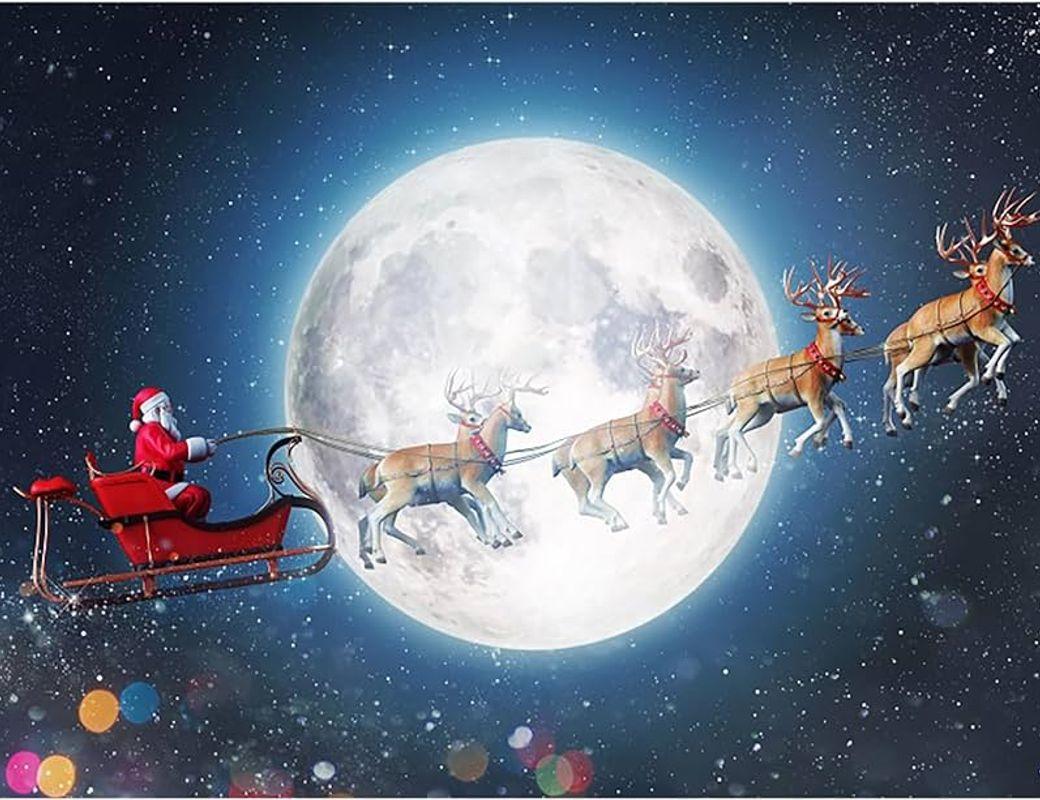
In modern celebrations, the flying reindeer are often depicted bounding through snow-laden skies, antlers silhouetted against the moon, sleigh bells ringing with an almost magical insistence. Yet beneath the whimsy lies the echo of ancient belief: the idea that certain creatures traverse the boundaries between worlds, that they can bring light, sustenance, and blessings to those who honor the winter, and that the darkest months are never truly devoid of wonder. Each leap of the reindeer is a reminder that the old winter ways survive not only in rituals and firelight but also in stories, symbols, and the enduring enchantment of the season.
The Origins and Evolution of Christmas Gift-Giving
Long before wrapped packages appeared beneath evergreen trees, the act of exchanging gifts in midwinter grew out of humanity’s oldest instinct to reinforce community when the world felt cold and uncertain. Across ancient Europe, the winter solstice marked the turning point of the year, a sacred threshold when the sun was at its weakest. People honored this moment with offerings, feasts, and gestures of generosity that symbolized hope and reciprocity, the assurance that light and good fortune would return.
Among the Germanic and Norse peoples, gifts were tied to the supernatural forces believed to roam the longest nights. Offerings of food, drink, or handcrafted items were left out as a sign of respect for wandering spirits and protective deities. During Yule, households shared small tokens with each other in the belief that generosity would invite blessings for the coming year. These modest exchanges bound families and communities together when winter was at its harshest, transforming giving into a ritual that affirmed survival and solidarity.
The Roman world developed its own midwinter tradition during Saturnalia, a festival overflowing with feasting, games, and role reversals. One of its most beloved customs was the exchanging of sigillaria, small figurines, sweets, and tokens meant to strengthen relationships and renew social bonds. Though Saturnalia was not a direct ancestor of Christmas, its spirit of revelry and goodwill carried forward into later celebrations across the Mediterranean world. The expectation that generosity defined the season gradually became part of the broader cultural fabric.
With the rise of Christianity, a new layer of meaning formed around gift-giving. The story of the Magi traveling from the East with gold, frankincense, and myrrh introduced a theological dimension to offerings made in midwinter. Their gifts to the Christ child became a symbolic model for Christian charity, especially during the Advent and Christmas seasons. Medieval traditions expanded on this idea, encouraging believers to give alms, provide food for the poor, and practice acts of mercy in honor of Jesus’s birth. These practices did not erase older customs but blended with them, merging spiritual devotion with long-standing cultural habits of seasonal generosity.
By the early modern era, gift-giving had quietly shifted from communal rituals to household-centered traditions. In many regions of Europe, small treats, coins, or toys were given to children on feast days connected to saints who modeled kindness, most notably Saint Nicholas. His reputation as a protector of the vulnerable strengthened the association between generosity and midwinter. Families left food or offerings in return, echoing ancient customs of reciprocity, only now expressed through Christian symbolism rather than pagan cosmology.
As Christmas transformed into a more domestic celebration during the eighteenth and nineteenth centuries, the focus of gift-giving changed once again. Instead of simple tokens or religious alms, families began presenting thoughtfully chosen items to one another as expressions of affection and goodwill. The gifts grew larger and more elaborate, and their presentation increasingly centered around Christmas morning. The introduction of decorated trees, stockings, and later the modern image of Santa Claus contributed to this shift, giving the act of giving a new sense of enchantment and spectacle.
What began as offerings to the spirits of winter, later shaped by Roman festivity and Christian devotion, eventually became a cherished family tradition woven into the fabric of the holiday. Gift-giving today still carries the echoes of those earlier practices, from the emphasis on generosity to the subtle ritual of offering something in return. Whether it is a wrapped present beneath a tree or a plate of cookies left out for a midnight visitor, the impulse remains the same: to celebrate life, renew connection, and welcome the returning light.
From Solstice Spirits to Santa Claus
Santa Claus did not appear fully formed. He is the result of centuries of stories, customs, and imagination woven together from many cultures and eras. His origins stretch back to ancient winter traditions when people celebrated the changing seasons and sought comfort, light, and hope during the darkest days of the year.
In northern Europe, long before Christianity, winter was a time of festivals and rituals. People honored the natural cycles of the earth and the sun, celebrating the return of light after the solstice. Part of these traditions involved offering gifts, food, or small tokens to spirits or gods who were believed to visit homes. These acts were meant to invite protection, prosperity, and good fortune during the long months of cold and darkness. Over time, the idea of a benevolent visitor who brought blessings to households became a recurring motif in winter celebrations.
As Christianity spread, the figure of Saint Nicholas of Myra became central to these traditions. Nicholas was a fourth-century bishop remembered for his generosity and care for the vulnerable. He was known for secretly giving gifts to those in need and became the patron saint of children and travelers. His feast day, celebrated on December 6, inspired the custom of leaving shoes or stockings out to be filled with gifts. This practice captured the same spirit as the older solstice traditions: a visitor arrives unexpectedly, bringing kindness to those who are deserving.
Across Europe, other regional customs added layers to the story. In the Netherlands, children celebrated Sinterklaas, a bishop-like figure who arrived by ship and rewarded good behavior with sweets and small gifts. In England, Father Christmas embodied warmth, hospitality, and cheer. While he was not initially associated with gift-giving, his presence celebrated the joy of winter and the importance of family and community. Over time, these traditions merged and influenced one another, creating the foundation of a single, more universal winter visitor.
When Dutch settlers brought their Sinterklaas traditions to America, these customs blended with English Father Christmas celebrations. By the nineteenth century, writers and illustrators began shaping Santa Claus into a domestic figure for children and families. Clement Clarke Moore’s poem “A Visit from St. Nicholas” introduced many of the elements we recognize today: the sleigh, the reindeer, and the playful spirit who delivers gifts on Christmas Eve. Later illustrations refined his image further, giving him the red suit, round figure, and twinkling eyes that became iconic.
Even small traditions, like leaving milk and cookies for Santa, grew from earlier customs of offering food to guests or spirits. In ancient times children might leave hay for Odin’s horse, or grain and treats for Sinterklaas. Over centuries, this simple act evolved into a gesture of gratitude for the gifts received, reinforcing the long-standing idea of reciprocity and participation in the joy of giving.
Today, Santa Claus is the culmination of all these influences. He carries the generosity of Saint Nicholas, the warmth of Father Christmas, and the playful spirit of centuries of winter celebrations. His story reminds us that the magic of the season has always been rooted in kindness, giving, and the hope that even the smallest acts can brighten the darkest days.
Conclusion: A Season Woven Through Time
When we look closely at the holidays we celebrate today, we find that Christmas is not a single tradition but a tapestry of many ancient threads. Evergreen trees carried the promise of life through the coldest months, and their lights echoed the eternal return of the sun. Stockings by the hearth preserved the memory of secret generosity, while mistletoe held the quiet enchantment of peace and protection. The Yule log burned as a beacon of warmth and continuity, and reindeer carried the wonder of midwinter skies from distant northern imaginations. Even Santa Claus, in all his familiar cheer, is the final expression of centuries of stories about kindness, hope, and the spirit of giving.
Each custom is a reminder that across cultures and throughout history people have found comfort in ritual and meaning in shared celebration. These traditions shift and change over time yet they continue to reflect the same desire to honor light in a season of darkness, to gather close with loved ones, to offer hospitality, and to give freely without expecting anything in return. Christmas has always been a bridge between the past and the present, carrying fragments of older worlds into modern homes where they live on in new forms.
As we hang ornaments, share meals, exchange gifts, or whisper wishes into the quiet of a winter night we take part in something far older than ourselves. We are repeating gestures that countless others have made across continents and centuries. In doing so, we keep alive the enduring belief that joy can be renewed, that generosity matters, and that even in the coldest season there is warmth waiting to be kindled.
These old winter ways remind us that the true magic of Christmas is not found in grand displays but in the steady glow of tradition, the love we extend, and the stories we carry forward. Year after year this season invites us to pause, reflect, and take comfort in the knowledge that light always returns and that the bonds we share are the brightest gifts of all.
Responses
No responses yet — start the conversation.