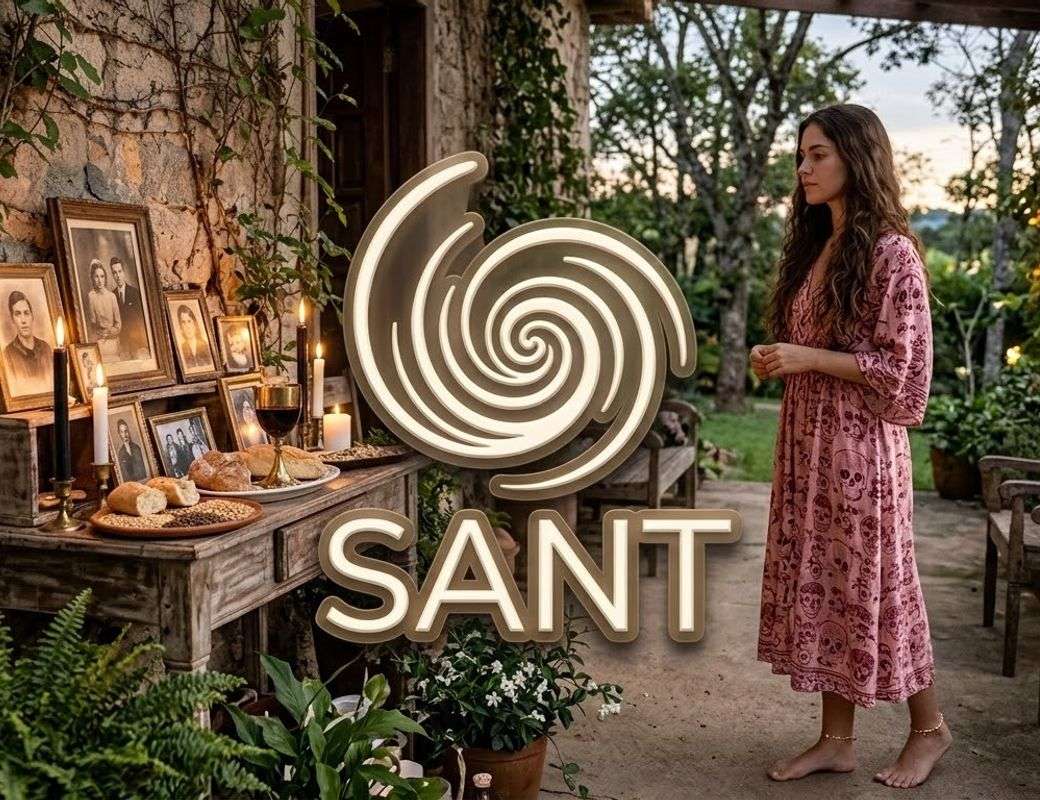
Saint Andrew’s Night
Strigoi, Wolves, Garlic, and the Strange November Traditions of Romania
Article · 22 min read · ·
On the final night of November, darkness settles early over Romania. Winter is drawing close, the fields have gone quiet, and in older villages, this was not considered an ordinary night. Garlic might be rubbed around doors and windows, while families gathered indoors and prepared for the long hours ahead. Somewhere beyond the safety of the house, wolves were said to possess strange powers, and restless spirits wandered through a world in which the boundaries between the living and the dead had become dangerously thin.
For unmarried young women, however, the night held another possibility. Saint Andrew’s Eve was a time for divination. Basil might be tucked beneath a pillow in hopes that a future husband would appear in a dream. Wheat could be planted and watched through the coming weeks, its growth offering clues about prosperity in the year ahead. Other rituals promised glimpses of love, marriage, fertility, and fortune.
At the center of it all stands Saint Andrew, one of the twelve apostles of Jesus and the patron saint of Romania. His feast is celebrated on November 30, yet the night preceding it has accumulated a remarkable collection of customs that do not fit neatly into a single category. Christian observance exists beside folk magic. Prayers mingle with protective rituals. Saint Andrew shares the night with wolves, divination, garlic, and the dreaded strigoi, restless supernatural beings believed capable of leaving their graves or bodies to trouble the living.
It is tempting to call Saint Andrew’s Night a kind of “Romanian Halloween,” and the comparison is easy to understand. Both involve spirits, supernatural danger, protective customs, and a night when the ordinary rules of the world seem temporarily suspended. Yet Saint Andrew’s Night belongs to its own cultural landscape, shaped by Romanian Christianity, rural folklore, seasonal beliefs, and traditions that developed and changed across generations.
Some modern accounts describe these customs simply as remnants of an ancient pre-Christian festival. The reality is more complicated. Certain elements have been interpreted by folklorists and ethnographers as preserving older beliefs, but the traditions that survive today have been layered with centuries of Orthodox Christianity and Romanian folk practice.
On this one cold November night, saints and spirits occupy the same landscape. And before morning comes, there are doors to protect, dreams to interpret, wolves to fear, and perhaps a strigoi or two wandering in the darkness.
Who Was Saint Andrew?
Before the strigoi, wolves, and protective garlic, there is Andrew himself.
In Christian tradition, Saint Andrew was one of the twelve apostles of Jesus and the brother of Simon Peter. The Gospels describe Andrew as a fisherman from Galilee who became one of Jesus’s earliest followers. The Gospel of John presents him as one of the first disciples to recognize Jesus and bring another person, his brother Peter, to meet him. This association eventually earned Andrew the title Protokletos, or “the First-Called,” particularly within the Eastern Christian tradition.
After the death of Jesus, later Christian traditions sent Andrew far beyond the familiar landscape of Galilee. Accounts of his missionary travels developed over centuries, connecting him with regions around the Black Sea, Greece, Asia Minor, and areas known in antiquity as Scythia. According to Romanian Christian tradition, Andrew carried Christianity into Scythia Minor, a Roman province that included the region of Dobrogea in present-day southeastern Romania.
This tradition is especially important to Andrew’s place in Romanian culture. He came to be regarded not simply as another apostle on the Christian calendar, but as a figure intimately connected with the beginnings of Christianity in the region. Today, Saint Andrew is honored as the patron saint of Romania, and his feast on November 30 is both an important religious observance and a national public holiday.
The historical picture, however, requires some caution. Ancient and later Christian sources associate Andrew with missionary activity in Scythia, but reconstructing exactly where he traveled and what occurred there is difficult. The specific Romanian traditions surrounding his presence developed through a mixture of religious history, local devotion, oral tradition, and later interpretation. It is therefore more accurate to say that Romanian Christian tradition remembers Andrew as an early evangelizer of the region than to treat every detail of his journey as established historical fact.
Yet saints rarely remain confined to written histories and church calendars. Once they become part of local culture, people tell stories about them, invoke them for protection, associate them with particular places, and sometimes weave them into customs that exist beyond the walls of the church.
That is precisely what happened with Saint Andrew.
His feast became associated not only with Christianity but with the arrival of winter, the protection of homes and livestock, and the mysterious behavior of wolves. To understand why November 29 could inspire both prayer and apprehension, we have to leave the story of the apostle behind for a moment and step into the darkness of Saint Andrew’s Eve.
A Night Between Autumn and Winter
Saint Andrew’s Night arrives at a natural turning point in the year. By November 29, the harvest has long since ended, daylight has dwindled, and winter is pressing close. In Romanian folk tradition, Saint Andrew’s feast became closely associated with this seasonal boundary, a moment when autumn gives way to winter and the familiar world seems to enter a darker, less predictable season.
Thresholds have always been powerful places in folklore. A doorway is neither entirely inside nor outside. Midnight belongs to neither one day nor the next. The changing of the seasons creates a similar kind of uncertainty, and Saint Andrew’s Eve gathered many of these boundaries together. It occurred at night, at the edge of winter, during a period when the agricultural year had slowed and communities were preparing for the cold months ahead.
Romanian folk belief transformed that uncertainty into something supernatural.
The night of November 29 into November 30 was sometimes treated as a dangerous period when ordinary protections weakened. Harmful supernatural beings could move more freely, animals might behave in extraordinary ways, and the future could become briefly accessible through dreams, signs, and divination. People developed customs meant to protect their households, livestock, and themselves from whatever might be wandering outside.
Even everyday activities could take on unusual significance. In some communities, people avoided certain kinds of work, including sewing or washing. Staying awake could itself become part of the observance. Families and neighbors gathered together, while elsewhere the night might be spent in prayer. Religious devotion and folk protection did not necessarily feel contradictory to the people practicing them. Both belonged to a world in which spiritual forces were understood to be close at hand.
Even the old Romanian names associated with the season preserve Andrew’s presence. December was historically known in some traditions as Indrea or Undrea, names connected with Saint Andrew. His feast therefore stood almost like a doorway into winter itself.
But according to folklore, that doorway did not open only for the living.
As darkness deepened on Saint Andrew’s Eve, another kind of traveler was believed to emerge.
The strigoi were walking.
When the Strigoi Walk
Among the supernatural beings associated with Saint Andrew’s Night, few were more feared than the strigoi. They are sometimes described simply as Romanian vampires, but that comparison only tells part of the story. Romanian folklore surrounding the strigoi is far more complicated, encompassing restless dead, dangerous spirits, and in some traditions even living people believed capable of sending their spirits out at night.
On Saint Andrew’s Eve, the danger was thought to become particularly intense. Folk tradition held that strigoi could move through the countryside, gather together, and threaten both people and animals. The darkness beyond the household was therefore not merely empty space. It was a landscape in which supernatural forces might be active, making the protection of the home especially important.
The strigoi also belonged to a much larger Romanian understanding of the uneasy relationship between the living and the dead. Death did not always guarantee that someone would remain peacefully in the grave. A person who died under unusual circumstances, violated certain social or religious expectations, or was believed to possess particular supernatural characteristics might become associated with fears of returning after death. Stories and practices varied considerably from region to region, which makes the strigoi difficult to reduce to one neat definition.
This is one reason the familiar vampire comparison can be misleading. Later literature and popular culture gave us the elegant vampire who drinks blood, seduces victims, and retreats to a coffin before sunrise. The strigoi emerged from a different folkloric world. Their danger might involve illness, misfortune, weakened livestock, disturbed households, or the draining of vitality rather than the theatrical blood drinking associated with fictional vampires.
On Saint Andrew’s Night, however, people were not expected to confront such beings dramatically. Folk protection was far more practical. The goal was to keep dangerous forces outside, reinforce the boundaries of the household, and make both people and animals less vulnerable until daylight returned.
That meant paying special attention to the very places where the outside world could enter: doors, windows, chimneys, thresholds, and even the entrances to animal shelters.
And for those vulnerable boundaries, Romanian folk tradition had a particularly pungent defense.
Garlic.
Garlic at the Door
Long before garlic became inseparable from vampires in popular culture, it already had a reputation as a powerful protective substance in Romanian folk belief. On Saint Andrew’s Eve, that protection could be put to very practical use. If dangerous beings were believed to wander outside, the first priority was making certain they stayed there.
Garlic might be rubbed around doors and windows, creating a symbolic barrier between the household and whatever moved through the night. Chimneys and thresholds could also receive attention, as could barns and other places where livestock were kept. These were all openings, points where the protected interior met the uncertain world beyond it.
Protection was not always limited to the building. Some traditions describe people rubbing garlic on parts of their bodies, including the forehead, chest, back, or joints. The practice may sound unusual to modern readers, but within the logic of folk protection it served the same purpose as marking a doorway. The body itself had boundaries that could be defended.
Livestock required protection as well. In rural communities, the health of cattle and other animals could determine whether a family made it comfortably through winter. A supernatural threat to livestock was therefore also a threat to the household’s survival. Garlic placed around stables or used in protective practices reflected very real anxieties about illness, loss, hunger, and the uncertainties of rural life.
One of the more fascinating customs associated with the night was sometimes known as the guarding of the garlic. Accounts of the tradition describe gatherings in which young women brought garlic to a house, often under the supervision of an older woman. The garlic was watched through the night amid conversation, food, and communal activity before later being kept and used for protection.
The garlic of Saint Andrew’s Night was therefore not merely a weapon against something we would now call a vampire. It belonged to a broader system of folk protection in which homes, bodies, animals, and livelihoods all needed safeguarding during a dangerous moment of the year.
Yet strigoi were not the only creatures believed to become unusual when Saint Andrew’s Eve arrived.
Beyond the protected doors and windows, another presence haunted the winter landscape. According to Romanian folklore, this was also the night when the wolves began to speak.
The Night of the Wolves
If the strigoi belonged to the supernatural darkness of Saint Andrew’s Night, the wolf occupied a more complicated place. Wolves were real inhabitants of the Romanian landscape, capable of threatening livestock and inspiring very practical fear. Yet in folklore, they were also creatures of mystery and power, and Saint Andrew’s Eve was believed to be one of the nights when their ordinary nature changed.
According to folk tradition, wolves could speak on Saint Andrew’s Night. Anyone unfortunate enough to hear and understand their words, however, was not necessarily receiving a wonderful supernatural gift. Some versions of the belief warned that overhearing the wolves could bring terrible consequences, even death. The animals were momentarily crossing a boundary between the human and animal worlds, and listening to what humans were never meant to understand could be dangerous.
Other traditions emphasized the unusual power wolves possessed at this time of year. Saint Andrew became closely associated with them, and some customs surrounding his feast were intended to protect households and livestock from wolf attacks during the coming winter. Certain activities were avoided, while protective actions were performed in hopes of keeping the animals away.
Garlic appears here once again. In Romanian folk belief, its protective power was sometimes described as being able to symbolically “close the mouths of the wolves.” The phrase captures the mixture of practical concern and magical thinking that runs throughout Saint Andrew’s Night. Wolves posed a genuine danger to animals on which rural families depended, but that danger could be understood through a supernatural framework in which ritual offered another form of protection.
The connection also makes sense within the agricultural calendar. Late November marked the approach of the hardest months of the year, when food became scarcer and wolves could venture closer to settlements in search of prey. The howling of wolves beyond a village was not an imaginary threat. Folklore transformed that very real presence into something larger, surrounding the animal with stories that expressed both fear and respect.
Saint Andrew’s association with wolves became so strong that his feast could function as a kind of symbolic boundary between humans and the wild. Inside were the household, livestock, firelight, prayer, and protective garlic. Outside were winter, darkness, spirits, and wolves whose voices might suddenly sound almost human.
Yet not everything sought on Saint Andrew’s Night was something to fear.
For young unmarried women especially, Saint Andrew’s Eve offered a tantalizing possibility: a glimpse of the person they might one day marry.
Dreaming of the Future
Not every mystery of Saint Andrew’s Night was waiting outside the door. For unmarried young women, some of the night’s most intriguing possibilities could be found much closer to home, beneath a pillow, in a dream, or in a simple piece of bread.
Saint Andrew’s Eve became particularly associated with love and marriage divination. In some Romanian traditions, the celebration was even popularly connected with young women seeking knowledge about their future husbands. The same night that allowed spirits to wander and wolves to speak was also believed to make the future slightly easier to glimpse.
One of the simplest customs involved basil. A young woman could place basil beneath her pillow before going to sleep, hoping that the man she would eventually marry would appear in her dreams. Basil carried religious as well as folk significance, making it particularly appropriate for a night when Christian devotion and household magic existed side by side.
Other customs were considerably less comfortable. One tradition involved preparing a small unleavened cake or flatbread from flour, water, and a generous amount of salt, sometimes known as a turtă de Indrei. The young woman ate it before going to bed without drinking water afterward. Thirst was part of the divination. If a young man appeared in her dream and offered her water, he might be revealed as her future husband.
Another version used grains of wheat. In some regional accounts, a young woman placed 41 grains of wheat beneath her pillow before sleeping. Her dreams might then reveal the young man connected with her future marriage, sometimes through an image involving the wheat itself. As with many oral traditions, the precise ritual and its interpretation varied from place to place.
These practices were not fortune-telling in the elaborate sense of consulting cards, charts, or professional diviners. They used ordinary household materials such as bread, salt, basil, water, and grain. That simplicity is part of what makes them so revealing. Divination was woven into everyday life, using objects already familiar to the people performing it.
There was also something wonderfully human beneath all the supernatural language. The young women practicing these customs were asking questions that people have asked for centuries: Who will I love? Will I marry? What will my future look like? On Saint Andrew’s Night, folklore offered a way to turn those uncertainties into ritual.
Love, however, was not the only future people hoped to glimpse. The household had another question to ask as winter began: What kind of year lies ahead?
For that answer, people turned once again to the agricultural world around them, planting wheat and cutting branches in hopes that something green might reveal what the coming year would bring.
Wheat, Branches, and the Year Ahead
At the end of November, the Romanian countryside was entering its quietest season. Fields that had recently provided grain and fruit were becoming bare, and the abundance of the next harvest lay many months away. It is perhaps fitting, then, that some Saint Andrew’s traditions asked winter itself for signs that life and prosperity would return.
One of the best-known customs involved wheat. Around Saint Andrew’s Day, wheat grains could be planted in a small container and brought inside the home, where they were carefully tended through December. By New Year’s Eve, the condition of the young shoots could be interpreted as an omen for the year ahead. Thick, healthy, green growth suggested prosperity, good fortune, and abundance. Weak or sparse growth was naturally less encouraging.
The custom transformed something very small into a symbol of something much larger. A handful of grain sprouting on a windowsill represented fields that would eventually have to grow again. During the darkest weeks of the year, that patch of green offered a miniature promise of renewal.
Fruit trees could also be asked to reveal the future. In some traditions, branches were cut and placed in water around Saint Andrew’s feast, then watched as Christmas approached. If the branch produced buds or blossoms indoors, it could be interpreted as a favorable sign for the coming year and, particularly, for the fertility of the orchard.
These customs belong to the same world as the marriage divinations practiced on Saint Andrew’s Eve, but their concerns were broader. The future of a rural household depended upon far more than romance. Crops needed to grow. Trees needed to bear fruit. Animals needed to remain healthy. Families needed enough food and resources to carry them through another cycle of the seasons.
Wheat and branches therefore became small living oracles. Rather than asking the future through spoken prophecy, people watched what grew.
There is a striking contrast here with the darker traditions of Saint Andrew’s Night. Outside the house, winter was arriving, wolves prowled the landscape, and strigoi were believed to wander. Inside, someone might be coaxing wheat from the soil or waiting for a bare branch to produce new buds.
Fear and hope existed side by side.
That combination is one reason Saint Andrew’s Night can feel strangely familiar to modern readers. Spirits walk, protective substances guard the home, people seek glimpses of the future, and the darkness outside seems temporarily filled with possibility.
It is easy to understand why the celebration is sometimes introduced with a catchy modern comparison.
But calling it “Romanian Halloween” tells only a very small part of the story.
Not Quite “Romanian Halloween”
With wandering spirits, supernatural creatures, protective garlic, and divination, the comparison seems almost inevitable. Saint Andrew’s Night is sometimes described as “Romanian Halloween,” and as a quick introduction for someone encountering the tradition for the first time, the nickname is understandable.
Look more closely, however, and the similarities begin to tell us less than the differences.
Halloween developed through its own complicated mixture of Christian observance, European folk customs, changing ideas about the dead, and eventually modern secular celebration. Saint Andrew’s Night developed within a different cultural landscape, tied specifically to the feast of Saint Andrew, Romanian Christianity, rural life, the beginning of winter, and local supernatural traditions.
Perhaps the most important distinction is that Saint Andrew himself never disappears from the celebration. November 30 remains his Christian feast, while the folk customs surrounding the preceding night developed alongside that religious observance. The result is a tradition in which saint and spirit, prayer and protection, Christianity and folklore can occupy the same cultural space.
Calling Saint Andrew’s Night “Romanian Halloween” may therefore provide a convenient doorway, but it should never become the entire room. The tradition deserves to be understood on its own terms.
And those terms become even clearer when we remember that Saint Andrew’s Eve was not simply a list of superstitions performed by individuals. In some communities, it was also a night experienced together.
Keeping Watch Through the Night
Saint Andrew’s Eve was not necessarily spent alone behind a garlic-covered door. Some of its traditions were communal, bringing people together precisely because the night was considered unusual. Staying awake, gathering with neighbors, sharing food, talking, and participating in protective customs turned a potentially threatening night into a social occasion.
The guarding of the garlic was one such occasion. In descriptions of the custom, young women gathered in a house, sometimes under the supervision of an older woman, bringing garlic that would be watched over during the night. The gathering could include conversation, food, and a surprisingly lively atmosphere. The garlic was not simply an ingredient waiting to be used. After passing through the ritual of Saint Andrew’s Eve, it could be preserved for its protective qualities and used when protection was needed later.
Some accounts describe young women bringing three heads of garlic and placing them near a small figure or doll associated with Indrei, a name connected with Andrew. Folklorists have offered different interpretations of these customs, including suggestions that certain elements may preserve traces of older seasonal ritual. Such interpretations should be approached carefully. By the time these practices were recorded, they existed within communities that had been Christian for centuries, and the surviving tradition cannot simply be peeled apart into neat “pagan” and “Christian” layers.
Food could carry its own ritual meaning. Beyond the salty bread used in marriage divination, other regional customs connected Saint Andrew’s season with foods made from grain. In some areas, a fermented preparation known as covasă, made from maize and flour, was shared with neighbors. Giving it away could be connected with hopes for abundance, including the health and productivity of cattle.
Meanwhile, the Christian feast remained present behind the folk customs. Saint Andrew’s Day belonged to the religious calendar, and prayer, church observance, and devotion to the apostle existed alongside household rituals. For the people participating in them, these practices did not necessarily occupy separate worlds. A person could honor Saint Andrew while also protecting a stable with garlic, watching for omens, or remembering stories about strigoi.
That coexistence may be one of the most revealing aspects of Saint Andrew’s Night. Folk religion rarely behaves as neatly as categories in a history book. People inherit customs from parents and grandparents, adapt them to changing circumstances, attach new meanings to old practices, and preserve traditions because they remain meaningful to the community.
Perhaps that is why Saint Andrew’s Night survived as something more than a collection of frightening stories. The night created a reason to gather during one of the darkest periods of the year. People watched together, talked together, wondered about the future together, and performed familiar rituals that connected one generation with the next.
Outside, winter waited.
Inside, the garlic was guarded, the stories continued, and everyone waited for morning.
When Morning Comes
Eventually, the darkness of Saint Andrew’s Eve begins to lift.
The wolves fall silent. Whatever strigoi may have wandered through the night retreat from the approaching daylight. Doors and windows remain marked with garlic, dreams are remembered and interpreted, and somewhere inside the house, grains of wheat wait patiently for the first green shoots that might reveal something about the year still to come.
November 30 belongs to Saint Andrew.
For Romanian Christians, his feast honors the apostle remembered in tradition as bringing Christianity into the lands surrounding the western Black Sea and associated with the beginnings of the faith in the region. Yet surrounding that religious observance is an extraordinary collection of folk traditions shaped by centuries of rural life, seasonal uncertainty, supernatural belief, and the simple human desire to protect what matters.
That may be the thread connecting customs that otherwise seem remarkably different. Garlic around a doorway, warnings about wolves, stories of strigoi, basil beneath a pillow, salty bread eaten before sleep, wheat growing on a windowsill, and branches coaxed into bloom are all responses to uncertainty. Some attempt to keep danger away. Others try to reveal what cannot yet be known.
Saint Andrew’s Night stands precisely between those impulses.
It looks backward toward a landscape filled with inherited stories and forward toward a winter whose outcome could never be guaranteed. Will the animals survive? Will the crops return? Will the household prosper? Will love arrive? Will everyone gathered around the fire still be there when another winter comes?
Modern life has changed many of the circumstances that gave these questions such urgency, and not every Romanian observes the old customs today. Yet traditions do not have to remain unchanged to retain meaning. Stories of Saint Andrew’s Night continue to preserve something of the world that created them, a world in which the supernatural could wait just beyond the threshold and a handful of garlic or a few grains of wheat could offer reassurance against an uncertain future.
Perhaps that is what makes the night so compelling even now.
Beneath the strigoi and speaking wolves, beneath the protective charms and marriage divinations, Saint Andrew’s Night is ultimately a story about standing at a threshold. One season is ending and another is beginning. Darkness has arrived, but it will not last forever.
So the doors are protected. The wheat is planted. The stories are told.
And when morning finally comes, winter begins.
Responses
No responses yet — start the conversation.