Pachamama Day: A Sacred Earth Celebration 🍃
Honour Pachamama, the Ancient Mother of Earth, with sacred offerings and gratitude today.
Article · 6 min read · ·
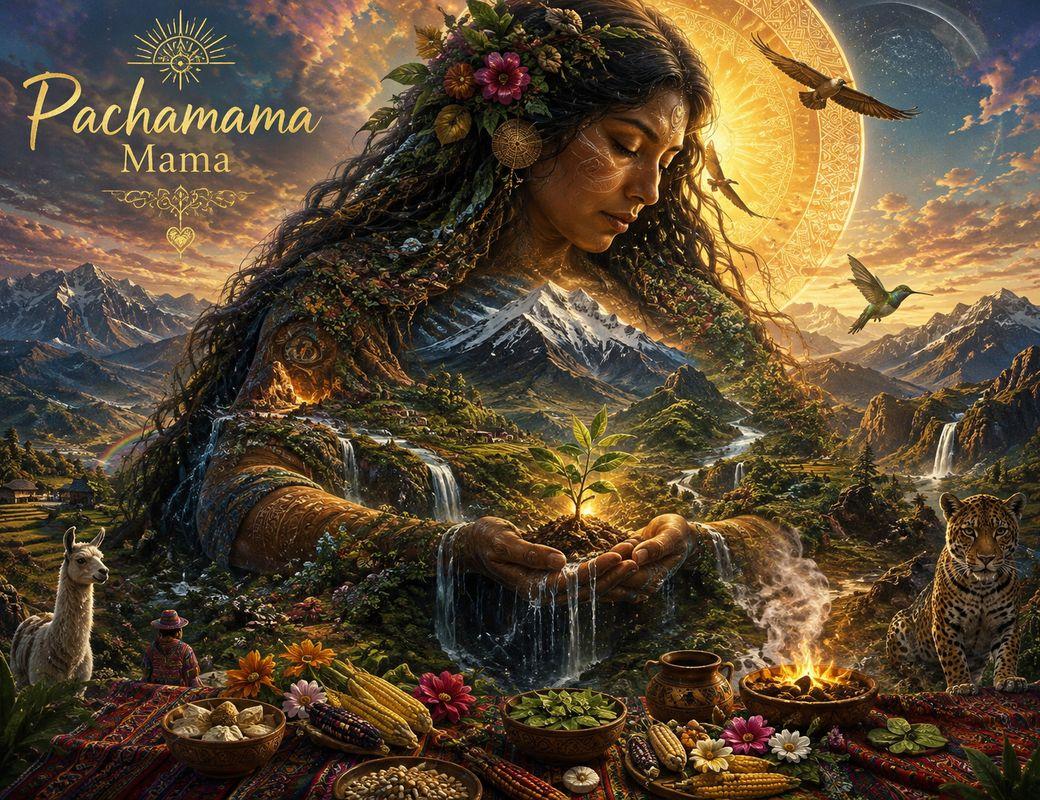
Imagine a world where every mountain has a spirit...
Every river is alive...
Every seed remembers your name.
That time has come.
Today, Mother Earth awakens as communities across the Andes welcome a new agricultural cycle, seeking her blessings of protection, fertility, abundance, and a fruitful harvest.
Mother Earth isn't a resource to exploit—she is Pachamama, the Great Mother who nourishes every living thing.
For thousands of years, Indigenous communities across the Andes—including the Quechua, Aymara, and other high-altitude Andean peoples throughout Peru, Bolivia, Ecuador, Chile, and Argentina—have lived with this understanding. Every 1 August, families pause their ordinary lives to thank her through offerings, prayer, music, food, and gratitude.
Fast forward to the modern day, and this ancient tradition has never felt more necessary. It reminds us to return to reverence, respect, and honour for the planet that sustains us.
Whether you see the Earth as sacred creation or the living embodiment of the Divine, Pachamama Day invites us to live in greater peace, harmony, and reciprocity with one another.
May today's offering be more than flowers left upon the Earth.
May it be the way we walk.
The way we consume.
The way we speak to one another.
And the gratitude we carry long after Pachamama Day has passed.
After all, every day is lived upon the body of the Great Mother.
🌎 What Is Pachamama?
Her name comes from the Quechua words pacha and mama.
💚 Pacha means world, universe, space, time, and the living cosmos.
💚 Mama means mother.
Often translated as Mother Earth, Pachamama is far more than the ground beneath our feet. She is the living embodiment of:
🍀 Nature
🍀 Fertility
🍀 Abundance
🍀 Harvest
🍀 Mountains
🍀 Rivers
🍀 Animals
🍀 The cycles of life
She is not viewed as separate from humanity but as the living whole of which humanity is only one part. To honour Pachamama is to remember that every breath we take is borrowed from the Earth herself.
⛰️ The Origin of Pachamama
Let's journey back in time.
Pachamama reflects the ancient Andean Earth and the goddess of cosmos whose presence reaches back long before the rise of the Inca Empire. Revered across Peru, Bolivia, Ecuador, and parts of Argentina and Chile, she represents nature, fertility, abundance, and the sacred relationship between humanity and the living Earth.
Rather than having one single creation story, Pachamama embodies a worldview. She is the universal life force connecting all living things through the continuous rhythms of nature.
Within Inca tradition, she is closely associated with the sacred order of the cosmos and is honoured alongside powerful deities such as Inti, the Sun God. Across different Andean communities, traditions and stories vary, but her essence remains unchanged: she is the Great Mother who sustains life itself.
🌱 Life & Nourishment
Pachamama is the physical and spiritual source of life, nourishing crops, animals, rivers, mountains, and humanity alike.
🌬️ Dual Nature
She is both gentle and fierce—bringing fertile harvests when respected, yet capable of expressing nature's power through earthquakes, landslides, and drought when harmony is broken.
⚖️ Reciprocity (Ayni)
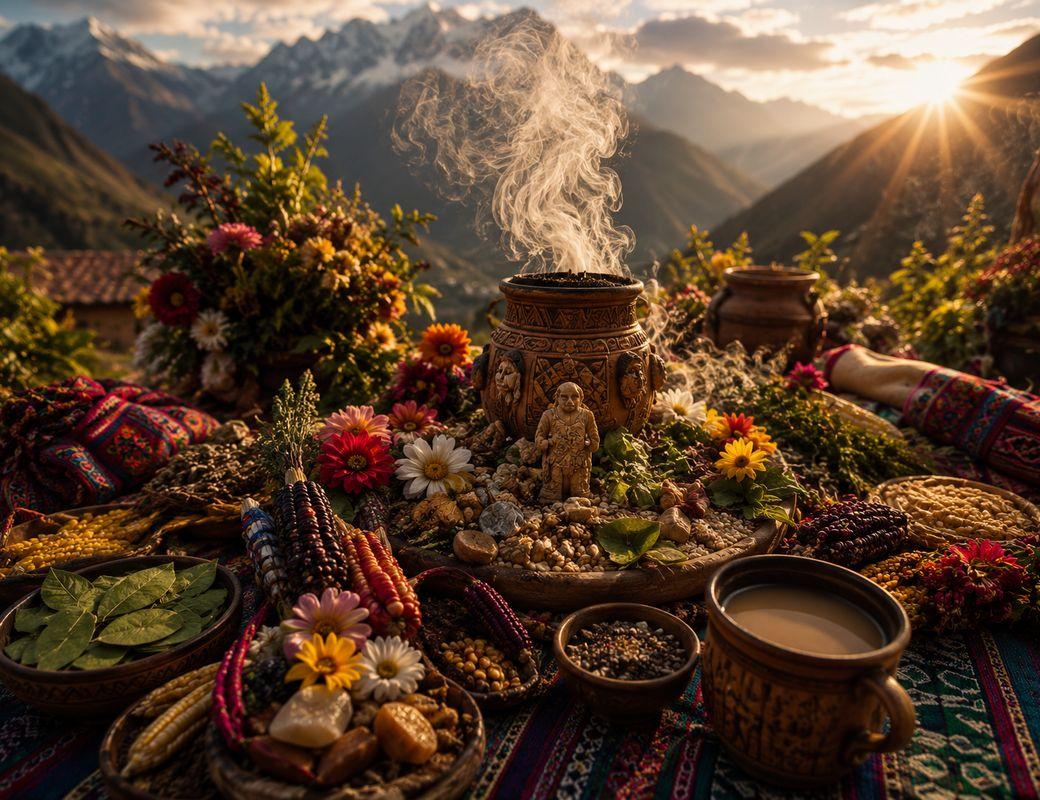
One of the most sacred Andean principles is Ayni—the understanding that life exists through mutual exchange. Humanity must care for the Earth just as the Earth cares for humanity. This balance is maintained through ritual offerings known as Pago a la Tierra, where gifts such as coca leaves, corn, food, flowers, and chicha are returned to the Earth with gratitude.
That is why Pachamama has been honoured for thousands of years.
Unlike many religions, these traditions were preserved not through written scriptures, but through oral storytelling, ceremony, and generations of lived wisdom.
🍞 Traditional Rituals & Offerings to Pachamama
Rituals
One of the most sacred ceremonies is Pago a la Tierra, meaning Payment to the Earth, also known as a Despacho ceremony.
Participants prepare a heartfelt offering before carefully returning it to the Earth, symbolically feeding Pachamama in gratitude for all she has given.
How the Ritual Is Done
🕳️ The Pit (Corpachada)
A small hole is carefully dug into the ground, symbolising the mouth of Pachamama—a sacred opening through which the Great Mother receives the community's gratitude and offerings.
🌽 The Placement
Participants gently place their gifts into the pit while offering prayers of thanks and blessings. Traditional offerings may include coca leaves, corn, seeds, bread, sweets, local foods, flowers, herbs, chicha, wine, and other symbolic gifts representing abundance and reciprocity.
The smoke from incense or sacred herbs is believed to carry prayers into the spiritual realm.
The offering is gratitude payment.
🌿 The Closing
Once every offering has been placed, the pit is respectfully covered with soil, stones, and, in some communities, colourful woven blankets or fresh flowers to seal the offering. The ritual concludes with gratitude, honouring the sacred bond between humanity and the living Earth.
Offerings
Traditional gifts often include:
🤎 Coca leaves
🤎 Corn
🤎 Seeds
🤎 Bread
🤎 Sweets
🤎 Chicha
🤎 Wine
🤎 Flowers
🤎 Tobacco
Community
The celebration is deeply communal.
Families gather through music, dancing, shared meals, prayer, and traditional herbal teas such as rue, believed by many to encourage protection, cleansing, and well-being throughout the month of August.
🌍 Pachamama & Mother Gaia
People often compare Pachamama with Mother Gaia, but their origins are beautifully different.
✨ Gaia emerges from ancient Greek mythology as the primordial Earth Mother.
✨ Pachamama comes from the Indigenous spiritual traditions of the Andes.
Although they belong to different cultures, both invite us into the same timeless truth:
💛 The Earth is alive.
💛 She nurtures us.
💛 She deserves reverence rather than exploitation.
Rather than treating the planet as something we own...
Both traditions gently remind us that we belong to her.
🌿 How You Can Celebrate Pachamama Day
Honouring Pachamama doesn't require elaborate rituals.
Sometimes the simplest acts carry the deepest meaning.
🌱 Spend time barefoot upon the Earth.
🌼 Leave flowers beneath a tree.
🕯️ Light a candle in gratitude.
💚 Pick up litter in your neighbourhood.
🥖 Share food with someone in need.
🌾 Plant something that will continue giving life.
📖 Journal everything the Earth has provided for you this year.
The greatest offering is sincere gratitude.
🌿 Pachamama Gratitude Prayer
”Great Mother, thank you for every meal, every breath, every sunrise, and every lesson. May I walk gently upon your body, give back more than I take, and remember that I can never be separate from the Earth. May gratitude guide my hands today and always.”
✨ Closing Reflection
Perhaps Pachamama Day isn't simply about ancient rituals.
Perhaps it's about remembering something we've quietly forgotten.
💚 The air filling our lungs...
💚 The water in our cups...
💚 The food upon our tables...
💚 The ground beneath our feet...
These have always been gifts bestowed upon us by the Great Mother.
Whether you call her Pachamama, Mother Gaia, Mother Earth, or simply Nature...
Today is an invitation to give something back.
Because every harvest begins with gratitude.
Until our paths cross again...
Sending you healing moondust & love.
🌝
Responses
No responses yet — start the conversation.