Ostara: The Moment of Balance
from which spring is born
Article · 7 min read · ·
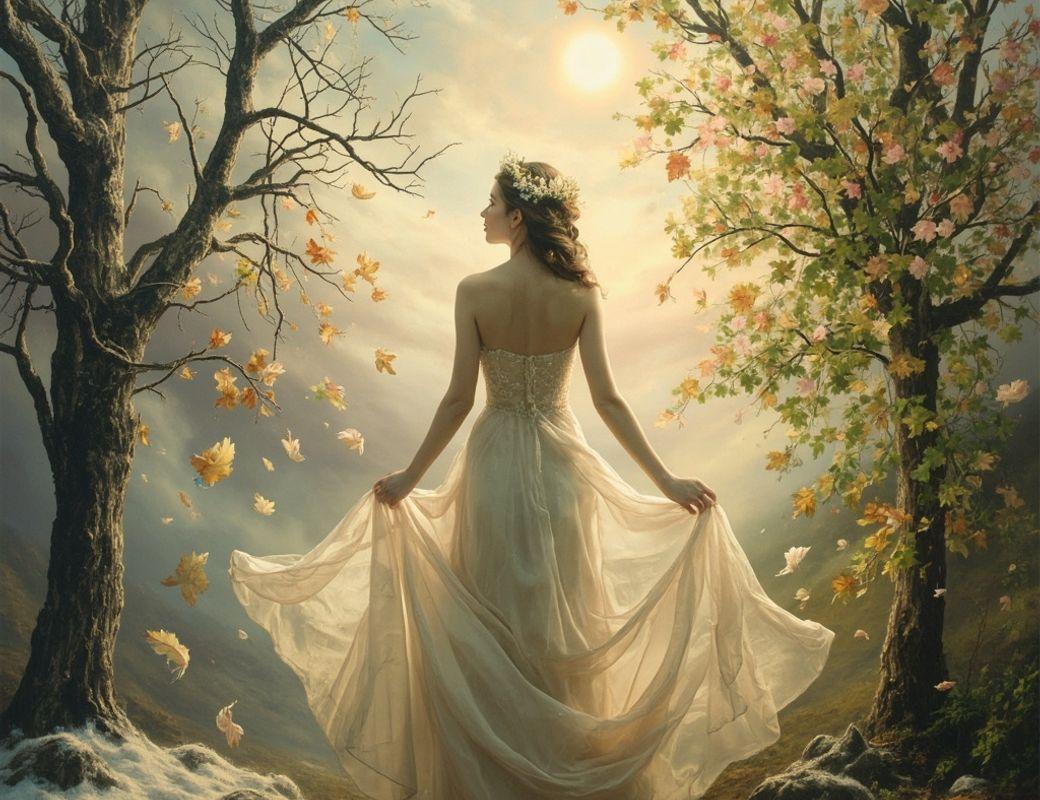
There are four special moments in the year when time stands still. When day and night meet as equals, before one begins to yield to the other. The spring equinox is one of these moments.
March 20, 2026, the Sun will cross the celestial equator, and astronomical spring will arrive in the Northern Hemisphere. In this instant, light and darkness pause in perfect equilibrium, after which day begins to triumph over night.
Different cultures called this moment by different names: Ostara among the Celtic peoples, Nowruz in the Persian tradition, Komoditsa among the ancient Slavs. But the essence remained the same: the equinox has always been a celebration of renewal, hope, and the return of life.
Today we'll talk about how to meet this day—not merely to mark the changing season, but to attune yourself to the wave of your own renewal.
⚖️The Moment When Everything Pauses
The spring equinox isn't just an astronomical date. It's a portal.
On the day of the equinox, the Sun rises due east and sets due west. Day and night each last 12 hours, perfectly balancing each other. Nature pauses at this threshold, and we pause with it.
Our ancestors felt this moment in their bones. For the Slavs, this was a time of welcoming Yarilo—god of the spring sun, fertility, and passion. For the Celts—the festival of Ostara, named for the goddess of dawn, whose symbols—the egg and the hare—we still encounter at Easter. For the Persians—Nowruz, a three-thousand-year-old New Year, when sprouted grains are placed on the table as a symbol of life triumphing over winter.
All these traditions share one thing: the equinox is a time to plant seeds. Not only in the earth, but in your soul.
🌱What Makes This Day Special in 2026
Astrologers say that the spring equinox of 2026 carries a special energy. At this time, the conjunction of Saturn and Neptune activates at 0° Aries—at the very first degree of the zodiacal wheel.
To translate this from astrological language into human terms: structure meets dream, form meets inspiration, reality meets vision. And they meet at a point of pure beginning. This means that intentions set on this day have extraordinary power to manifest.
This isn't about "making a wish at midnight." This is about conscious choice: Who do I want to become in this new cycle? What do I want to cultivate? What seeds, planted years ago, is it time to let go of?
🌿Cultural Roots—From Bonfires to Sprouted Grains
To feel the depth of this day, it's worth looking into the traditions. They're not museum pieces, but living guides for how we can welcome spring today.
In the Slavic tradition, the equinox was a festival of welcoming spring. They lit bonfires and jumped over fires—it was believed this could cleanse away everything wintry, heavy, and outworn. They baked pancakes and cookies shaped like larks—birds that were the first to return from the south, carrying spring on their wings. The merrier the celebration, the more abundant the harvest would be, they believed.
In the Celtic tradition, Ostara is a time when the spring goddess awakens the earth from sleep. The egg, as a symbol of nascent life, was painted and exchanged as gifts, and the hare (or rabbit) was considered the goddess's sacred animal—hence the Easter bunny that has come down to our day.
In the Persian tradition, they prepare haft-sin for Nowruz—a table with seven items whose names begin with the letter "sin." Among them is always sprouted wheat—sabzi, a symbol of rebirth. Before the celebration, they conduct "khane tekani"—a thorough house cleaning to welcome new energy into a clean space.
What unites all these traditions is one thing: cleansing, gratitude, and intention.
🌸The "Three Seeds" Practice
Instead of simply reading about traditions, I invite you to live this day. Here's a practice you can do on March 20—alone or in quiet contemplation.
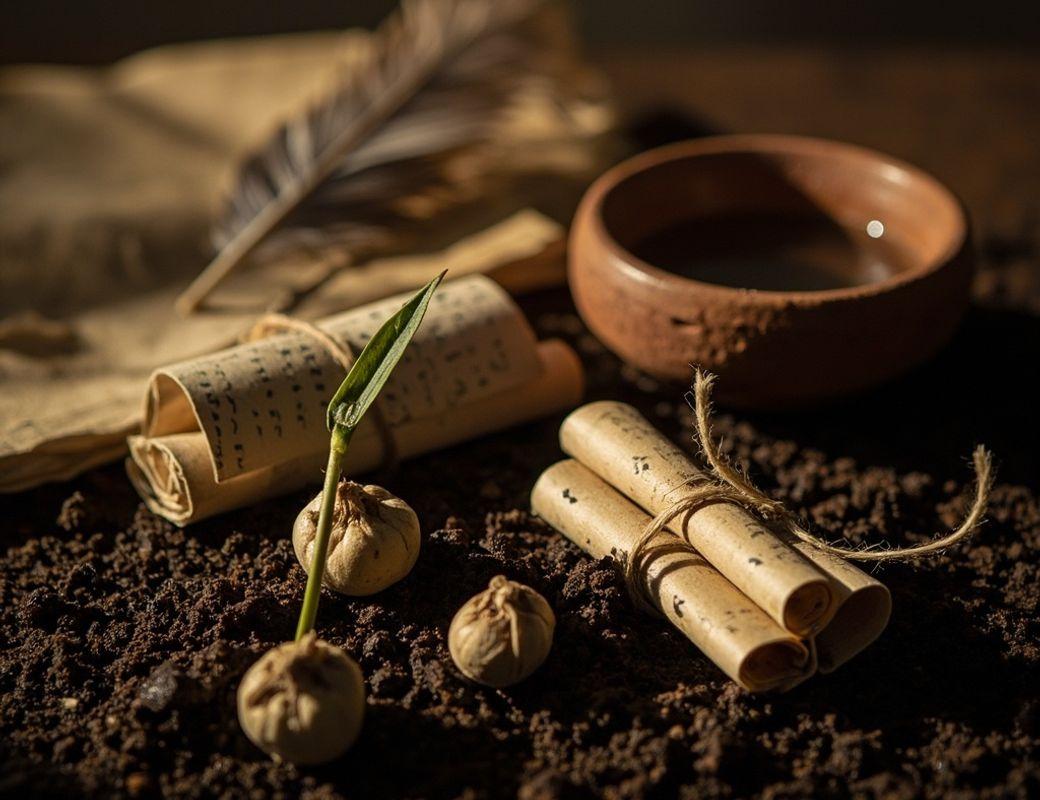
You'll need: 20–30 minutes, three small pieces of paper, a pen, three seeds (real ones work—like sunflower, pumpkin, or pea seeds, or simply three small stones or beads to serve as symbolic seeds), a candle, a small pot with soil or simply a place where you can "plant" your seeds.
Step 1: Attuning to Balance.
Light the candle. Sit comfortably and close your eyes. Take several deep breaths. Imagine that within you, as in nature, light and darkness are now meeting. Don't struggle with them; let them be. Feel this moment of stillness before the beginning.
Step 2: Three Spheres of Life.
Take three pieces of paper. On each, write one sphere of life you want to renew this year. For example:
-
Paper 1: "My body and health."
-
Paper 2: "My creativity and work."
-
Paper 3: "My relationships."
You don't have to choose these three. Choose your own. Just no more than three—the equinox teaches us not to scatter ourselves, but to choose what matters most.
Step 3: A Seed for Each Sphere.
Take the first seed (or stone). Place it on the first paper. Close your eyes and ask yourself:
"What one quality, one state, one skill do I want to cultivate in this sphere?"
Don't rush. The answer may not come immediately. When it comes—write it right on the paper, next to the seed. For example:
-
For the body: "Lightness" or "Endurance."
-
For creativity: "Courage to show up."
-
For relationships: "Honesty with myself."
Repeat for each of the three seeds.
Step 4: Planting.
Now take the pot with soil (or simply go outside to your yard, if possible). As you bury each seed (or simply bury the paper with your intention, if you're using stones), speak aloud or in a whisper:
"I plant this seed. I trust in time. I trust in myself. May [name the quality] sprout in my life in due time."
If you're using real seeds and a pot, place it somewhere visible. Care for it through spring as a living reminder of your intentions.
Step 5: Completion.
Thank yourself. Sit in silence for a few more minutes. Extinguish the candle.
🕯️Simple Rituals for the Equinox
If you don't have time for the full practice, here are a few small actions that will help you welcome spring mindfully:
-
Greet the dawn. On March 20, rise early and face the sun toward the east. Even five minutes by the window with a cup of tea, with the thought "I welcome the new cycle"—that's already a ritual.
-
Do some cleaning. Not a deep clean, just symbolic. Clear out one shelf, one drawer, one space that's been asking for order. Throw out what has served its purpose.
-
Write a gratitude list to winter. Yes, even if winter was difficult. What did it teach you? What are you taking with you into spring? Then burn this list (or simply tear it up)—as a farewell to the dark season.
-
Treat yourself to something round. Pancakes, fritters, cookies—the shape of the sun. You don't have to bake them yourself; you can simply buy them. The key is to eat mindfully, with the feeling: "I receive the light."
-
Make a wish. But not "I want a million dollars"—a state of being. "I want to feel safe." "I want to wake up with energy." Write it down and hide it in a book or under your pillow for one night.
🌼Balance Isn't Forever—And That's Beautiful
You know what's most important about the equinox? It lasts only a moment. Perfect balance between light and darkness—merely a point of transition. After it, light begins to increase, day to overcome night.
So it is in our lives. We can't live in eternal balance. We move into shadow, then emerge into light. We pause, then we move. We sow, then we reap.
But the very fact that this point exists—this moment of pure balance, of choice, of stillness before the beginning—gives us anchor.
On March 20, 2026, wherever you are, pause for a minute. Feel it: day and night are equal. Light and darkness meet. And in this meeting, a new spring is born—both in nature and in you.
With faith in your inner garden, the MoonX team.
P.S. If you decide to do the "Three Seeds" practice—share in the comments with one word: what quality you've chosen to cultivate this season? May our intentions support one another.
Responses (16)

Show more