Mid-Autumn Under the Same Moon
How the Harvest Full Moon Became One of Asia’s Most Beloved Celebrations
Article · 19 min read · ·
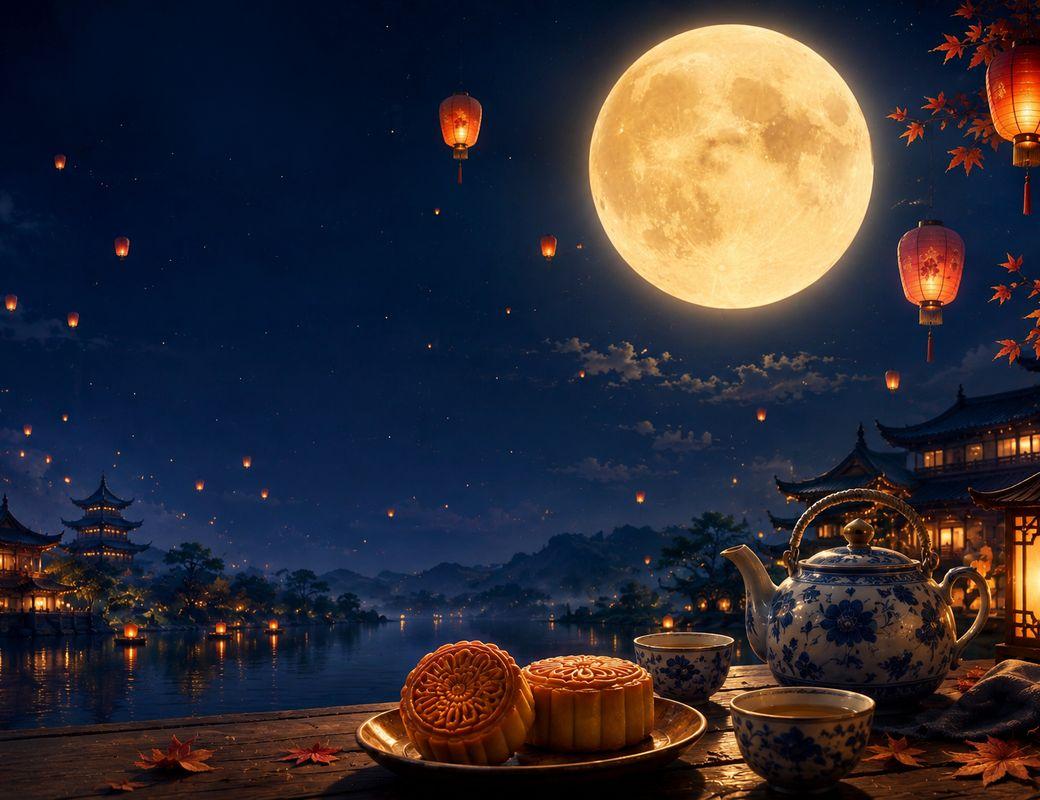
Every year, on the fifteenth day of the eighth lunar month, the harvest moon rises full and luminous across much of Asia. In China it is Zhōngqiū Jié. In Korea it is Chuseok. In Japan it is Tsukimi. In Vietnam it is Tết Trung Thu. Different names, different histories, different traditions, yet all share the same instinct: a moon this bright deserves to be celebrated.
For thousands of years, communities have gathered beneath this autumn moon to give thanks for the harvest, honor their ancestors, reunite with family, and celebrate the changing of the seasons. Although each culture shaped the festival according to its own beliefs and customs, the full moon became a shared symbol of abundance, harmony, and renewal across much of East and Southeast Asia.
In 2026, the Mid-Autumn Festival falls on September 25. This article explores how the holiday has evolved across the region, not to flatten these rich traditions into a single “Asian moon festival,” but to celebrate the remarkable diversity that grew from a shared lunisolar calendar. From China’s legendary moon goddess to Korea’s ancestral rites, Japan’s quiet moon viewing, and Vietnam’s joyful lantern parades, each tradition reflects a unique cultural response to the same brilliant harvest moon.
China’s Zhōngqiū Jié
Where Harvest, Reunion, and Moonlight Meet
The oldest layers of China’s Mid-Autumn Festival are rooted not in romance or legend, but in the agricultural year. Long before mooncakes appeared on family tables, the autumn moon was associated with the harvest and the rhythms that governed planting, gathering, and survival. Ritual reverence for the moon can be traced deep into Chinese antiquity, and by the Zhou Dynasty, ceremonial offerings to the moon were part of the seasonal ritual calendar.
The name Zhōngqiū Jié (中秋节) means “Mid-Autumn Festival,” referring to its place in the traditional lunar calendar. Celebrated on the fifteenth day of the eighth lunar month, the festival arrives when the moon is traditionally understood to be at its fullest and brightest. In Chinese culture, the roundness of the full moon came to symbolize completeness, harmony, abundance, and reunion. Its shape mirrored the ideal of the family gathered whole again beneath the autumn sky.
Over centuries, those agricultural and celestial traditions became intertwined with one of China’s most enduring legends: the story of Chang’e, the goddess of the moon.
Her tale exists in many versions, but the familiar story begins with the great archer Hou Yi, who saves the earth after ten suns appear in the sky and scorch the land. After shooting down nine of them, he receives an elixir of immortality. Through circumstances that vary from one telling to another, Chang’e drinks the elixir and rises into the heavens, eventually making her home upon the moon.
There she is joined in Chinese lunar folklore by the Jade Rabbit, eternally working with a mortar and pestle, and Wu Gang, a woodcutter condemned to chop down a magical cassia tree that heals itself each time his axe strikes it. The moon becomes a strange little world of immortals and unfinished tasks, populated by figures separated from ordinary human life below.
Yet during Mid-Autumn, it is Chang’e’s separation that gives the celebration some of its emotional power. Families gather beneath the moon while the goddess herself remains forever apart from those she loved. Reunion dinners, shared food, and journeys home become a quiet answer to that loneliness. The full moon may represent wholeness, but the mythology surrounding it also remembers what it means to be separated from home.
No food embodies that idea more completely than the mooncake.
Round and richly filled, mooncakes are traditionally divided among family members so that everyone receives a piece of the same whole. Classic versions may contain lotus seed paste, red bean paste, nuts, or salted duck egg yolks, whose golden centers resemble the full moon itself. Modern bakers have expanded the tradition considerably, creating mooncakes filled with custard, fruit, chocolate, coffee, ice cream, and countless regional variations. The flavors change, but the symbolism remains: something round is shared so that the family, too, may remain whole.
Mooncakes have also acquired one of the festival’s most irresistible legends. According to a popular story, rebels plotting against the Mongol-led Yuan Dynasty in the fourteenth century concealed messages inside mooncakes, allowing plans for an uprising to circulate unnoticed. Historians generally treat the tale as folklore rather than established fact, but its survival says something about the cultural power mooncakes eventually acquired. They became more than food. They could carry memory, symbolism, and even stories of resistance.
Many other traditions surround the festival. Lanterns illuminate streets, parks, temples, and homes, sometimes taking the forms of rabbits, fish, flowers, dragons, or elaborate modern designs. Families gather for large meals and spend time outdoors admiring the moon. Osmanthus, whose tiny golden blossoms perfume the air around the festival season, appears in sweets, teas, and wine, linking the celebration once again to the natural rhythms of autumn.
Not every beloved Mid-Autumn custom is ancient, however.
In Taiwan, one of the most recognizable modern traditions is the Mid-Autumn barbecue. The custom became enormously popular during the 1980s, when food advertising and changing social habits helped turn outdoor grilling into a fixture of the holiday. Today, families and friends gather around grills beneath the full moon as enthusiastically as earlier generations gathered around ceremonial offerings.
It is a useful reminder that traditions are rarely frozen in time. Some are thousands of years old. Others are only a few decades old. Given enough repetition, affection, and shared memory, both can become part of the same living festival.
China gave the Mid-Autumn moon some of its most famous stories, but those stories represent only one way of understanding the night. Across the sea in Korea, the same point in the lunar calendar carries a different emphasis. There, the harvest moon turns attention away from lunar immortals and toward something much closer to home: the ancestors.
Korea’s Chuseok
Harvest, Ancestors, and Dancing Beneath the Full Moon
If China’s Mid-Autumn Festival looks toward the moon as a symbol of reunion, Korea’s Chuseok (추석) turns much of that same seasonal gratitude toward the ancestors.
Celebrated on the fifteenth day of the eighth month of the traditional lunar calendar, Chuseok is one of Korea’s most important holidays. The name is often translated as “autumn eve” or “autumn evening,” while the older name Hangawi refers to the great middle of autumn. Like other harvest celebrations across the region, its precise beginnings are difficult to pin down. Agricultural rites, seasonal thanksgiving, ancestor veneration, and much older folk traditions gradually converged into the holiday celebrated today.
In modern South Korea, Chuseok is traditionally observed over a three-day public holiday, and its arrival produces one of the largest annual movements of people across the country. Trains fill, highways become crowded, and families leave major cities to return to their hometowns. The journey itself has become part of the ritual. Chuseok is not simply a day to celebrate the harvest. It is a time to return to the people, places, and ancestors from whom the family came.
At the heart of that return is charye, an ancestral memorial rite traditionally performed in the family home. Foods prepared from the new harvest are arranged as offerings, and family members pay respect to those who came before them. Rice, fruit, meat, fish, rice cakes, and other dishes may appear on the table, although customs differ considerably between regions and families.
The ceremony reflects an understanding of family that extends beyond the living. The dead are remembered not as distant figures confined to the past, but as part of a continuing lineage. The harvest becomes something shared across generations, an opportunity to express gratitude not only for what the earth has provided, but for the lives that made the present family possible.
That remembrance often extends beyond the home.
During Chuseok, many families traditionally practice seongmyo, visiting ancestral graves to pay their respects. Gravesites may be cleaned and tended through a practice known as beolcho, in which weeds and overgrowth are removed from the burial mound and surrounding area. These acts of care turn remembrance into something physical. Honoring the dead means showing up, tending the place where they rest, and refusing to allow memory to become overgrown.
Food, of course, is equally central to Chuseok, and few foods are more closely associated with the holiday than songpyeon.
These small rice cakes are made from rice flour and filled with ingredients such as sesame seeds, beans, chestnuts, or sweetened pastes. Unlike the perfectly round mooncakes associated with China’s Mid-Autumn Festival, songpyeon are traditionally shaped into small half-moons. They are steamed over fresh pine needles, which give the cakes their distinctive fragrance and lend them their name, often interpreted in connection with pine.
The half-moon shape carries an interesting symbolism of its own. A full moon has already reached completion and must begin to wane. A waxing half-moon, however, still has somewhere to go. It can therefore suggest growth, possibility, and a future not yet fulfilled.
Making songpyeon is traditionally a communal activity, with family members gathering to shape the small cakes by hand. Folk belief also attached predictions to the results. A person who made especially beautiful songpyeon might be promised a beautiful child or a desirable marriage. Like many domestic superstitions, the belief offers a small glimpse into the expectations once placed upon women through seemingly ordinary household traditions.
But Chuseok does not belong entirely indoors, nor entirely to solemn remembrance.
Under the full autumn moon, another tradition transforms the holiday into movement and song.
Ganggangsullae (강강술래) is a traditional circle dance historically performed by women, who join hands beneath the moon and move together in a great ring while singing a repeating refrain. The dance can begin slowly before increasing in speed, with the circle expanding, contracting, twisting, and changing formation as the songs continue.
Its origins remain uncertain, and that uncertainty is part of what makes the tradition so fascinating.
One popular story connects Ganggangsullae to the Japanese invasions of Korea in the late sixteenth century and the celebrated naval commander Yi Sun-sin. According to tradition, women dressed in military clothing and circled fires on hillsides, creating the illusion that Korean forces were far larger than they actually were. The spectacle supposedly deceived or intimidated Japanese troops.
It is a compelling story, but historians have also proposed much older origins. The circular dance may descend from agricultural or fertility rites performed beneath the full moon, with the military explanation attached centuries later. The circle itself, the female participants, the harvest season, and the lunar setting all point toward ritual traditions that may predate the famous wartime legend.
Whatever its beginnings, Ganggangsullae became one of Korea’s most recognizable folk traditions. In 2009, it was inscribed on UNESCO’s Representative List of the Intangible Cultural Heritage of Humanity, helping preserve a practice in which music, movement, women’s communal culture, and the autumn moon remain intertwined.
Chuseok therefore holds several worlds together at once. It celebrates abundance while remembering those who did not live to see the present harvest. Families return home, graves are tended, food is prepared and shared, and women still dance beneath the same full moon that illuminated generations before them.
Yet travel farther east, and the mood changes again. In Japan, the autumn moon does not demand a great family migration or elaborate ancestral rites. Sometimes the appropriate response to something beautiful is much simpler.
You sit down, grow quiet, and look.
Japan’s Tsukimi
An Evening Devoted to the Moon
After the homecomings and ancestral rites of Chuseok, Japan offers a quieter response to the autumn moon.
Tsukimi (月見) means simply “moon viewing,” a name that captures the heart of the tradition. There is no great family migration or single myth at its center. Instead, people gather where the moon can be seen, arrange seasonal offerings, and take time to admire it.
Although connected to the agricultural calendar, the refined moon-viewing customs associated with Tsukimi flourished among Japan’s aristocracy during the Heian period, from the late eighth through the twelfth centuries. Influenced in part by traditions transmitted from China, members of the imperial court gathered beneath the autumn moon to compose poetry, listen to music, drink sake, and admire its reflection on ponds and streams.
Sometimes they watched the moon indirectly, reflected in water or even in a cup of sake. Moon viewing became an occasion for contemplating beauty, the changing seasons, and the fleeting nature of experience, themes that would become deeply rooted in Japanese aesthetics.
Over time, these aristocratic customs intertwined with agricultural traditions. The full moon of the fifteenth night, known as Jūgoya, became associated with gratitude for the harvest and hopes for continued abundance.
Traditional displays reflect those agricultural roots. Susuki, Japanese pampas grass, is arranged as a symbol of ripened rice and was also traditionally associated with protection from harmful spirits. Offerings may include taro, chestnuts, edamame, fruit, sake, and especially tsukimi dango, small white rice dumplings whose rounded shape evokes the moon. Fifteen are often arranged in a pyramid in honor of the fifteenth lunar night, although customs vary by region.
Then there is the rabbit.
According to Japanese folklore, the markings on the moon resemble a rabbit working with a mortar and pestle. Similar imagery appears elsewhere in East Asia, but the rabbit’s task changes with the culture telling the story. In China, the Jade Rabbit is commonly associated with preparing the elixir of immortality. In Japan, the tsuki no usagi, or rabbit in the moon, pounds rice to make mochi.
A Buddhist tale gives the lunar rabbit another layer of meaning. A monkey, fox, and rabbit encounter a hungry old man and search for food to give him. Unable to find anything, the rabbit offers itself instead. The old man reveals himself as a divine being and, moved by the rabbit’s selflessness, places its image upon the moon so its sacrifice will always be remembered. Variations of this ancient story appear throughout Buddhist literature, connecting Japan’s lunar rabbit to a much wider tradition of compassion and self-sacrifice.
Tsukimi today is not a major national homecoming holiday in the way Chuseok is in Korea. It survives through smaller gatherings, temple and garden events, seasonal decorations, sweets, and foods inspired by the full moon. Restaurants even offer tsukimi dishes topped with an egg, its golden yolk standing in for the moon, while seasonal moon-viewing burgers have become a familiar part of autumn advertising.
It may seem a long way from Heian nobles composing poetry beside a moonlit pond, but the impulse remains recognizable. Autumn arrives, the moon becomes full, and people find a way to mark the moment.
Farther south, in Vietnam, that same lunar night takes on an entirely different character. Quiet contemplation gives way to glowing lanterns, beating drums, dancing lions, and streets filled with children.
Under the same autumn moon, the night becomes a celebration of childhood.
Vietnam’s Tết Trung Thu
Lanterns, Lions, and a Festival for Children
Farther south, the Mid-Autumn moon shines over a celebration filled with lantern light, drums, dancing lions, and children spilling into the streets.
Vietnam’s Tết Trung Thu shares the agricultural roots found in other Mid-Autumn traditions across the region. Historically connected with the harvest and gratitude for abundance, the celebration gradually developed a distinctly child-centered character, earning its familiar reputation as Vietnam’s Children’s Festival.
One explanation connects this transformation to the agricultural calendar. During the busiest months of planting and harvest, parents spent long days working in the fields. Mid-Autumn offered an opportunity to turn their attention back toward their children once the most demanding work had passed. Whatever the precise origins of the custom, children now stand unmistakably at the heart of the celebration.
As evening falls, lanterns appear everywhere.
Children carry brightly colored paper lanterns through streets and neighborhoods in processions known as rước đèn. They may be shaped like stars, carp, butterflies, rabbits, or dragons, with the five-pointed star lantern becoming one of the festival’s most recognizable images. Traditionally illuminated by candles, they transform the night into a moving field of color and light.
Drums announce múa lân, Vietnam’s lion dance, as costumed performers weave through streets, courtyards, schools, and community celebrations. Associated with good fortune and prosperity, the energetic dance gives Tết Trung Thu a sense of exuberance quite different from Japan’s contemplative moon viewing.
Food returns us to a familiar Mid-Autumn symbol: the mooncake.
Vietnamese bánh trung thu traditionally appear in two forms. Bánh nướng are baked mooncakes with golden crusts, while bánh dẻo have soft, pale exteriors made from glutinous rice flour. Fillings range from lotus seed and mung bean to salted egg yolk, nuts, seeds, and savory mixtures. Modern varieties have expanded considerably, and elaborate boxes of mooncakes are commonly exchanged among relatives, friends, colleagues, and business associates.
Yet Vietnam has its own figure waiting in the moon’s shadows: Chú Cuội.
In Vietnamese folklore, Cuội is a woodcutter associated with a miraculous banyan tree possessing extraordinary healing powers. The tale has several versions, but in the best-known, the magical tree tears itself from the earth and begins rising into the sky. Cuội grabs its roots in an attempt to pull it back down and is carried upward with it. Tree and woodcutter eventually come to rest upon the moon.
During Tết Trung Thu, children are encouraged to search the full moon for Cuội sitting beneath his banyan tree. Moon gazing becomes something playful, a celestial treasure hunt unfolding above the lanterns and rooftops.
Cuội is often joined in modern celebrations by Chị Hằng, Vietnam’s moon maiden, who is related to the broader Chang’e tradition. Together they appear in children’s songs, performances, and festival stories, blending shared lunar mythology with distinctly Vietnamese folklore.
The celebration culminates in phá cỗ, when children gather around trays of fruit, sweets, mooncakes, and other treats before sharing the feast. Fruit may be carved or arranged into animals and decorative shapes, turning the harvest itself into part of the spectacle.
Tết Trung Thu still carries echoes of an agricultural festival, but Vietnam transformed those ancient rhythms into something particularly joyful. Here, the harvest moon becomes a lantern carried through a darkened street, a drumbeat announcing a dancing lion, a mooncake shared with family, and a legendary woodcutter waiting beneath his tree in the sky.
Across Asia, we have now moved from reunion tables to ancestral graves, from moonlit poetry to lantern processions. Beyond China, Korea, Japan, and Vietnam, however, the autumn moon travels farther still, carried by migration, diaspora, and centuries of cultural exchange.
Beyond the Big Four
The Mid-Autumn Moon Across Borders
The traditions surrounding the Mid-Autumn moon have never remained neatly contained within national borders. Centuries of migration, trade, and cultural exchange carried them into new communities, where familiar customs took on local character.
In Hong Kong, the festival comes alive after dark. Lantern displays illuminate parks and neighborhoods as families gather outdoors beneath the moon. Among its most spectacular traditions is the Tai Hang Fire Dragon Dance, in which a massive dragon studded with thousands of burning incense sticks winds through the streets amid drums, smoke, and crowds.
The tradition dates to the nineteenth century, when residents of the village of Tai Hang reportedly performed a fire dragon dance in response to a series of disasters and an outbreak of disease. The ritual became associated with driving away misfortune, eventually growing into one of Hong Kong’s most distinctive Mid-Autumn traditions.
Farther south, Singapore and Malaysia reflect generations of Chinese migration alongside the cultures that developed around those communities. Mooncakes are exchanged among family, friends, and colleagues, while lanterns illuminate homes, temples, neighborhoods, and public celebrations.
In Singapore, Mid-Autumn lantern displays have become especially elaborate, with places such as Chinatown and Gardens by the Bay transformed by illuminated animals, flowers, mythological figures, and scenes drawn from traditional stories. Older customs and contemporary spectacle exist comfortably beside one another, much as they do throughout the festival itself.
But perhaps the most remarkable journey of the Mid-Autumn Festival has been beyond Asia altogether.
Chinese and Vietnamese communities carried their traditions with them across oceans, and today Mid-Autumn celebrations can be found throughout North America, Europe, Australia, and elsewhere. Chinatowns, temples, cultural organizations, schools, and community centers host lantern festivals, lion dances, performances, mooncake tastings, and activities for children.
In diaspora communities, the festival can take on another layer of meaning. A mooncake becomes more than a seasonal food, and a lantern becomes more than a decoration. These traditions offer a way to preserve connections between generations, introduce children to stories their grandparents knew, and maintain a relationship with places that may now exist thousands of miles away.
There is something particularly fitting about the moon becoming part of that connection. Borders can separate families. Migration can place oceans between generations. Languages and customs can change. Yet the moon visible from a new home is the same moon that rises over the one left behind.
Across these celebrations, the details may differ, but the impulse remains familiar: gather together, share food, remember where you came from, and notice that another season has turned.
After thousands of years of changing kingdoms, shifting borders, migration, and reinvention, the Mid-Autumn moon is still rising.
And people are still looking up.
Under the Same Moon
The Mid-Autumn traditions of Asia resist being folded into a single story, and that is precisely what makes them so compelling.
In China, the full moon became a symbol of reunion, surrounded by stories of Chang’e, the Jade Rabbit, and those separated from the people they love. In Korea, Chuseok turns toward ancestors, harvest, and the generations that came before. Japan’s Tsukimi asks for something quieter: a place to sit, an offering of seasonal food, and enough stillness to notice the moon. In Vietnam, the night belongs largely to children, carried through the streets in lantern light, drumbeats, and dancing lions.
None of these traditions is simply another version of the others. Each emerged from its own history, beliefs, landscapes, and communities. Yet certain ideas return again and again: gratitude for abundance, the importance of family, remembrance of those who came before, and awareness that the seasons continue to turn whether we notice them or not.
Perhaps that is why the full moon became such a powerful symbol for these celebrations. It appears complete, a bright circle without beginning or end. For families separated by distance, it offers a shared point in the sky. For agricultural communities, it marks another passage through the year. For poets, storytellers, and children, its shadows become rabbits, goddesses, woodcutters, and entire worlds.
Modern life has changed the way these festivals are celebrated. Ancient offerings now exist beside elaborate lantern installations, mooncakes arrive in designer boxes, restaurants sell moon-themed seasonal menus, and families separated by continents may gather through screens rather than around the same table. The traditions evolve because the people carrying them forward do too.
But when the autumn moon rises, an ancient gesture remains.
People stop.
They gather with family, honor their ancestors, carry lanterns through crowded streets, share something sweet, or simply look toward the sky.
Different countries. Different languages. Different stories.
Under the same moon.