Ivan Kupala:
a night of fire, water, and returning to yourself
Article · 6 min read · ·
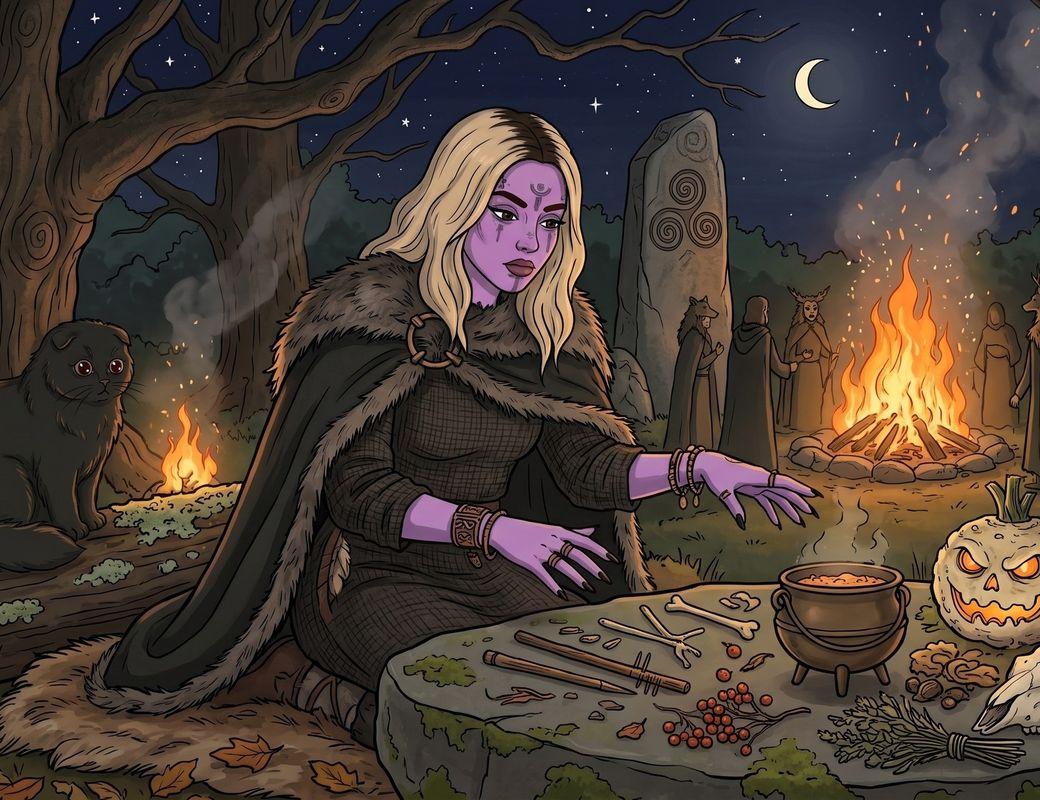
On the night of July 6th to 7th, when summer has reached its full strength, Slavs celebrated one of the most mysterious and beautiful holidays of the year — Ivan Kupala. This night, according to belief, belonged not to people but to the elements. Fire and water, two opposing forces, came together to purify, heal, and grant new hope.
With the arrival of Christianity, the holiday became linked to the Nativity of John the Baptist (hence the name "Ivan"), but the pagan roots remained alive: fortune-telling, wreaths, bonfires, searching for the blooming fern — all of this came from the depths of centuries.
Ivan Kupala is not just "a day on the grass" or an excuse for swimming. It's a portal, when the boundaries between worlds grow thin, and nature reaches its most powerful, most flourishing state. This is a time when you can burn away the old, cleanse yourself with water, and enter the rest of summer renewed.
🔥Fire and Water — Twin Purifications
The main magic of Kupala Night lies in the union of opposites: bonfire and river.
The bonfire symbolized the sun, purification from everything that had outlived its time. On Kupala Night, huge bonfires were lit on hills, and people jumped over them in pairs and alone. It was believed that leaping through the flames cleanses soul and body, and if you jump with your beloved — it seals the union forever. Those who didn't dare to jump could simply step over the fire or pass their hands through it, taking the warmth.
Water on this night also gained special power. People bathed in rivers and lakes until dawn, believing that water washes away illness, curses, and weariness. Even if the water was cold — this was considered beneficial (both hardening the body and purifying the soul). Young women washed their faces with morning dew to preserve their beauty throughout the year.
Today, you don't have to jump over a real bonfire or dive into a cold river. But you can honor this night symbolically: light a candle, take a shower with the intention of cleansing, pour out a glass of water "as a sign of letting go."
🌿 Herbs, Wreaths, and Finding Yourself
Kupala Night was considered a time when herbs gained their greatest power. They were gathered before dawn, dried, and kept as talismans throughout the year. Especially revered were St. John's wort, thistle, wormwood, and fern.
Fern — that's a story unto itself. It was believed that only on Kupala Night does it bloom with a fiery flower, and whoever finds this flower gains the ability to understand the language of beasts and birds, see hidden treasures, and open any lock. Of course, this is legend, but it beautifully illustrates the main idea: on this night, anything is possible.
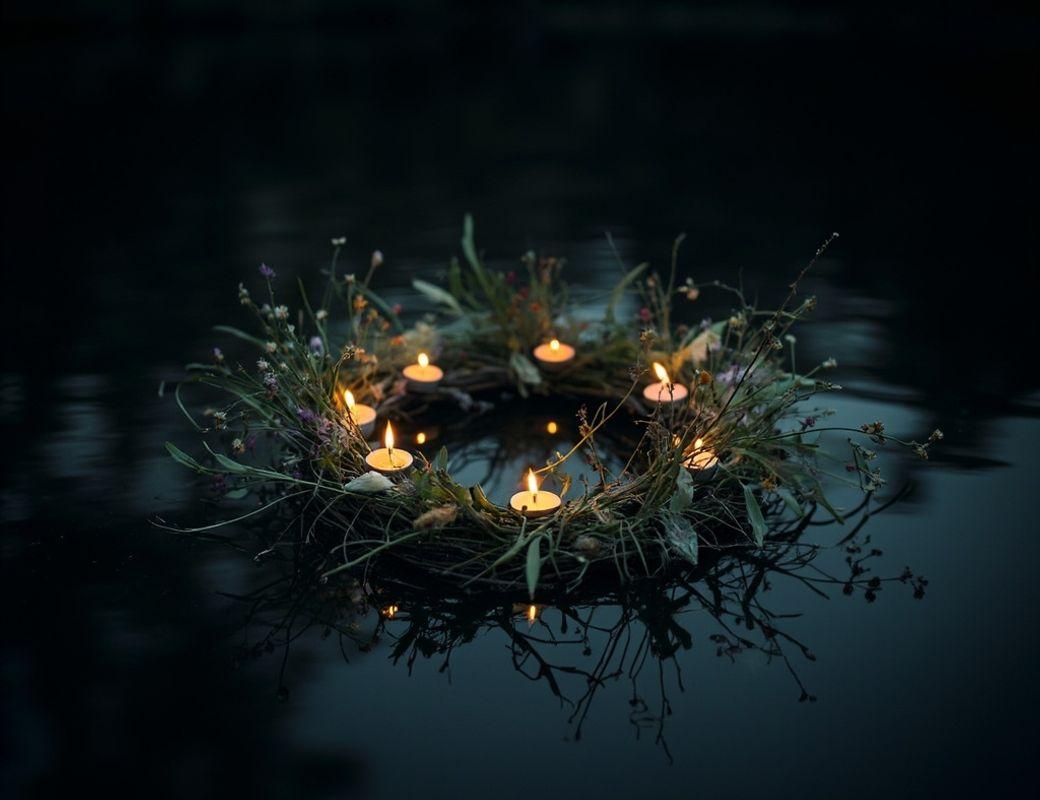
Wreaths — another important symbol. Young women wove wreaths from wildflowers and herbs, weaving candles into them, and set them floating on the water. If the wreath floated far — the girl would marry that year. If it sank — misfortune. If it washed ashore — no marriage, but the year would pass peacefully.
Today we can weave a wreath not for fortune-telling, but as a symbol of our wholeness, beauty, and connection with nature. Or simply gather a bouquet of wildflowers — as a reminder that we too are part of this blooming world.
🕯️What We Can Do Today
You don't need to go to the countryside and search for ferns. Here are some simple yet profound practices that will help you honor Kupala Night in the city.
1. Fire of Purification
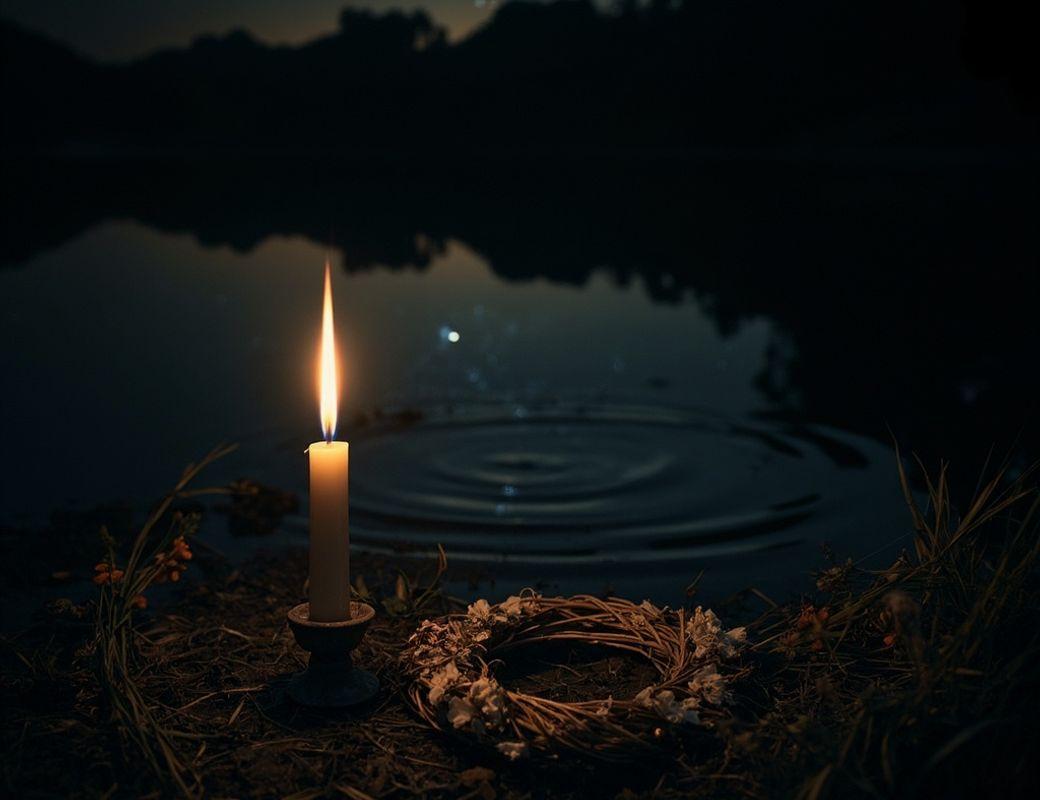
Light a candle. Write on small pieces of paper what you want to release: old grievances, fears, habits, imposed "shoulds." Burn them over the flame (carefully, in a fireproof bowl). Say: "What I no longer need burns away. I release this with gratitude."
2. Water of Renewal
Take a shower or bath. Before doing so, say to the water (aloud or mentally): "Water, wash away my weariness, others' thoughts, heaviness. Make me light as a drop and pure as a spring." Feel how the water carries away everything unnecessary.
3. A Wreath for Yourself
Weave a wreath from wildflowers (daisies, cornflowers, clover) or simply from greenery. Place it on your head. Look at yourself in the mirror. Say: "I am part of nature. I bloom. I am beautiful not for someone else, but for myself." If you can't weave a real wreath — you can make one from paper, from ribbons, or even just draw one.
4. Meeting the Dawn
Kupala Night ends with dawn. Greet it. Step out onto the balcony or simply open the window. Watch as the sun rises. Feel that you have lived through this night — and emerged renewed.
5. Gathering Herbs
Buy several bundles of dried herbs at the store or gather them yourself (chamomile, St. John's wort, mint). Tell them: "You are my protection for the year." Place them in a cloth pouch and hang it above the door or put it under your pillow.
📝 Questions for Nighttime Reflection
Kupala Night is a time to make wishes, but not like New Year's — in the language of images. Sit by the window (or by a candle) in silence and ask yourself these questions.
-
What in my life is "blooming" now? What do I want to let bloom further?
-
What is it time to "burn away"? What fears or habits am I ready to throw into the fire?
-
What do I want to "wash away" from myself — others' expectations, imposed burdens, exhaustion?
-
What "seed" do I want to plant for the second half of summer?
The answers may not come immediately. But the silence itself and these questions — are already part of the ritual.
🌿 In Closing
Ivan Kupala is a night when nature reminds us: we are not separate mechanisms operating on a schedule. We are part of a living, breathing world. In this night there is room both for purification by fire and renewal by water, and for the hope that even in the deepest darkness you can find your blooming fern — your fortune, your miracle.
Meet this night as you feel called to. With a bonfire or a single candle, with a wreath on your head or without, by the river or by an open window. The main thing — allow yourself for even a moment to feel: the world around you is alive. And I am part of it.
P.S. If you decide to perform any of these rituals — share in the comments which one you chose. Let our small fires come together into one great circle. 🔥