Irish Traditions: Imbolc
The quietest turning point of the year in Irish ritual.
Article · 7 min read · ·
Imbolc
Fire, fragility, and the earliest turning of the Irish year
Imbolc is one of the oldest seasonal observances in the Irish calendar, traditionally marked around February 1st, at a point when winter had not yet loosened its grip but was no longer absolute. Unlike later festivals associated with abundance or harvest, Imbolc occupies a precarious position in the year: a moment when survival still depended on restraint, preparation, and careful attention to the land.
The name Imbolc is widely understood by scholars to be connected to the early lactation of ewes, reflecting the agricultural realities of the season rather than symbolic rebirth or celebration. This linguistic connection underscores a central truth of Irish seasonal observance: it was shaped first by livestock, weather, and food security, not abstract spirituality (National Museum of Ireland).
Imbolc did not mark the arrival of spring.
It marked the possibility that survival might continue.
Imbolc in the early Irish year
In early Irish society, the year was not divided into neat meteorological seasons, but into functional periods tied to land use and survival. Imbolc sat between the deep scarcity of midwinter and the uncertainty of early growth. Food stores were often low. Weather remained unpredictable. A single late frost could undo fragile progress.
For this reason, Imbolc was not approached with confidence. Folkloric material preserved in the Dúchas Schools’ Collection emphasizes that this was a time of watchfulness, weather observation, and cautious preparation rather than outward festivity. Signs in the natural world were noted closely, not to guarantee outcomes, but to inform readiness.
Irish tradition did not ask people to believe that spring would come.
It asked them to prepare as if it might not.
Imbolc as a fire festival
Imbolc is traditionally identified as one of the four Celtic fire festivals, alongside Beltane, Lughnasadh, and Samhain. These festivals marked critical thresholds in the year — points of transition rather than arrival — and fire played a central role in acknowledging those shifts (Newgrange).
https://www.newgrange.com/imbolc.htm
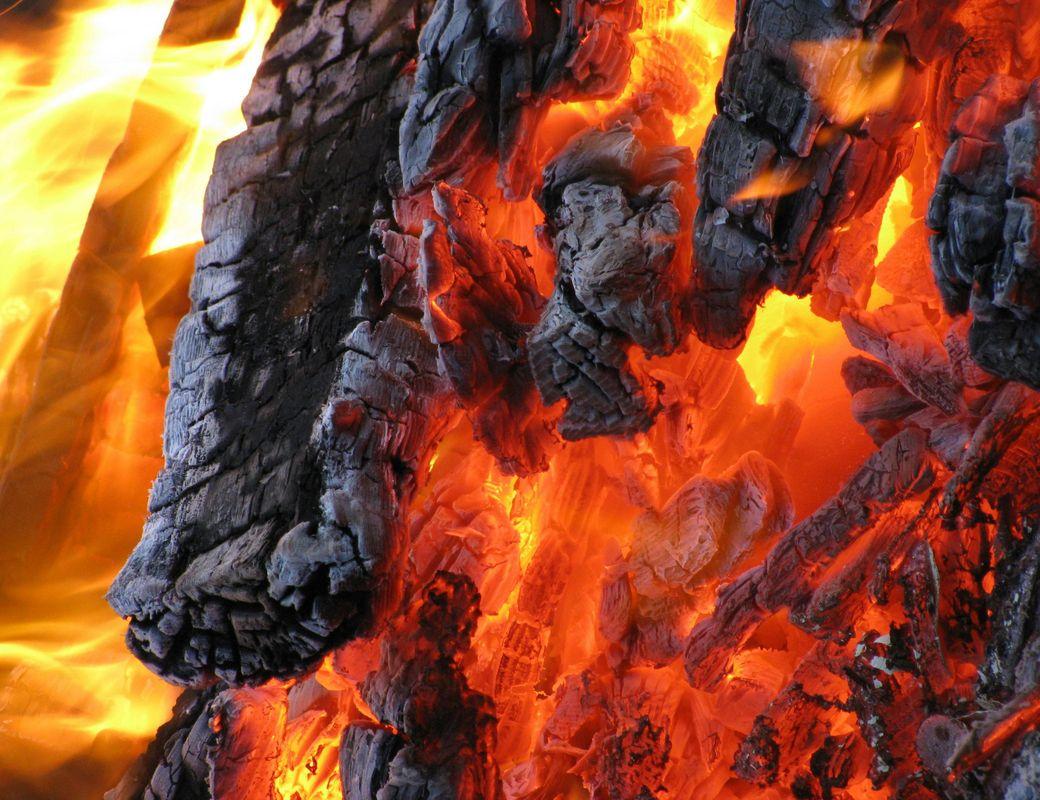
At Imbolc, fire did not symbolize triumph or abundance. It represented warmth maintained against uncertainty. Hearth fires, candles, and controlled flame were associated with protection, continuity, and the careful preservation of life through winter’s end.
This association is deeply tied to Brigid, a figure whose presence spans pre-Christian Irish tradition and later Christian veneration as St. Brigid of Kildare. Across both contexts, Brigid is linked to:
-
the hearth and domestic fire
-
the protection of livestock
-
healing and care
-
continuity through hardship
Rather than a figure of sudden renewal, Brigid at Imbolc embodies guardianship — the act of keeping what exists alive long enough to grow. Fire here is not expansive. It is contained, tended, and necessary.
Author's Note: If anyone is as intrigued as I am, in religion and tradition across multiple cultures, you'll notice a similarity between Brigid, Hera (Greek Goddess), and Juno (Roman Goddess). All three are linked to domesticity and livestock (i.e. cows).
I firmly believe that Juno and Hera were the same Goddess under different names. As often, in history, we see the adaptation of certain beings to different names in different cultures and traditions. St. Brigid is likely the Christian Irish name for Juno, post Hera.
Practice before symbolism
Historically, Imbolc was not marked by elaborate ceremony. It was embedded in ordinary work.
Activities associated with the season included:
-
checking and repairing tools
-
tending animals preparing to give birth
-
cleaning and maintaining the hearth
-
conserving remaining food and fuel
These acts were not symbolic performances. They were expressions of responsibility. In early Irish culture, care for household and land was inseparable from spiritual life. Preparation itself was devotion.
To tend the hearth was to tend the future.
Uncertainty as a feature, not a flaw
One of the most striking aspects of Imbolc in Irish tradition is its lack of certainty. Unlike later seasonal celebrations, Imbolc did not promise success. It acknowledged vulnerability.
Folklore repeatedly emphasizes that winter could still return with force. Storms, cold snaps, and loss of livestock were real possibilities well into the season. Imbolc therefore did not encourage bold action or expansion. It encouraged restraint, patience, and vigilance.
Hope existed but it was held carefully.
Imbolc in an Irish-Canadian context
For those living in Canada, Imbolc often arrives when winter remains severe. Snow is deep. Temperatures are low. The land may appear unchanged... Especially this year, when all of Canada is trapped in a Polar Vortex (It's minus a thousand in my province!!!)
This does not place Irish-Canadian observers out of alignment with Imbolc.
It places them squarely within its historical reality.
Irish tradition was shaped by long winters, scarcity, and uncertainty. To observe Imbolc in Canada is to honor the truth that beginnings often occur without visible evidence, and that care must precede confidence.
Imbolc asks not when spring will arrive, but what must be protected until it does.
Observing Imbolc today
(Historically informed, modern, and restrained)
The following practices are modern adaptations shaped by historical values rather than reconstruction.
1. Tending fire
Light a candle or tend a hearth with the understanding that fire represents continuity, not transformation. Let the flame be small, contained, and sufficient.
2. Preparing rather than planning
Attend to practical matters that support endurance: food, warmth, tools, rest. Imbolc was never about setting goals. It was about staying capable.
3. Watching the land
Notice subtle shifts — light, weather, animal behavior — without interpretation. In Irish tradition, observation came before meaning.
4. Allowing fragility
If energy feels low or hope feels tentative, that is not a failure of the season. It is the season.
What Imbolc teaches
Imbolc does not celebrate renewal.
It teaches responsibility toward possibility.
It reminds us that what begins now is:
-
fragile
-
uncertain
-
dependent on care
And that tending matters more than belief.
Closing reflection
Imbolc is not the celebration of spring.
It is the decision to keep the fire burning
when spring is not yet assured.
It asks for patience over optimism.
Care over confidence.
Attention over declaration.
And in that quiet restraint,
the year begins, carefully, to turn.
Looking Ahead: Upcoming Dates in the Irish Seasonal Year
Thresholds, not deadlines
Irish tradition did not treat the year as a series of celebrations to be rushed toward. Instead, it marked key turning points; moments when land use, weather, and responsibility shifted. These dates were not always observed with ceremony, but they were noticed, and noticing mattered.
What follows is a brief overview of upcoming seasonal thresholds in the Irish year, offered as points of awareness rather than obligation.
In my own practise, I do not celebrate all thresholds; I only celebrate the ones that resonate with me. In my own practise, I am more drawn to Earth celebration.
Imbolc — February 1
The stirring beneath the ground.
Associated with early lactation of livestock, hearth fire, and careful preparation. A season of fragility and watchfulness rather than renewal.
Spring Equinox — mid-March
Not heavily emphasized in early Irish tradition, but still a natural balance point. Day and night stand briefly equal. More often observed through agricultural readiness than ritual.
Beltane — May 1
A major seasonal threshold marking the movement into summer. Traditionally associated with protection of livestock, boundary marking, and controlled fire. A time of outward movement — but still governed by caution.
Summer Solstice — mid-June
Like the equinox, not a dominant ritual focus in early Irish sources, but still acknowledged through the abundance of light. The height of growth, not its beginning.
Lughnasadh — August 1
The beginning of harvest. A recognition of effort, labor, and yield rather than completion. Associated with communal gathering and responsibility to share.
Autumn Equinox — mid-September
A balance point again, more practical than ceremonial. Attention turns toward storage, preservation, and preparation for scarcity.
Samhain — November 1
One of the most significant thresholds in the Irish year. Marks the beginning of winter and the closing of the agricultural cycle. Associated with endings, remembrance, and the thinning of boundaries.
Winter Solstice — mid-December
The longest night and the confirmation that light will return. Not an end to winter, but reassurance within it. Observed through stillness rather than celebration. In my own practise, I celebrate Yule.
Sources
-
Dúchas Schools’ Collection — Seasonal folklore: https://www.duchas.ie/en/cbes
-
Newgrange — Imbolc and the Fire Festivals: https://www.newgrange.com/imbolc.htm
-
Heritage Ireland — St. Brigid & Kildare: https://heritageireland.ie/visit/places-to-visit/kildare/st-brigids-cathedral/