Irish Traditions
Numbers and the connection they have to Irish Witchcraft
Article · 8 min read · ·
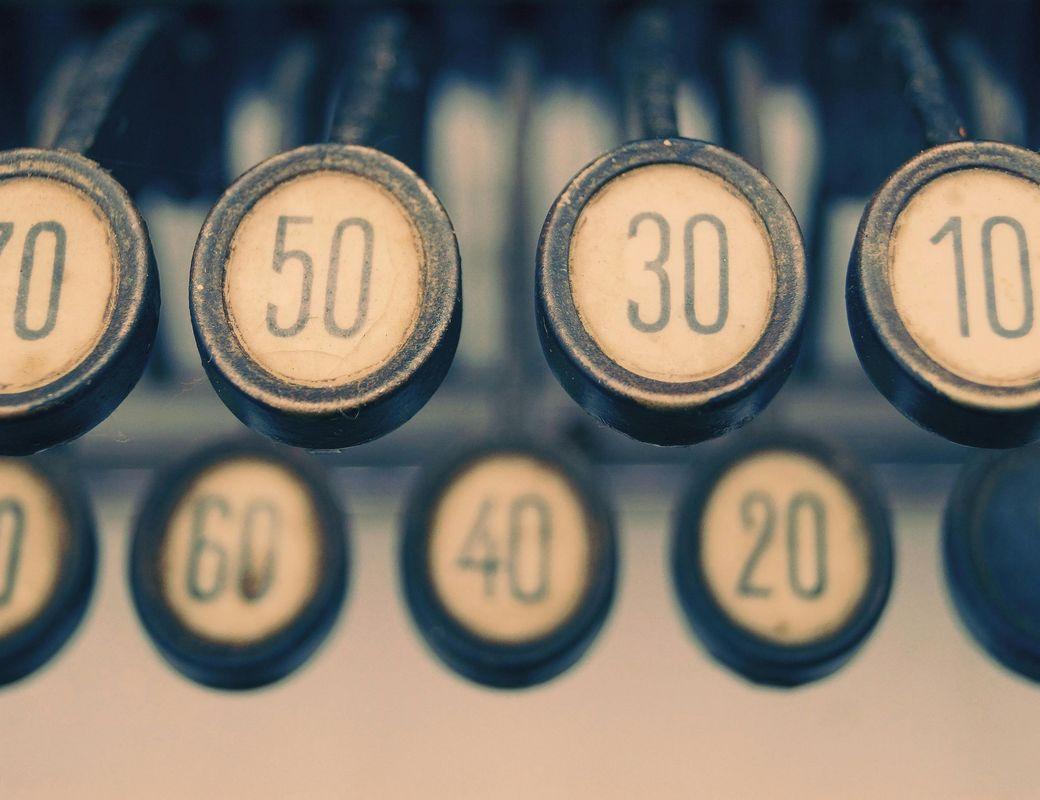
In Irish tradition, numbers were not spells, formulas, or guarantees.
They were ways of holding knowledge long enough to be remembered.
Early Irish culture was overwhelmingly oral. Law, history, genealogy, myth, and practical wisdom were carried by memory rather than by books. Because of this, information needed structure — not to control meaning, but to preserve it. Scholars of early Irish society note that numerical groupings functioned as mnemonic frameworks, allowing complex ideas to be retained and transmitted accurately over generations (Kelly, A Guide to Early Irish Law, 1988).
Numbers did not create truth.
They made truth portable.
Numbers as memory architecture
In early Irish legal and wisdom texts, knowledge is frequently organized into numbered sets rather than linear explanation. This is not evidence of numerology, but of memory technology. Fergus Kelly explains that Irish law texts often rely on lists, groupings, and repeated numerical structures because they reflect how knowledge was taught orally — through recitation, repetition, and balance (Kelly 1988).
A number did not tell you what to believe. It told you how to remember.
This approach appears across genres: law tracts, genealogies, proverbs, and mythological narratives all use numbers as scaffolding rather than instruction.
The centrality of three
Among all numbers, three holds a uniquely consistent presence in Irish tradition. The Triads of Ireland (Trecheng Breth Féne), preserved in medieval manuscripts but rooted in much older oral tradition, present moral, social, and practical wisdom in groups of three (Meyer, The Triads of Ireland, 1906).
Examples include:
-
Three things that sustain a household
-
Three things that destroy harmony
-
Three qualities of good leadership
These triads are not magical invocations. They are balanced thought-forms. Dáithí Ó hÓgáin notes that triadic structure allowed Irish tradition to hold tension without resolving it — offering completeness without finality (Ó hÓgáin, Myth, Legend and Romance, 2006).
Three allowed multiple truths to coexist.
This pattern appears in mythology as well: figures arrive in threes, events unfold in three stages, and transformation often requires a third condition. Scholars understand this not as superstition, but as a cognitive and philosophical preference for relational thinking rather than binary opposition (Ó hÓgáin 2006).
Numbers and law: balance, not enchantment
In Brehon law, numbers appear constantly — but always in service of equilibrium. Compensation, responsibility, and restitution were quantified to restore balance rather than punish wrongdoing. Kelly emphasizes that early Irish law was concerned with repairing harm, not asserting dominance, and numbers provided a fair and repeatable way to do so (Kelly 1988).
Here, numbers are ethical tools.
They regulate obligation, not fate.
They restore proportion, not power.
This reinforces a broader cultural pattern: numbers were used to maintain harmony within community and land, not to manipulate outcomes.
Numbers in folklore and seasonal life
In Irish folklore, numbers often appear in relation to cycles rather than moments. Waiting periods, repetitions, and gradual transformations are marked numerically to help people observe change over time.
Dáithí Ó hÓgáin notes that in folk belief, numbers frequently functioned as containers for observation — helping people track weather patterns, agricultural rhythms, and periods of uncertainty without assuming control over them (Irish Superstitions, 1995).
This is why numbers in Irish tradition are often paired with patience:
-
Waiting rather than acting
-
Watching rather than demanding
-
Repetition rather than immediacy
Numbers marked attention, not authority.
What Irish tradition does not support
Equally important is what the evidence does not show.
There is no indication in early Irish sources of:
-
A rigid numerological system
-
Numbers functioning as spells or guarantees
-
Exact numerical rituals required for spiritual success
Irish tradition consistently treats numbers as descriptive rather than prescriptive. They describe patterns already present in life, land, and community — they do not force change into being (Kelly 1988; Ó hÓgáin 2006).
What this means for Irish-inspired witchcraft today
When modern practitioners use numbers — whether threefold actions, nine-day observances, or thirteen-night cycles — these should be understood as frameworks for attentiveness, not ancient mandates.
This approach is not a dilution of Irish tradition. It aligns with it.
Numbers help us:
-
Slow down
-
Notice repetition
-
Hold meaning without rushing resolution
That is exactly how numbers functioned historically.
From Theory to Practice
Because numbers in Irish tradition were never rigid or prescriptive, their presence in practice was often subtle and embedded, rather than overt or ceremonial. They shaped how people moved through actions, time, and decision-making, rather than dictating outcomes. This is why Irish-rooted witchcraft does not present numbers as spells to be activated, but as patterns that guide attention and restraint.
In practice, this means numbers were not used to command the world, but to help a person stay oriented within it.
Numbers as Lived Rhythm
What emerges from the historical and folkloric record is not a system of numerology, but a culture of pacing. Numbers helped people know when to pause, when to repeat, and when to stop. They marked thresholds without fixing them, allowing space for uncertainty and change.
When we look at how numbers appear in everyday Irish folk practice, we see them functioning less as mystical tools and more as anchors for rhythm — ways of keeping the body, household, and spirit aligned with natural cycles.
From Knowledge to Action
This understanding helps explain why numbers show up most clearly in ordinary acts: tending a fire, crossing a boundary, waiting through a season, or closing a working before it becomes excessive. The power was never in the number itself, but in what the number allowed — steadiness, balance, and containment.
In this way, numbers acted as quiet agreements between the practitioner and the moment they were living in.
Introducing Practical Examples
When we talk about how an Irish witch integrates numbers into their practice, we are not describing elaborate rituals or fixed formulas. We are describing habits of attention — small, repeatable choices that keep practice grounded and sustainable.
What follows are examples of how numbers might be woven naturally into an Irish-rooted practice, not to intensify magic, but to shape it carefully.
Numbers did not make the work stronger.
They made it possible to live with.
1. Using Three to Hold Balance (Not Power)
An Irish witch might do something three times not to “activate” magic, but to ensure completeness.
Examples:
-
Saying a charm three times so it is heard, understood, and settled
-
Circling a hearth or boundary three times to acknowledge body, home, and land
-
Ending a working by touching fire, water, and earth — three elements commonly emphasized in Irish folk practice
Three is used here to steady a practice, not intensify it.
2. Marking Thresholds With Odd Numbers
Odd numbers often appear in Irish folk practice because they signal movement and liminality, not because they’re “luckier.”
Examples:
-
Leaving one, three, or seven items as an offering rather than an even number
-
Knocking three times before entering a liminal space (a shed, byre, or sickroom)
-
Walking a boundary path once or thrice, never back and forth
Odd numbers keep things from feeling “closed.” They imply continuation.
3. Using Numbers to Limit, Not Expand
Irish-rooted practice often uses numbers to restrain excess, not encourage more magic.
Examples:
-
Keeping a working to one clear intention, even if it takes many days
-
Choosing three words to describe a year instead of a long list of goals
-
Allowing a charm to run for nine days, then stopping — even if results feel incomplete
Here, numbers create containment, which protects the practitioner from overreach.
4. Counting as a Way to Wait
Counting is frequently used to slow the body and mind.
Examples:
-
Stirring a pot nine times before removing it from the fire
-
Sitting with grief or uncertainty for three nights before speaking of it
-
Letting a candle burn down while counting breaths rather than watching the flame
The number is not the point — the pause is.
5. Seasonal Numbers as Memory Anchors
Numbers help remember when something belongs.
Examples:
-
Returning to the same prayer or charm after three moons
-
Revisiting a winter intention at midwinter, Imbolc, and Bealtaine
-
Observing changes in dreams over seven nights, then letting the practice go
This prevents obsession. The practice ends when its season ends.
6. Household Witchcraft & Repetition
Irish witchcraft was domestic. Numbers lived in routine.
Examples:
-
Blessing bread with three touches before baking
-
Cleaning thresholds in a set order, repeated weekly
-
Saying a short line each night for a fixed number of nights, then stopping
The repetition builds relationship, not dependence.
7. When Numbers Are Not Used
Equally important: knowing when not to count.
An Irish witch might:
-
End a working when it feels finished, regardless of number
-
Let a vigil last as long as the fire holds
-
Refuse to repeat a charm that no longer feels truthful
This flexibility is key. Numbers serve the practice — never the other way around.
What This Shows
Numbers in Irish-rooted witchcraft:
-
are not spells
-
are not guarantees
-
are not aesthetic traditions
They are ways of pacing, remembering, and preventing excess.
They help a witch:
-
Move slowly
-
Pay attention
-
Stop at the right moment
Closing Blessing
May what comes to you
come in its own time,
and may you not hurry it
before it is ready.
May you know when to wait,
when to tend,
and when to leave a thing be.
May what repeats in your days
teach you gently,
and may what does not return
be released without regret.
May your steps be counted only
by the ground beneath you,
and your seasons be measured
by what you can carry.
And when the number is finished,
may you know it is finished.
Go forward in good faith. 💚