Irish Tradition: Yule
Understanding the Yule tradition and why some say it lasts longer than one night.
Article · 5 min read · ·
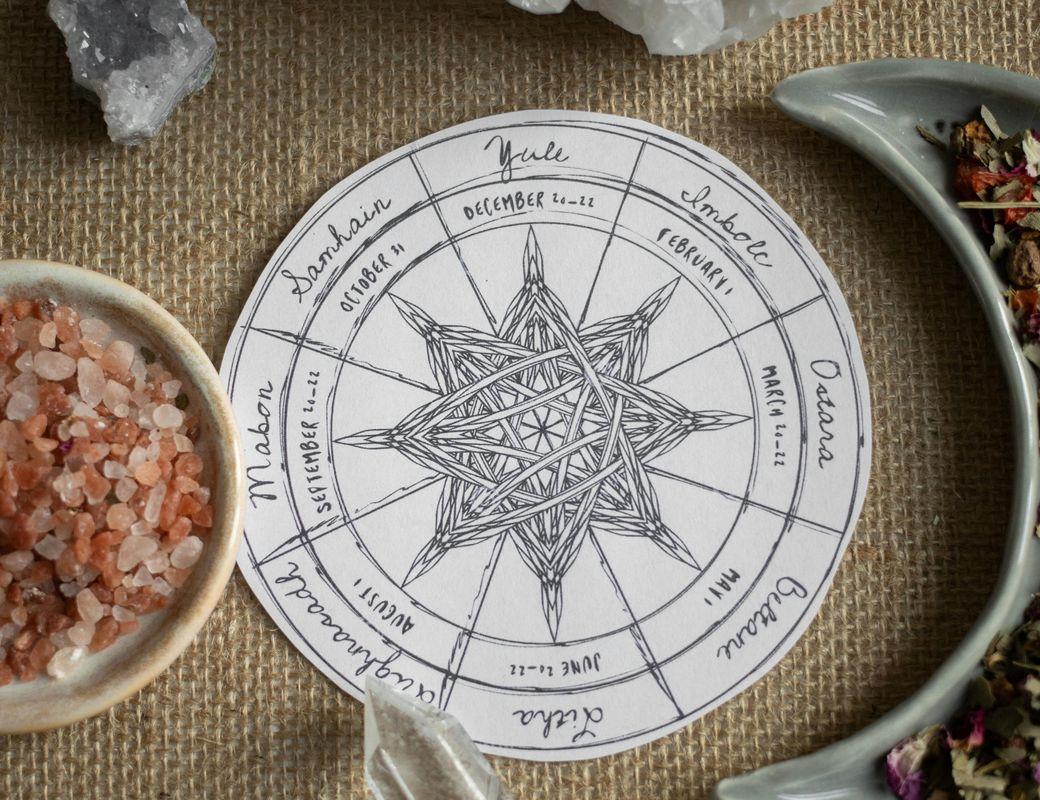
When we talk about “Yule,” many of us bring modern pagan or popular seasonal ideas. We think of multiple nights, feasts, and symbolic rituals. But when we look at ancient Irish seasonal observances, the picture is quieter and more rooted in the natural cycle of the sun.
The Winter Solstice Was the Center, Not a Festive Countdown
In Ireland, the midwinter moment that mattered most was the winter solstice. Solstice is the shortest day and longest night of the year, when daylight begins its slow return. This astronomical event has been recognised for thousands of years in Ireland and the surrounding regions. (Heritage Ireland)
One of the clearest archaeological reminders of this attention to the returning sun is Newgrange, a Neolithic passage tomb in County Meath built around 3,200 BC. Its passage and inner chamber were intentionally aligned so that the rising sun on and around the solstice enters the mound and progressively illuminates the interior. It serves as a powerful symbol of light returning after darkness. (Newgrange)
This alignment isn’t a symbolic coincidence; it reflects deliberate prehistoric design and observation, showing how important the solstice was to ancient Irish builders. (National Museum of Ireland)
Irish Winter Traditions Didn’t Rigidly Count Nights
Unlike later European traditions where specific numbers of days are assigned to midwinter festivals, there’s no strong historical evidence that ancient Irish pagans kept a fixed multi-night ritual calendar specifically called “Yule.” Many modern discussions of Celtic Yule mix later folklore with modern pagans’ interpretations.
Instead, what is clear from archaeological and folkloric indications is that:
-
The winter solstice was recognised as a turning point in the seasonal cycle.
-
Light and darkness were meaningful markers of time and life in ancient cultures across Ireland and the broader Celtic world.
-
Some Irish seasonal customs — like gatherings around fire, feasting, storytelling, and community — emerged in the broad winter period but aren’t well-documented as fixed numbers of nights before later influence from Christian and Germanic calendars.
So, if someone says “Yule is 12 nights long,” that structure is not originally Irish. It comes from later (especially Germanic and Scandinavian) traditions and was later blended into modern pagan calendars.
The Meaning Was in the Turn, Not the Count
Ancient people didn’t need a fixed nightly countdown, because what mattered was the solar cycle itself. They relied on the certainty that after the darkest night, days would grow longer. Symbolically, that became about rebirth, renewal, and hope. (WDIY)
This isn’t just abstract: communities in Ireland still gather at Newgrange and other passage sites to observe the winter solstice sunrise, marking the continuing cultural resonance of that turning point.
How This Connects to Modern Practice
Today, many people choose to observe Yule over multiple nights, 13, or even the whole cross-quarter to Celtic seasonal week, and that’s meaningful for many practitioners. But it’s important to recognise that:
-
“Yule” as a festival name comes from Germanic tradition, not Gaelic or Old Irish sources.
-
The idea of a set number of nights comes from later European folk practice and modern pagan calendars.
-
In ancient Ireland, what mattered was the solstice itself and the lived experience of increasing sunlight, not a fixed ritual tally.
Modern Practice as Relationship, Not Re-Creation
Understanding that Irish midwinter observance was centred on the solstice rather than a fixed number of nights doesn’t mean modern practice is invalid - it means it functions differently.
Ancient Irish communities were not attempting to re-create tradition. They were responding to what the land, the sky, and the season demanded of them. The winter solstice mattered because it was observable: the sun returned, the light shifted, and survival through the dark was affirmed.
Modern practitioners live in a very different world. Artificial light, fixed calendars, and globalized spirituality mean we often need structure to slow ourselves down. Practices like observing twelve nights, journaling daily reflections, or working with dreams through Yule can serve as intentional containers. This is not because they are ancient Irish customs, but because they help modern people re-enter a seasonal rhythm.
This is where modern practice becomes interpretive rather than reconstructive.
Why Extended Yule Practices Feel Necessary Today
For people today, especially those drawn to Irish-inspired spirituality, extended Yule observances often arise from a longing that ancient people didn’t need to articulate:
-
To sit with darkness rather than rush past it
-
To slow down decision-making
-
To create meaning in a season that modern life rarely allows to rest
Ancient Irish people already lived within that slowness. Winter limited travel, work, and daylight naturally. The solstice marked a turning point within an already quiet season. It is not the beginning of stillness, but confirmation that endurance had meaning.
Modern extended practices often try to re-introduce that feeling.
Holding Irish Tradition With Integrity
Honouring Irish tradition does not require rejecting modern Yule practices. Instead it requires naming them honestly.
To say:
-
“I observe twelve nights of reflection inspired by Yule”
-
is different from saying:
-
“The ancient Irish celebrated twelve nights of Yule.”
The first is relationship.
The second is historical overreach.
Irish tradition asks for attentiveness rather than exact replication. The solstice itself remains the anchor (the moment when light returns after the longest night) while everything else becomes personal, poetic, and adaptive.
A Seasonal Ethic, Not a Schedule
What Irish winter observance offers modern practitioners most strongly is not a ritual calendar, but an ethic:
-
Don’t rush clarity in the dark
-
Don’t demand productivity from winter
-
Trust slow return rather than instant renewal
This ethic shows up clearly in how the solstice was marked, briefly, precisely, and without spectacle. The light enters Newgrange for only a few minutes, and then it is gone again. The meaning is not extended celebration, but reassurance.
Living Irish Yule Today
To live Irish-rooted Yule today might look like:
-
Marking the solstice intentionally
-
Letting the days after remain quiet rather than performative
-
Carrying insight forward without forcing resolution
-
Allowing winter to continue being winter
In this way, modern practice doesn’t imitate the past: It listens to it.
Whatever Yule looks to you, is how it should be observed. That is the root of all Irish tradition and practise.
Responses (4)