How I’m Observing Imbolc
How I’m observing Imbolc in Canada during our polar vortex.
Article · 5 min read · ·
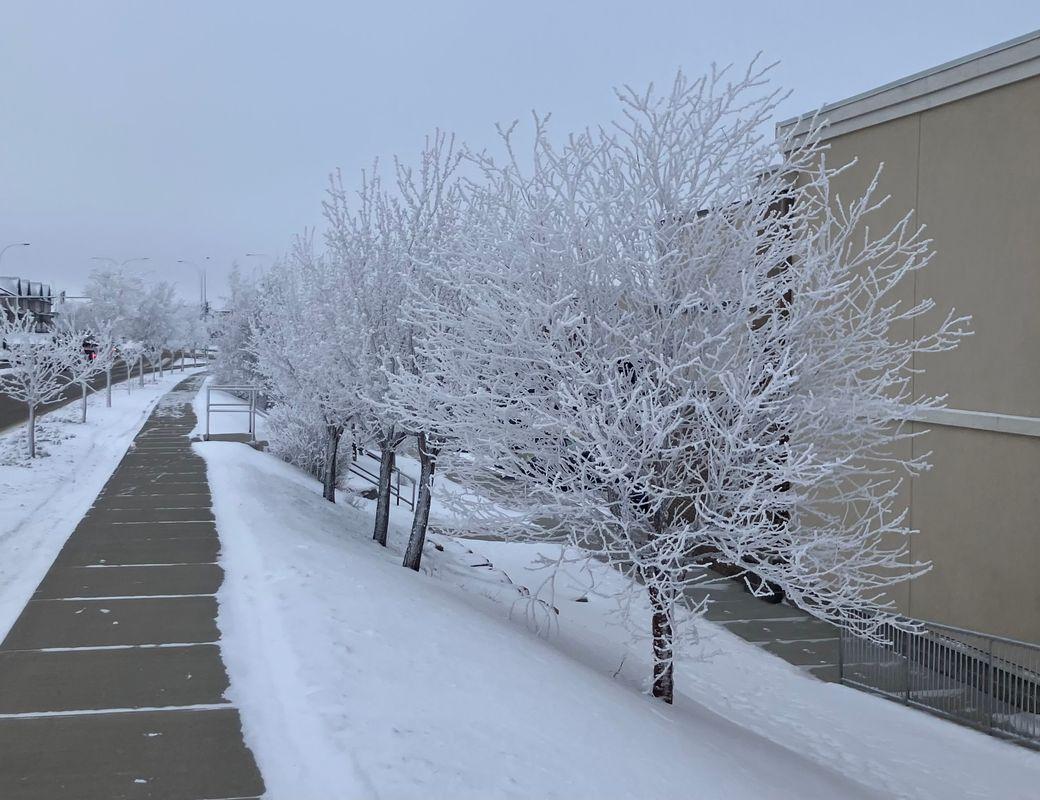
(Above is an image from my days pre-Imbolc. As you can see, it is minus a thousand here, and we are highly aware that the groundhog will see his shadow… so no early spring for us.)
How I’m Observing Imbolc
Today’s date: January 31, late at night
I’m observing Imbolc tonight.
Not tomorrow morning. Not with daylight or ceremony. But late, quietly, mostly in my bedroom, and briefly on the back porch, where winter is still very real.
That feels right.
Imbolc has never been about spring arriving. Historically, it marks the earliest possible turning of the year, when winter still holds and nothing is guaranteed yet. The land hasn’t changed much. The cold hasn’t softened. But something might be beginning.
Tonight, I’m meeting that moment in a way that feels honest to both Irish tradition and to where I live now.
Remembering what Imbolc actually was
I won’t go into much detail, as I already have written a thorough article on the tradition, but I’ll do a quick summary here.
Imbolc, traditionally observed around February 1, is closely tied to the agricultural reality of early Ireland. The name itself is commonly connected to the early lactation of ewes; a practical sign that life was beginning to stir again beneath winter’s hold. It was never a symbolic rebirth festival. It was about survival, timing, and paying attention.
Imbolc is also understood as one of the Irish fire festivals, alongside Beltane, Lughnasadh, and Samhain. But the fire of Imbolc wasn’t celebratory. It wasn’t communal bonfires or spectacle. It was hearth fire — kept small, steady, and necessary.
Fire at Imbolc meant continuity.
Warmth maintained.
Life protected long enough to continue.
Winter could still return harshly. Loss was still possible. Imbolc didn’t promise anything; it acknowledged possibility.
Why I’m observing it at night and the night before
There’s something appropriate about marking Imbolc after dark.
The land is still quiet. The cold is still sharp. Nothing has resolved yet. Observing it at night keeps me from pretending otherwise.
And it’s midnight. No one’s awake and observing yet, except for me.
This isn’t a moment for declaring intentions or imagining the year ahead. It’s a pause. A check-in. A recognition that we’ve made it this far, and that something may be shifting; even if we can’t see it yet.
In my bedroom: keeping things small
In my own practise, I enjoy keeping things subtle and small. My connection with the Spirit is not a grandiose affair. I like the simplicity of it, as I feel more connected.
Others may do a bonfire, which I will partake in, come Beltane, but each tradition is grounded in you.
I’ll begin in my bedroom, with one candle.
That’s it.
I’m not casting anything. I’m not calling anything in. I’m just lighting a flame and sitting with it for a few minutes; the modern equivalent of tending the hearth. Small fire. Enough fire.
I’ll notice how my body feels after winter. What’s tired. What’s held on. What feels fragile but still alive.
If I write anything in my grimoire, it’ll be one line at most. Not a list of goals. Not a plan. Just a note of something I want to keep alive gently, without rushing it.
Imbolc doesn’t ask for ambition. It asks for care.
On the back porch: meeting the season honestly
After that, I’ll step out onto the back porch.
Not for long; just long enough to feel the cold, breathe the night air, and remember the conditions under which Imbolc first mattered.
Out there, I’ll light sage.
Sage isn’t part of historical Irish tradition — and I don’t treat it as if it is. But as an Irish-Canadian witch, it’s an integral part of my tradition, shaped by the land I live on now. It’s not ceremony. It’s not borrowed ritual. It’s simply a way I’ve learned to mark seasonal change here.
The act will be brief. No words. No gestures. Just acknowledgment of the first possible turning of the year — and then I’ll come back inside.
That, too, feels appropriate. Imbolc was never about staying out in the cold longer than necessary.
What I’m not doing
Some may, and that is up to their own traditions. Mine is not the same, and that is the best part of being spiritual.
I’m not manifesting.
I’m not setting intentions for the year.
I’m not pretending winter is over.
Historically, Imbolc didn’t allow that kind of certainty. To treat it like a fresh start would be dishonest to the season it actually represents.
For me, this is a moment for restraint, not expansion.
An Irish-Canadian Imbolc
Living in Canada means Imbolc often arrives while winter is still heavy. Snow is still deep. The cold is still sharp. That doesn’t put this observance out of step with tradition — it puts it right inside it.
Irish tradition was shaped by long winters, scarcity, and uncertainty. Observing Imbolc while the land is still locked in cold isn’t a contradiction. It’s faithful.
Imbolc asks one quiet question:
What’s worth keeping alive until spring can really arrive?
Tonight, I’m answering that gently.
Closing
Imbolc isn’t loud.
It doesn’t ask for celebration.
It’s the moment you keep the fire going —
inside, and briefly against the cold —
knowing nothing is guaranteed yet.
Tonight, that’s enough
This is definitely different than my usual posting. I offer it to you all, to allow you to add to your own tradition or start, if it resonates.
I remember when I was just starting, not really knowing where to start. So may my reflection be an offering for you to learn and realize that all tradition is different, even if we start in the same place.
Go forward in good faith, and may you have the happiest of Imbolc. ☘️✨🌺
Responses (4)