From Janus to Your Journal
The History and Magic of New Year’s Resolutions
Article · 7 min read · ·
The custom of making New Year’s resolutions is often seen today as a simple cultural habit, a personal checklist meant to encourage self-improvement. But beneath this modern gloss lies a deeply woven tapestry of ancient religious devotion, magical thinking, seasonal ritual, and spiritual psychology that spans thousands of years. Resolutions did not emerge suddenly; they evolved slowly across civilizations that treated the transition from one year to the next as a moment of enormous cosmic significance, a threshold where the fate of the entire coming year could be shaped through intention, purification, sacrifice, or vow.
Long before resolutions were scrawled into planners or typed into smartphone notes, ancient peoples understood that liminal moments, the turning of the year, the rebirth of the sun, or the closing of a great cycle, carried unique energetic power. To them, these moments were living portals where the past and future touched, where the human heart could speak directly to the divine.
The Babylonians are often credited with the earliest known form of New Year’s resolutions. During the Akitu festival, held in mid-March to honor the agricultural renewal of the land, people made solemn promises to their gods, particularly Marduk. These pledges were not casual commitments. Returning borrowed tools, repaying debts, and swearing loyalty to the king were sacred acts believed to bring divine favor and a prosperous year. If one broke these promises, misfortune and divine disfavor could follow. This idea, that vows tied to the new year held cosmic weight, became a central theme in later cultures.
In ancient Egypt, the turning of the year was synchronized with the heliacal rising of Sirius and the annual flooding of the Nile, a moment tied strongly to the goddess Isis, rebirth, and renewal. Egyptians performed purification rites, offerings, and prayers intended to align themselves with Ma’at, the cosmic order. Though not “resolutions” as we know them, these acts of purification and intentional alignment were understood as shaping personal and communal destiny for the months ahead. They formed an early spiritual framework for the idea that one could reset one’s life during a sacred seasonal transition.
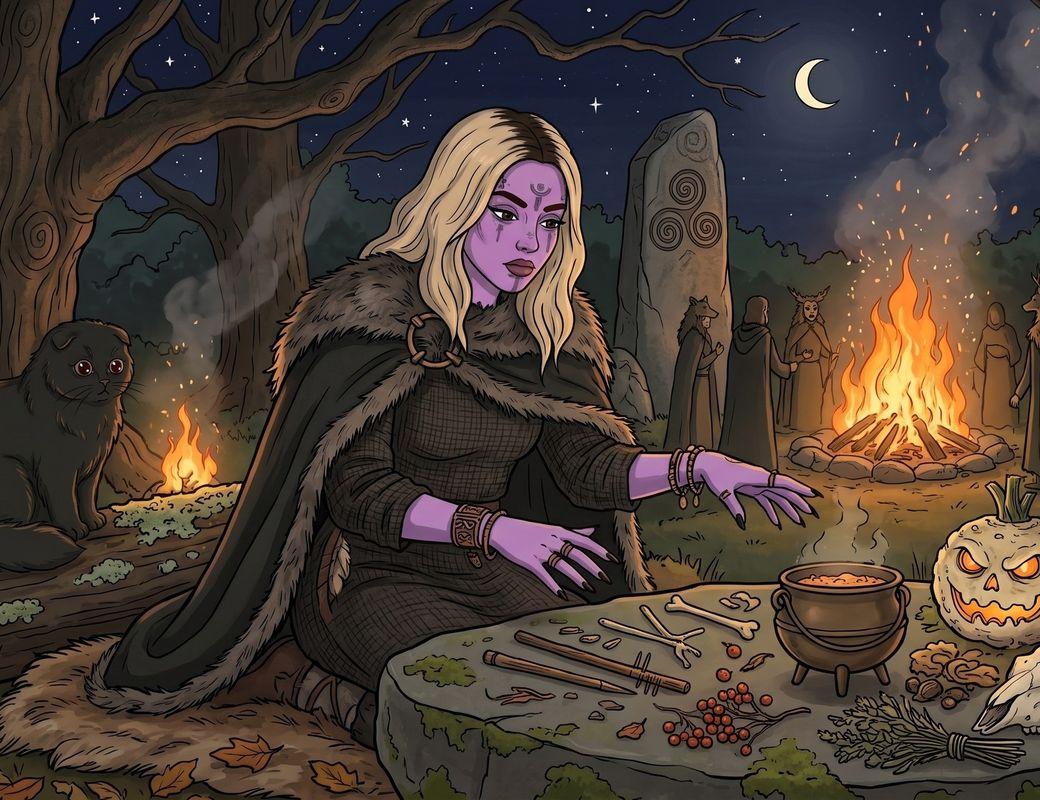
Among the Norse and other Nordic peoples, the turning of the year was observed through the festival of Yule, a twelve-night rebirth celebration honoring the returning sun. Yule was a time for oaths, sometimes taken publicly around the bragarfull, the ceremonial “cup of promises”, where individuals vowed acts of courage, loyalty, or personal change for the coming year. These vows, sworn before gods like Odin or Freyja, carried immense spiritual and social weight. The act of making a New Year’s vow was not simply a personal goal; it was a declaration of identity and destiny, spoken aloud in a sacred communal space. This ritual of oath-taking became one of the strongest Germanic predecessors to the modern resolution.
The Romans, however, brought the practice into a form that unmistakably mirrors our modern resolutions. When Julius Caesar reformed the calendar in 46 BCE, the year officially began in January, a month dedicated to Janus, the guardian of beginnings, transitions, thresholds, and doorways. Janus stood apart from other Roman gods because he possessed two faces, one looking backward and one forward. To the Romans, he embodied the ability to reflect on the past while simultaneously entering the future with clarity and purpose.
This symbolism inspired the Roman tradition of beginning the year with personal vows. People offered sacrifices of wine, grain, and incense to Janus. Statesmen pledged to rule with justice. Citizens promised the gods that they would behave with honesty, kindness, or discipline. Even soldiers swore oaths of loyalty for the coming year. These resolutions were not merely personal goals, they were spiritual contracts witnessed by Janus himself, who was believed to open and close the metaphorical “doors” of fate. In some accounts, Romans even exchanged sweet fruits and coins as tokens of good intentions for the year, gestures that survive faintly today in the form of New Year’s gifts and good-luck customs.
As Christianity slowly spread, many pagan customs blended into the new religious framework. Medieval Christians were encouraged to use the New Year as a moment of moral inventory, repentance, and promises to live more virtuously. Sermons during this period urged believers to reflect on their flaws and choose a better path. These early forms of spiritual self-examination echoed the older pagan practices but were reframed in the language of sin, virtue, and divine accountability.
By the 17th and 18th centuries, resolutions had become increasingly secular in Europe. Diaries and personal journals began to include New Year’s entries focused on self-discipline, self-improvement, or moral aspiration. The Victorians embraced the practice with enthusiasm, intertwining moral reform movements with spiritual self-betterment. Many Victorians wrote elaborate New Year’s vows promising to avoid gossip, cultivate kindness, or improve their social behavior. The modern tone of self-help and self-correction was born during this era.
By the 20th century, the religious weight behind resolutions had largely faded, replaced by a psychological model of personal transformation. Resolutions migrated from temples and churches into homes, workplaces, and personal planners. Yet the magical and spiritual echoes remain. People still feel that the New Year holds a special energy, a feeling inherited from thousands of years of ritualized renewal. To declare a resolution is, in a subtle but powerful way, to enter into an ancient lineage of humans seeking to reset their lives at a cosmically charged moment.
Today’s resolutions may be phrased in modern language, yet they remain descendants of vows once whispered to gods, etched on temple offerings, or carried through smoke and ritual flame. They remind us that the beginning of a year is not simply a date on a calendar but a portal, a liminal crossing, a moment where intention can be shaped into reality.
And so, just as ancient people purified their homes, bodies, and spirits before stepping into a new cycle, we can still honor the turning of the year with practices that cleanse, align, and empower us, blending history with ritual, and magic with mindful intention.
A New Year’s Smudging and Intention-Setting Ritual
To honor the ancient lineage from which our modern resolutions descend, you can perform a simple yet powerful ritual that blends purification with intentional magic.
You will need:
– Incense or dried herbs (sage, cedar, lavender)
– A fireproof bowl or dish
– A candle (optional)
– Paper and pen
Begin by preparing your environment. Clean your room or ritual space, open a window if possible, and allow yourself a few quiet moments to settle. Light your candle if you’re using one, and take several deep breaths to center your energy.
When you feel ready, light your smudge bundle or incense and let the smoke drift gently through the room. Imagine it clearing stagnation, old emotional residue, and any lingering tension from the previous year. Sweep the smoke around yourself in slow, deliberate motions. You are cleansing the energetic field through which your future intentions will flow.
Once the air feels clearer, sit comfortably and close your eyes. Reflect on the year that has passed, its successes, its disappointments, its surprises, and its lessons. Acknowledge everything without judgment. When you open your eyes again, you symbolically step into the present with a renewed sense of clarity.
Now take your paper and write your resolutions or intentions for the coming year. Phrase them in positive, active language, not what you want to escape, but what you want to invite. Write as though your intentions are already taking root: “I cultivate joy,” “I honor my body,” “I open myself to abundance.”
When you are finished, fold the paper. You may place it somewhere special, inside a journal, beneath a crystal, on an altar, or you may burn it safely, letting the smoke carry your intentions into the unseen realm, just as ancient peoples once released their vows through ritual flame.
As you close the ritual, whisper gratitude for the year that has ended and quiet hope for the one that begins. Then extinguish your candle or allow the embers to fade.
Conclusion
Across millennia and continents, from Babylonian temples to Roman hearths, Egyptian festivals, Nordic oath-cups, medieval sermons, Victorian parlors, and modern journals, the act of making a New Year’s resolution has always been more than a personal goal, it has been a ritual of renewal. It is a moment when humanity collectively pauses at the threshold between what has been and what could be. By understanding the ancient layers beneath this practice, and by engaging in even a simple ritual of cleansing and intention, we reclaim the magic at its core. Each resolution becomes not merely a hope for change, but a conscious step into a new chapter, shaped by clarity, guided by tradition, and empowered by the timeless human desire to begin again.
Responses
No responses yet — start the conversation.