Celebrating the Celtic Festival of Lammas
The First Harvest Festival of the Wheel of the Year
Article · 7 min read · ·
A Time to Pause and Give Thanks
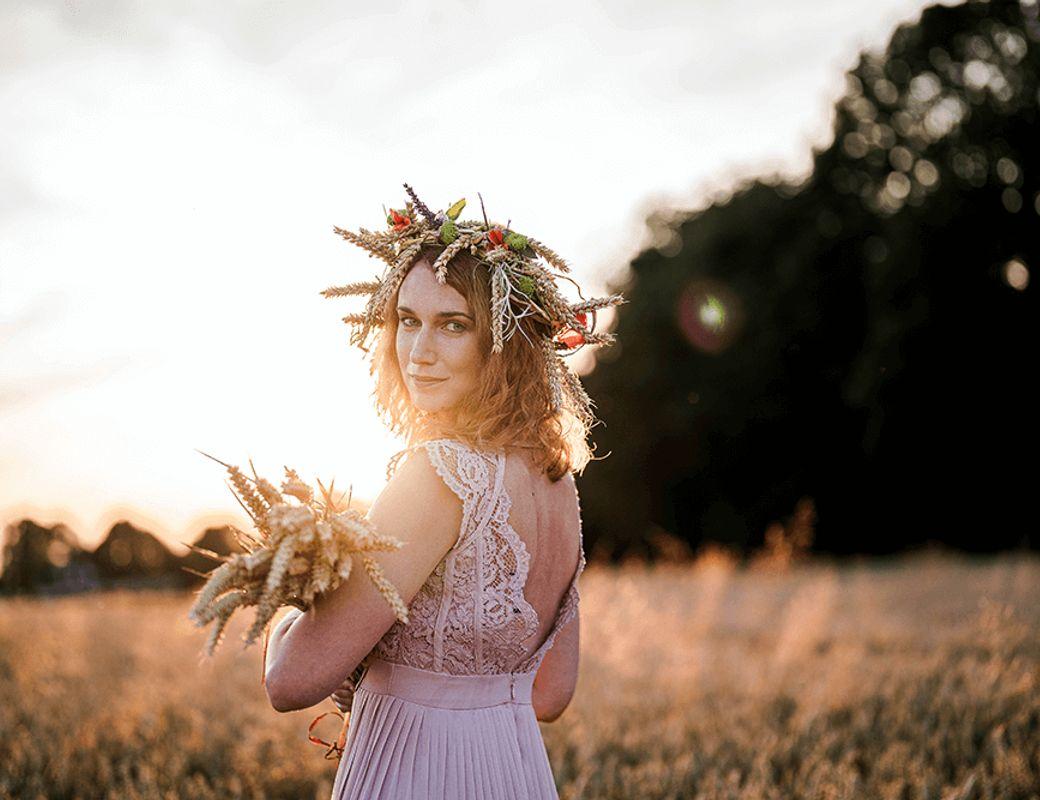
August 1st marks the celebration of Lammas, the first of the harvest festivals and one of the eight sacred sabbats on the Wheel of the Year, honored by Wiccans, witches, Druids, and other nature-based traditions. This day signals the beginning of the harvest season, when the first grains—wheat, barley, oats, and rye—are gathered and transformed into bread, offerings, and feasts.
Lammas is a seasonal turning point. The days are still long and warm, but the sun has passed its peak, and the subtle pull toward autumn begins. It’s a moment of gratitude—a time to pause and acknowledge the blessings we’ve received and the efforts we’ve made to bring those blessings to life.
Also known by its ancient Celtic name Lughnasadh (pronounced LOO-nah-sah), this festival is closely tied to the Irish god Lugh, a solar deity of skill, artistry, and strength. Whether called Lammas or Lughnasadh, the heart of this sabbat is the same: to honor the fruits of the Earth and the work it took to grow them, both spiritually and physically.
The Etymology of Lammas and Lughnasadh
The word Lammas has roots in the Old English phrase hlaf-mas, which translates to “loaf-mass.” This name reflects the early Christian tradition of baking a loaf of bread from the first grain of the season and bringing it to church as an offering. “Hlaf” means loaf, and “mas” (from “mass”) refers to a sacred gathering or religious service. In this context, Lammas became a time of blessing and thanksgiving, where bread served as both physical nourishment and spiritual symbol.
The festival’s older and more mythologically rich name is Lughnasadh, a term from Old Irish. It combines the name Lugh, the god honored during this season, with the word násad, meaning “gathering” or “assembly.” Therefore, Lughnasadh means “the Assembly of Lugh.” This name points back to the mythic origins of the festival, which was established in honor of Lugh’s foster-mother, Tailtiu, an earth goddess who died after clearing the land for agriculture. In her memory, Lugh held great funeral games, feasts, and ritual gatherings—an act that became the foundation of Lughnasadh as it was celebrated throughout ancient Ireland.
These two names—Lammas and Lughnasadh—represent different cultural layers of the same sacred time. Lammas carries the echoes of Christianized agricultural life, while Lughnasadh reaches deeper into the heart of Celtic mythology, where gods and ancestors were honored with acts of remembrance, gratitude, and sacred celebration.
Lugh: The Many-Skilled One
Lugh is one of the most celebrated figures in Celtic mythology. Known as Samildánach, or “the many-skilled one,” Lugh was revered as a god of light, the sun, craftsmanship, war, poetry, healing, and sovereignty. His radiant energy represents the height of summer’s power—his presence bright, clever, and commanding.
The story of Lughnasadh begins with his foster-mother, Tailtiu, who is said to have died of exhaustion after single-handedly clearing the fields of Ireland to make way for agriculture. In her honor, Lugh created a festival that included athletic games, competitions, tribal assemblies, and sacred rituals. These funeral games for Tailtiu became a lasting tradition in ancient Ireland, blending myth, magic, and seasonal necessity into one of the most important festivals of the year.
Lugh’s role in this sabbat reminds us that life’s abundance often comes from sacrifice, and that hard-earned wisdom and skill are worthy of celebration. Honoring Lugh at Lammas is not just about calling in the light—it’s about recognizing the labor, craft, and love behind every good thing in our lives.
Ancient Traditions and Sacred Celebrations
Long before Lammas became part of the modern pagan calendar, it was a vital festival in Celtic and Gaelic cultures. It marked the first of three harvest festivals (followed by Mabon at the autumn equinox and Samhain at the end of October) and was essential for ensuring both spiritual and physical survival.
The ancient celebrations of Lughnasadh were rich and layered. The cutting of the first sheaf of grain was a sacred act. That first bundle was often kept separate, blessed, or turned into a corn dolly to represent the spirit of the harvest. These dolls were placed on altars or stored in homes to ensure prosperity through the winter months.
People also baked ritual bread using the season’s first flour, often shaping it with sun symbols or Lugh’s sigil. Some loaves were offered to the gods, while others were shared in community feasts, reinforcing bonds of gratitude and interdependence.
The Áenach Tailten, or funeral games of Tailtiu, were among the most important aspects of Lughnasadh. These gatherings included footraces, horse riding, wrestling matches, storytelling, music, and poetry contests. They served not just as entertainment but as acts of devotion—celebrations of life in honor of death.
Handfastings and trial marriages were also common during this festival. Couples could be joined for a symbolic “year and a day,” with the freedom to part ways at the next Lughnasadh if they wished. These seasonal unions reflected the natural rhythms of life and the sacredness of choice and commitment.
Communities would gather at hilltops, sacred wells, and standing stones to leave offerings—grains, fruits, crafted tokens, or flowers—to the Earth, the ancestors, and the gods. These rituals were acts of deep respect and magical alignment with the land’s life force.
For the ancient Celts, Lughnasadh was more than just a festival—it was a sacred covenant with the land, a recognition that all prosperity is born of effort, reverence, and community. The traditions that flourished during this time carried spiritual meaning that still resonates today.
How We Celebrate Lammas Today
While most of us no longer plant and harvest our own grain, Lammas is still a meaningful spiritual checkpoint. For modern witches, Wiccans, and earth-based practitioners, it’s a time to ask: What am I harvesting in my life right now? What have I worked toward? What blessings have come from my effort—and what must I release?
Today’s celebrations may look different, but the essence remains the same. We continue to gather, feast, give thanks, and reflect. Here are some beautiful ways people honor Lammas:
🕯️ Build a Seasonal Altar
Use sun-colored candles, stalks of grain, corn husks, sunflowers, and fruits of the season. Add a small loaf of bread or a corn dolly as a symbol of the harvest.
🍞 Bake with Intention
Making your own bread—even a simple one—is a powerful act of gratitude and magic. As you knead the dough, think about your personal harvest: your growth, your lessons, your success.
🌻 Feast and Share
Celebrate with a meal made from seasonal ingredients—corn, squash, berries, honey, stone fruits, and herbs. Invite friends or family to share in the abundance.
🔥 Harvest Magic and Letting Go
Write down something you’ve accomplished and something you’re ready to release. Offer it to a small fire or bury it in the Earth with thanks.
🎨 Craft Something Sacred
Make a corn dolly, sun charm, or small offering to leave outdoors as a gift to the land.
A Simple Lammas Ritual: Gratitude and Offering
You’ll need:
-
A loaf of bread (store-bought or homemade)
-
A golden or orange candle
-
A slip of paper and pen
-
A small bowl of water or earth-safe dish
-
Optional: herbs, flowers, or seasonal decorations
How to do it:
-
Set the mood. Light your candle and take a few deep breaths. Arrange your altar or space with natural items from the season.
-
Reflect and write. On the paper, list three things you’re grateful for this season—blessings you’ve received or things you’ve worked hard for.
-
Break bread. Eat a piece of the bread slowly, with gratitude. Then place another small piece in the bowl of water (or outside), saying:
-
“As I harvest, I give thanks. As I receive, I return. May this offering bless the land and those who walk upon it.”
-
Close with stillness. Snuff the candle and spend a few quiet moments reflecting on your journey this year.
Lammas Affirmation
“I give thanks for what I have sown, and I honor what I have grown. I harvest with joy and release with grace.”
Why Lammas Still Matters
In a world that moves fast and forgets easily, Lammas brings us back to the sacred rhythm of effort and reward. It teaches us to give thanks, to recognize our growth, and to prepare for what comes next.
It reminds us that life is a circle, not a straight line. There is a time to plant and a time to reap, a time to shine and a time to rest. Every season has its purpose. Gratitude strengthens the spirit, and connection—to nature, to each other, and to our ancestors—still matters more than ever. As the light slowly begins to wane, Lammas invites us to honor what we’ve created, to celebrate what we’ve received, and to walk forward with open hands and a grateful heart.
Responses (6)