Homesickness: when the soul remembers a place
that isn’t on any map
Article · 5 min read · ·
Have you ever felt homesick for a place you can’t name? Not for the apartment where you grew up or the city where you spent your childhood, but for something much farther away. A feeling you can’t quite put into words, but that sometimes washes over you at the most unexpected moments: the smell of grass after rain, the sight of a starry sky, the sound of an old song, or someone’s passing glance.
This feeling is familiar to many people. Psychologists call it nostalgia or separation anxiety. Poets call it “homesickness.” And in spiritual traditions, it has a special name: the soul’s longing for its source.
Today, we’ll talk about what this feeling is, when it arises, and what we really mean when we say, “I want to go home.”
What “home” means to the soul
In everyday language, home is the place where we live. But in the language of the soul, home means something else.
Home is a state in which we feel safe, accepted, and whole. It’s not about walls, but a feeling: “I don’t have to earn my place here.” For some, it’s tied to childhood, a grandmother’s house, the smell of pies, and the warmth of hands. For others, it’s connected to nature, to a place where they first felt like themselves.
But there’s another layer, too. Spiritual traditions say that the soul remembers the place it came from. It’s not a geographical location. It’s a state of oneness, peace, and love that we came from and long for. Astrologers link this longing to the Moon’s position in the natal chart—it points to what gives us a sense of safety and “home.”
When we say “I want to go home,” we often don’t mean a specific address. We mean the feeling that we can finally exhale.
When homesickness hits
This feeling can wash over us at all kinds of moments. Sometimes it comes quietly, like a wave. Sometimes it comes out of nowhere, like a blow.
Homesickness can come when:
You’re in a noisy place, surrounded by people, but still feel lonely.
You’ve reached a goal you dreamed of, but for some reason, the joy doesn’t come.
You look at the stars or the water, and something inside you aches at the beauty—and at knowing you can’t hold on to it.
You hear music that reminds you of something you can’t remember.
You return to a place that used to feel like “home” and realize it no longer feels that way.
What we’re really feeling in these moments:
Not “I want to be in this apartment,” but “I want to be somewhere I don’t have to be strong.”
Not “I want to be with my mom,” but “I want someone to hold me the way a child is held.”
Not “I want to go back to childhood,” but “I want to feel again that the world is safe and I’m loved just for existing.”
Homesickness isn’t a whim. It’s a call from the deepest part of you, the part that remembers what it feels like to be whole.
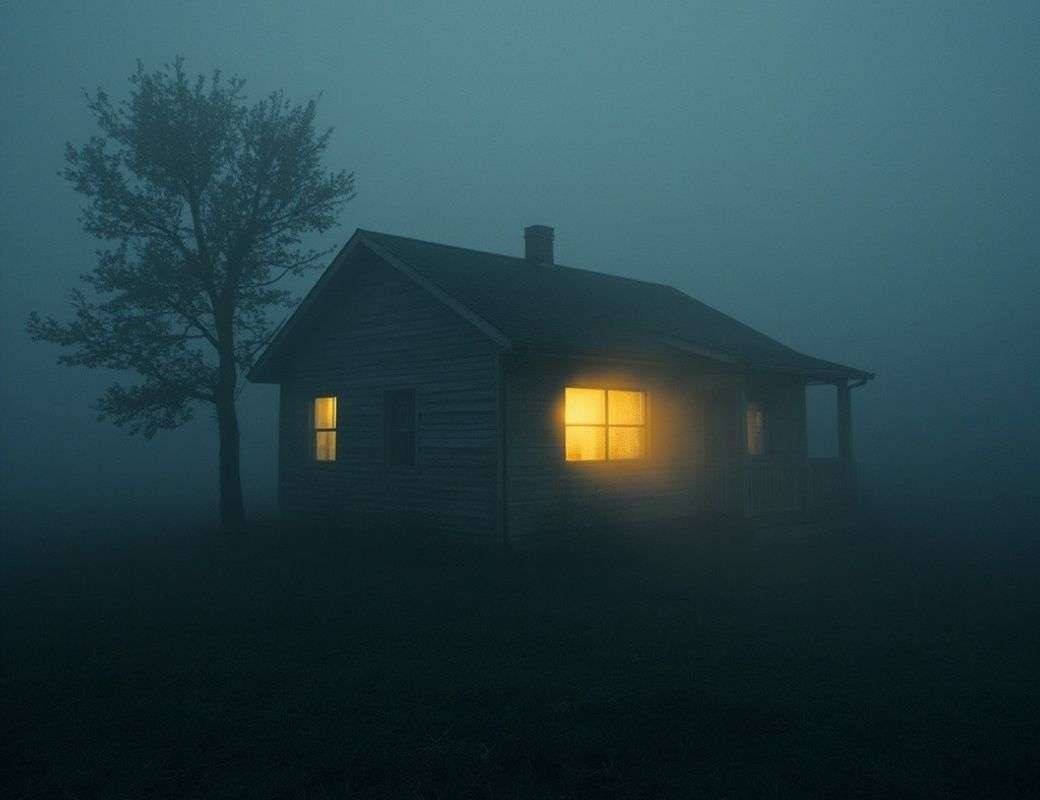
Practice: “Returning to your inner home”
When homesickness washes over us, we often try to drown it out: we eat, scroll through our feeds, look for new relationships, move to different cities. But the longing doesn’t go away, because we’re looking for “home” in the wrong place.
That “home” has always been inside us.
You’ll need: 15 minutes of quiet and a place where no one will disturb you.
Step 1. Close your eyes.
Take a few slow breaths in and out. Feel your body. Notice how you’re sitting or lying down.
Step 2. Ask yourself:
“Where in my body does this longing live?” Don’t look for words. Just feel. Maybe it’s a lump in your throat. A heaviness in your chest. An emptiness in your stomach.
Step 3. Place your hand there.
Say silently: “I see you. I know you feel this longing. I’m here.”
Step 4. Picture your inner home.
Not a real place, but an imagined one. It could be a softly lit room, a garden, a clearing in the woods, or the seashore. A place where you feel at peace. Imagine walking in. Look around. Notice what it smells like, what the light is like, and whether it’s warm there.
Step 5. Stay there for a while.
For five minutes. Just be there. Tell yourself: “I can always come back here. This home is mine.”
Step 6. Open your eyes.
Take your time. Take a few breaths. Notice whether anything has changed.
A final thought: Longing as a compass
Homesickness isn’t a “bad” feeling you need to suppress. It’s a compass. It shows you where you’ve taken a wrong turn. Where you’re not living your own life. Where you’ve forgotten that home isn’t a place, but a state of being.
If you’re homesick, it means you remember that home exists. And that’s already the first step toward returning.
You’re not lost. You’re just far away from yourself. And the way home starts with one question: “What do I need right now to feel safe?”
Sometimes the answer is simple: a cup of tea. Sometimes it’s a whole life rebuilt from scratch. Either way, it’s a journey back to yourself.
P.S. If you’re feeling homesick right now, share one word in the comments: how do you feel it? In your throat? In your chest? In your stomach? Sometimes, naming it is the first step toward coming home.