The Wheel of Life
how to stop feeling perpetually indebted to yourself
Article · 5 min read · ·

Do you know that feeling when you're trying to keep up with everything—work, home, family, health, relationships—but inside, there's this persistent sense that you're constantly dropping something? That one area is living at the expense of another? That you're either working too much, or resting too little, or have completely forgotten about yourself?
This doesn't mean something's wrong with you. It's simply imbalance. And it can be seen, touched, and gently realigned.
Today we'll talk about one of the simplest and most visual self-diagnostic tools—The Wheel of Life. It's not a complex psychological technique, but rather a map that helps you look into your life and honestly answer: "Where am I really right now?"
🌿What is the Wheel of Life and why do you need it
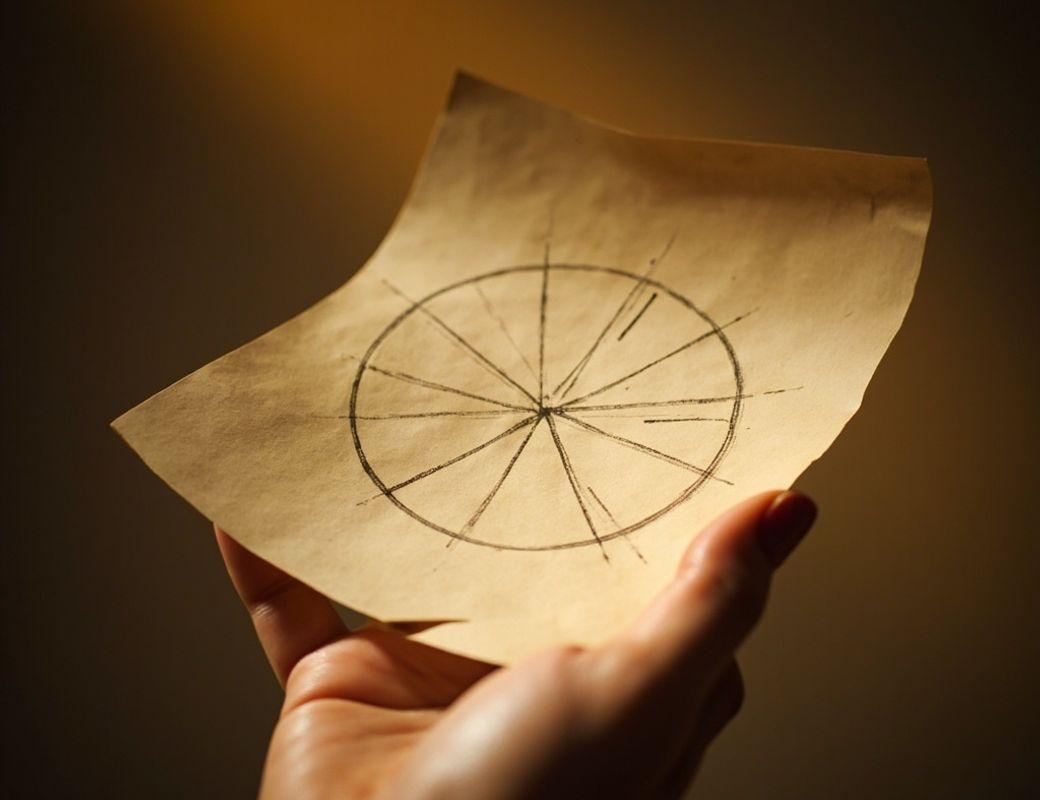
The Wheel of Life is a circle divided into sections. Each section represents one important area of your life. Typically there are eight:
- Health & Energy
- Family & Home
- Relationships & Love
- Work & Career
- Finances & Money
- Personal Growth & Development
- Rest & Recreation
- Social Life & Friends
You can adapt this list to fit you: remove what's not relevant, add what matters specifically to you (for example, creativity, spirituality, travel).
Each section is rated on a scale from 1 to 10—how satisfied you are with this area right now. When you connect all the points, you get a circle—or, more often, an uneven line that shows: where you have "low spots" and where you have "peaks".
This isn't a "normal/abnormal" test. It's your personal map. It shows not what you "should" be doing, but where your attention is now, and where it barely reaches.
🛠️ How to create your Wheel of Life (step by step)
You'll need: a sheet of paper, a pen, colored pencils or markers.
Step 1: Draw a circle.
Divide it into 8 equal sections (like a pizza). Label each section with your life area.
Step 2: Rate each section.
On a scale from 1 to 10 (1 = "almost nothing," 10 = "everything's perfect"). Be honest. Rate not "how it should be," but "how it is right now." Even if your rating is a "3"—that's just a fact, not a verdict.
Step 3: Connect the dots.
Mark each rating on the section's line and connect them. Look at what you got. What does your line look like? A smooth circle? A star? A lopsided oval?
Step 4: Look at the result.
Where are the highest ratings? Where are the lowest? Which area is almost falling out of your attention? Which is "skewed"?
🔍What to do with the results (without panicking)
The most important thing—don't try to "fix" everything at once. If you try to improve all sections simultaneously, you'll just burn out faster.
Instead:
- Choose 1–2 sections that are critically low right now. Those where your rating is 3–4. These are your "growth areas."
- Choose 1 section where the rating is high (8–9). This is your resource. What's already working and giving you strength.
- Ask yourself: "What can I do in the next 2–3 weeks to slightly improve my 'low spot'?" Not something massive, just a small step.
Examples:
- If the "low spot" is health: "I'll drink a glass of water in the morning and take a 10-minute walk at lunch."
- If the "low spot" is rest: "I'll go to bed 15 minutes earlier and read a book instead of scrolling my phone."
- If the "low spot" is relationships: "I'll send one close person a warm message for no reason."
These steps won't fix everything. But they will move the wheel forward. And movement is already progress.
💎 Practice "My Ideal Wheel"
This practice is for those who want not just to see their current state, but to chart a direction.
You'll need: a second sheet of paper, a pen.
Step 1: Draw a new wheel.
Now rate each section not "as it is," but "how I want it to be in a year." In other words, set goals for each section: your ideal rating (not necessarily 10, but one that would satisfy you).
Step 2: Compare the two wheels.
Look at the "real" wheel and the "ideal" one. What's changed? Where is the difference greatest? That's where your main growth directions are.
Step 3: Write down three steps.
Choose one section where the gap is largest, and write down 3 small steps you can take in the coming month. For example:
- "I'll dedicate 15 minutes a day to reading a book in my field."
- "I'll sign up for a course/lecture."
- "I'll start keeping an idea journal."
Step 4: Place both wheels where you'll see them.
Repeat the exercise in a month. See how the ratings have changed. Don't expect perfection—just notice the changes.
🌱 Why the "wheel" shouldn't be perfectly round
Many people who first see the Wheel of Life have an illusion: "everything needs to be even and perfect." But actually—that's a misconception.
The perfect wheel is a myth. Real life is dynamic balance. Today you might have a dip in health because you're working hard on a project. In a month—the project's done, and you return to health. The wheel turns, it's not static.
What matters:
- That you don't have sections consistently at "0"—meaning you've completely forgotten about them.
- That you notice where your attention is flowing, and periodically redistribute it.
- That you don't demand a perfectly even circle from yourself—that's not the goal, it's a trap.
🕯️ In closing
The Wheel of Life isn't an exam. It's not checking "whether you're living correctly." It's simply a tool that helps you notice in time where your life is becoming unbalanced.
You don't have to be perfect at everything all at once. You have the right to periods when work is center stage and friends are in the shadows. And periods when rest is primary and work is on pause.
The main thing is that you see this map. And choose where to direct your attention. Consciously. Without guilt.
Your wheel is yours. And only you decide where it rolls.
P.S. If you've created your Wheel of Life—share in the comments which section turned out lowest and what small step you've decided to take. Sometimes, all it takes to move the wheel forward is one word. 🌿