The 13 Magical Nights
A Season of Intention, Release, and Becoming
Article · 11 min read · ·
The darkest nights of winter have a way about them. As the year draws to a close and the world falls silent, we are left in a space between what has been and what is yet to be. Centuries of storytelling with their spirits, omens, blessings and warnings have attached themselves to these hours for good reason.
Central Europe has its own winter ways, not least the Rauhnächte. Put in English, they are the “Rough Nights” or the “Smoke Nights.” In times past, such evenings were steeped in mystery and used for divination, household protection, and grappling with the uncertainties of the year ahead. Several modern practitioners have adopted a ritual called the 13 Magical Nights, drawing on those old customs. [1,2]
I begin my part in this ritual well before the solstice. It is an exercise in writing thirteen affirmations of who one is in the process of becoming, and I prefer this rather than wishes for what one wants. Over twelve nights, an affirmation is put to the fire; on the thirteenth, one is to be carried forward by one's own hand. It’s a beautiful and fulfilling experience; instead of a New Year’s resolution, as many do, it becomes a journey of self-discovery into the new year. But it is best to have some idea of the practice’s origin first.
The Historical Origins of the Rauhnächte
German-speaking Central Europe is home to the Rauhnächte, from the Alpine villages to Austria and southern Germany. The nights represented something of an odd interlude between the old and new years to come. Most traditional observances fall in the twelve nights from Christmas to Epiphany, though in some places the dates are tied to the solstice. [1,2]
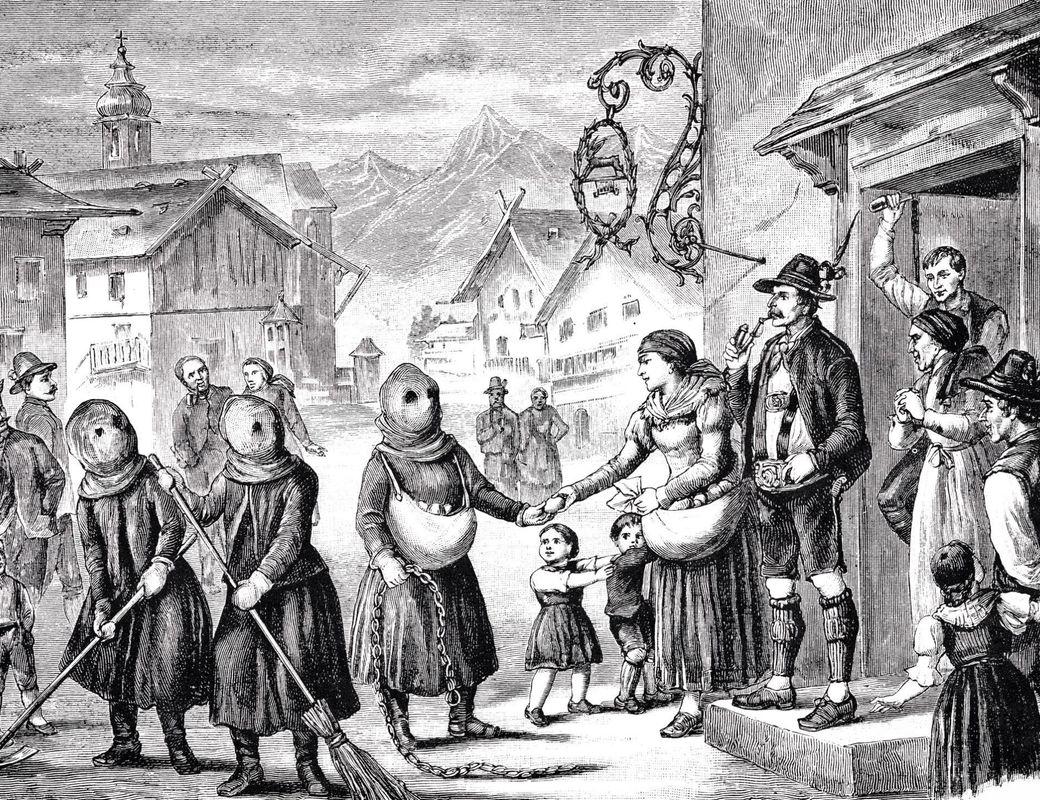
We can find supernatural visitors and protective smoke blessings associated with the Rauhnächte, as well as household rites believed to affect the year to come. Some would set fire to incense or aromatic plants in blessing of home and stock. Others paid attention to the weather, dreams, and other portents for a read on the future. There was also the Wild Hunt, that procession of Germanic and European lore, and local characters like Perchta. While often dismissed as an ancient pagan rite, the history is more complex than that. What is on record is a mix of Christian tradition and regional beliefs that have accumulated over generations. The origin of any given custom is impossible to pin down. All that is left is an interesting cultural way of marking the passage of the year. [1,2,3]
The Modern Tradition of Thirteen Intentions
To write thirteen intentions and deliver twelve to the flames is a present-day spiritual adaptation, not some verified ceremony of the old Rauhnächte. It is meant to symbolize the transition to winter and the letting go of uncertainty. I prefer to call them affirmations, and there is a point to it.
Where one might be tempted to write:
-
“I wish I could find peace.”
-
“I want to be a successful writer.”
-
“I hope to be more confident.”
I will put it this way:
-
“I am at peace with myself and my surroundings.”
-
“I am a writer who is successful and fulfilled.”
-
“I have confidence in my abilities.”
These are in the present tense, as if the thing is already so. It is a modern way of setting an intention. The wording alters how I relate to it; I am less concerned with what is lacking and more with the habits and identity I am putting in place. They are not guarantees but rather personal and spiritual commitments about where my life is headed. [4]
Begin Preparing Now: One or Two Affirmations Each Week
The most rewarding part of the ritual is in the weeks before the winter solstice. There is no need to put all thirteen on paper in one sitting. I would advise against it. From early November, around Samhain, make time each week to reflect on your life and write one or two affirmations. Do so until the 21st of December. It makes for a season of reflection instead of a hurried evening of writing. Samhain is no historical prerequisite for the Rauhnächte or this ritual, but it is a fitting start for my own brand of contemporary folk-witchcraft.
What You Will Need
-
Thirteen small pieces of paper
-
A pen
-
A jar, pouch or envelope
-
A candle or tealight
-
A fireproof dish of some sort
-
A journal or grimoire
Remember, like always, there is no need for costly instruments, crystals, or an ornate altar. Sincerity and a quiet spot will do.
Writing Your Affirmations
Set aside a time once or twice a week to be undisturbed. In the quiet, sit and put some thought into the life you are in the process of making. Put questions to yourself: what do you wish to put more strength behind, what are you prepared to alter, and who is it that you are turning into? Or maybe one will pop into your head while enjoying your everyday life.
On a bit of paper, put down an affirmation. Start with “I am” or “I have” and employ language that is positive, clear, and in the present tense. A few examples might be:
1. Loving and meaningful relationships surround me.
2. I have financial security and stability.
3. I am confident in my abilities.
4. My home is peaceful and welcoming.
5. I am healthy and take care of my body.
6. There are opportunities for me to grow.
7. I am inspired and creative.
8. I dare to go after my ambitions.
9. I am patient with myself as well as others.
10. Work and personal life are in balance.
11. I feel a connection to the world and nature around me.
12. I have the discipline to get my goals done.
13. I am thankful for the life I am building.
These are not set in stone; your affirmations ought to be of your own values and hopes. They are not meant to be an account of how things stand at present but to put forward a direction you are going to foster. When done, fold up the paper to conceal the words and put it in your container. Add one or two every week. There is no point in re-reading what you have already written; let them stay folded until the ritual.
A Preparation Calendar
Fore a start in early November, the following will see you through to the solstice with all thirteen affirmations.
Week 1 (Nov. 3–9): Write 2
Week 2 (Nov. 10–16): Write 2
Week 3 (Nov. 17–23): Write 2
Week 4 (Nov. 24–30): Write 2
Week 5 (Dec. 1–7): Write 2
Week 6 (Dec. 8–14): Write 2
Week 7 (Dec. 15–20): Write 1
By the 20th of December, you will have your thirteen pieces ready. Feel free to vary the schedule. The idea is to give yourself time to contemplate each statement without rushing.
December 21: The First Magical Night
The observance of the winter solstice gets underway on the evening of the 21st. It is the year’s longest night and shortest day in the Northern Hemisphere, and from here daylight will slowly pick up again. For those of a nature-centered focus, it is a perfect occasion to mark renewal and the return of light.
Prepare your ritual space at sundown. Have your jar or pouch of the thirteen affirmations next to the fireproof dish and your candle. Give some thought to the year drawing to a close and what you have put up with or learned and are now ready to let go of.
Light the candle and, without so much as a glance, take a folded affirmation from the container. Do not open it. Hold it and note the intention.
Then offer a blessing if you would like:
“As the darkness reaches its deepest hour, I welcome the returning light. I release this intention with gratitude, trusting that I have planted its seed. May I have the wisdom to recognize opportunity, the courage to embrace change, and the patience to allow life to unfold.”
Remember to be careful with fire; put the paper in the dish and burn it unread. Let the ashes cool before you put them away. Put out the candle. The first one is done.
The Next Eleven Nights
Each evening from the 22nd of December to January 1, do the same. Light the candle and, at random, choose an affirmation to burn without reading it. In doing so, you are letting go of any expectation or worry attached to it. It is not as though the universe is under an obligation to provide a certain result; you are simply setting an intention and accepting that one cannot control everything. You can say the blessing again or sit in silence. Some keep a journal of their dreams and thoughts for the year ahead on these nights. While dream interpretation is part of Rauhnächte folklore, journaling is left to the individual. [1,3]
Note: This is my thirteen-night winter-solstice adaptation, rather than the conventional twelve-night Christmas-to-Epiphany calendar.
The Thirteenth Night: January 2
Twelve evenings have passed, and but one folded affirmation is left. On January 2, you are to make one last visit to your ritual space. Light a candle and retrieve the remaining paper from its container. Unfold it this time and read over the words put down weeks ago. It is an affirmation you will hold on to and put work into for the rest of the year. The other twelve have been let go symbolically; the thirteenth is what you have elected to pursue with some deliberation.
Say the affirmation that is left. Do not wait for the statement to pass through your tongue; think through the actions that would see it through. Should your affirmation be about peace, then make room for reflection or set down firmer boundaries. If it is financial stability you are after, perhaps a savings plan is in order, or there is a money matter to be addressed. In short, the intention is to be put to practical use.
You can put it into these words:
_ “What remains is mine to nurture. I have the strength to begin, the patience to continue, and the courage to create change. May my actions honor the intention I carry.”_
Put the paper away in your grimoire or journal or someplace of import and do not hesitate to go back to it in the months ahead. The ritual is done, but the commitment is not.
What do you do with the ashes?
When they have cooled off, they can be put out of the way. A few modern practitioners like to put a little ash back in the earth as a form of release. In that case, stick to plain, untreated paper and stay clear of any waterways or sensitive flora. Otherwise, ordinary disposal is fine. If burning the paper is not feasible, each folded piece may be torn up small without being read. The meaning of the ritual is in the act of letting go, not the fire.
Do affirmations make things happen by virtue of being written?
There is no science to show that writing or burning them will supernaturally bring about an outcome. They are tools for getting one to behave with more intention. Putting a statement in the present tense can help a person zero in on the qualities and actions they want to develop. Some find unrealistic statements to be dispiriting. The thirteen-night event is best seen as part spiritual symbol, part setting of intentions, and part practical responsibility. For a folk witch it may have further spiritual weight, but that is for the practitioner to decide. [5]
A Final Reflection: The Power of Becoming
What I like most of all about the 13 Magical Nights is that it does not start with the fire. Weeks before that, there is a pen and paper and a moment of quiet honesty. Each affirmation is a question of who we are and what we want to be. By the winter solstice, we have had ample time to think on our course. Then, over twelve nights, we let our intentions go, not knowing which would be left behind. The thirteenth night leaves us with one statement. It is no wish cast into the dark nor a demand on the universe. We are declaring who we are going to be. For twelve nights we give up what is beyond our control. On the thirteenth, we take up the work at hand. The magic has always been in that.
References and Further Reading
[1] University of Innsbruck “Rauhnacht.” Universität Innsbruck, Institut für Geschichtswissenschaften und Empirische Kulturwissenschaft. https://www.uibk.ac.at/de/geschichte-ekw/datenbanken/feste-und-braeuche/rauhnacht/
Accessed 2 Nov. 2026.
[2] Austria-Forum Austrian Encyclopedia “Raunächte.” AEIOU Österreich-Lexikon, Austria-Forum. https://austria-forum.org/af/AEIOU/Rauhn%C3%A4chte. Accessed 2 Nov. 2026.
[3] Austria-Forum Austrian Folklore “Rau(ch)nächte.” ABC zur Volkskunde Österreichs, Austria-Forum. https://austria-forum.org/af/Wissenssammlungen/ABC_zur_Volkskunde_%C3%96sterreichs/Rau%28ch%29n%C3%A4chte Accessed 2 Nov. 2026.
[4] Contemporary Thirteen-Wishes Ritual Mulki, Annika. “Rauhnächte Ritual der 13 Wünsche.” Ritual guide, 2015. https://annikamulki.de/wp-content/uploads/2015/01/Rauhn%C3%A4chteritual-13-W%C3%BCnsche-1.pdf Accessed 2 Nov. 2026.
This document describes the modern ritual format, but does not establish when the practice first originated.
[5] Scientific Research on Affirmations Wood, Joanne V., W. Q. Elaine Perunovic, and John W. Lee. “Positive Self-Statements: Power for Some, Peril for Others.” Psychological Science, vol. 20, no. 7, 2009, pp. 860–66. https://doi.org/10.1111/j.1467-9280.2009.02370.x Accessed 2 Nov. 2026.
Images
Historical depiction of the Perchten: “Berchtengehen.” Illustrierte Chronik der Zeit, 1890. Reproduced in Bone and Sickle, https://www.boneandsickle.com/category/krampus/. Accessed 2 Nov. 2026.
Jar with Paper. Image by Damon Robi. Accessed 2 Nov. 2026
Responses
No responses yet — start the conversation.