Mugwort and the Art of Dreaming
A Three-Night Ritual for the Curious Soul
Article · 11 min read · ·
Some doors are not meant to be opened with keys. Some are opened by silence, intention, and the strange landscapes we wander while asleep.
Plants have long been something of a hybrid, straddling the line between the practical and the mysterious for centuries. They are used for healing and protection, remembrance, and spiritual rites. Mugwort is one such plant: an unpretentious herb with its silvery leaves and a standing in the realm of dreams that has not wavered.
Botanically speaking, it is Artemisia vulgaris, a member of the Asteraceae family in company with daisies and chrysanthemums. Its past is written into the herbal traditions of Europe and Asia as much for its medicinal uses as for its symbolism. In modern folk witchcraft it is tied to the unseen world, to divination and intuition, and to the recollection of dreams.
The question is whether a plain plant can have any bearing on our dreaming. Science has yet to make the case that mugwort is responsible for vivid or lucid states of mind; its claims to fame rest on folklore and custom. A scientific review will classify it as a traditional dream herb, but there is insufficient clinical evidence to support its effects.[1]
There is still meaning to be had in the practice for all that. At times a ritual is less an exercise in altering the external world than in learning to attend to the one inside.
The Three-Night Mugwort Dream Practice
This is a reflective spiritual undertaking, modeled on the old associations of mugwort with dreaming, rather than a scientifically proven method for inducing lucid dreams.
What is required:
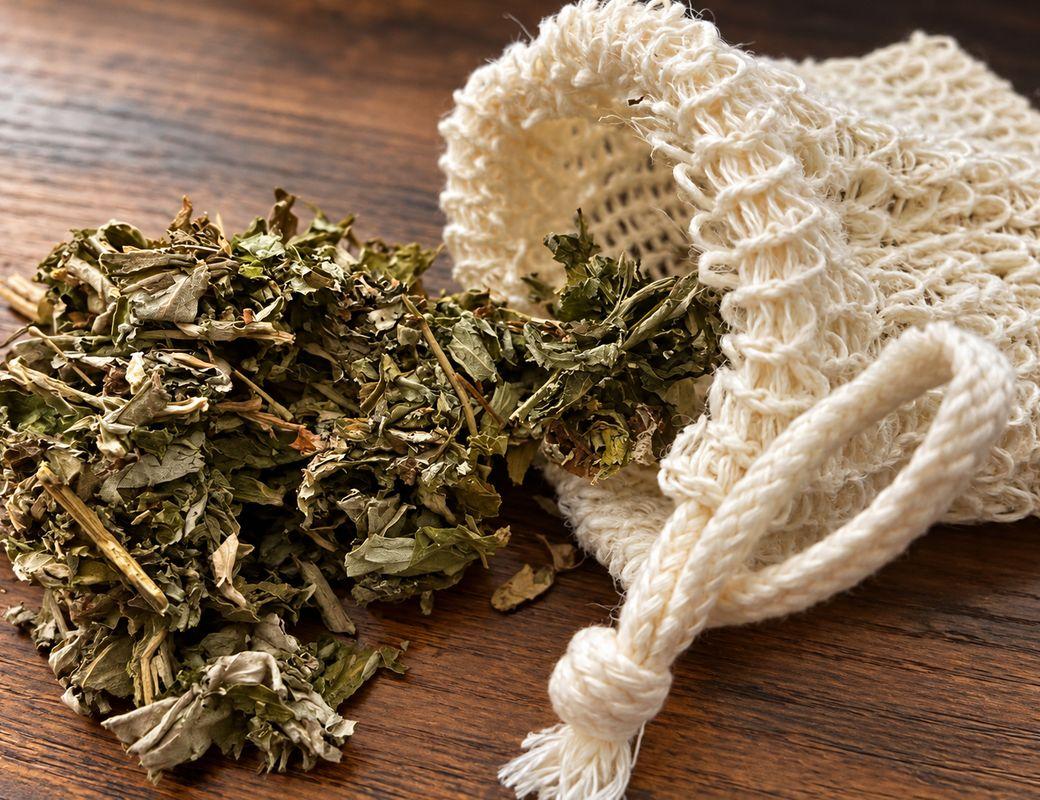
- Dried mugwort, properly identified, in small quantity
- A cotton or muslin sachet that is breathable
- A pen and a notebook for your dreams
- Some quiet in which to sleep
- An intention to be explored
To prepare the sachet, put about a teaspoon of the dried herb in the cloth and tie it off. Put it in your hands and draw three slow breaths. Think on what has been preying on your mind of late, be it a feeling you cannot account for, a dream you want to put to memory, or a question you have put off. There is no call for an elaborate incantation, just an intention.
One might say:
“Beneath the veil of quiet night,
May dreams emerge within my sight.
What morning brings, I shall recall,
The truth, the strange, the great, the small.”
It is a modern charm of original composition. Set the sealed sachet by the bed, out of reach of children and pets, and not near the face. Anyone with a sensitivity to mugwort pollen or scent should steer clear.
When to Perform the Mugwort Dream Ritual
It is a modern charm of original composition. Set the sealed sachet by the bed, out of reach of children and pets, and not near the face. Anyone with a sensitivity to mugwort pollen or scent should steer clear.
The mugwort dream ritual is not confined to a set schedule, yet in contemporary folk witchcraft some lunar phases and seasonal observances are given special weight.
By tradition, the New Moon is for new beginnings and self-discovery as well as the setting of intentions, so it is a good time to start delving into one’s dreams. The Full Moon stands for illumination and reflection along with a more acute intuition; the Waning Moon is for looking inward and letting go.
Then there is Samhain on October 31, an old Gaelic festival denoting the move into the year’s darker half. Pagan practice today tends to link this date with divination and paying respects to ancestors on the understanding that the veil separating the living from the spirit world is at its thinnest. It is therefore a suitable moment for some quiet contemplation and dream work.
A three-night run could start on October 29 and wrap up on the night of Samhain, with any last dreams put down and the ritual closed out on November 1.
In the end, one need not adhere to any specific moon or holiday. Such ties are symbolic, not matters of scientific fact when it comes to dreaming. What matters is having the right intention and an open mind to hear what the dreams have to say.
Night One: The Invitation
Observation is the order of the first evening. Sit for a few minutes in silence before you go to sleep and let your thoughts come to rest of their own accord.
Make this statement:
_ “Tonight, I welcome the dreams I may remember.” _
Do not try to dictate them. When the morning arrives, stay still for a moment and see what is there. Write it all down—a voice, a color, a room that was familiar yet impossible. Even if nothing is recalled, put that in the book too.
Night Two: The Question
Pick a question for the second night. It ought to be of a personal and reflective nature, not something where you would look for medical or factual direction.
For instance:
What am I ready to put behind me? What in my life wants more of my attention? What have I been putting off?
Jot it in your journal before turning in. If it is safe to do so, take hold of the sachet for a time and put it back where it belongs. As you get ready for bed, run the question through your mind once.
Record your dreams in the morning without jumping to put an interpretation on them. Dreams are given to be odd, full of emotion, and at odds with themselves. Not every picture is a hidden message or a prophecy. A wolf is sometimes a symbol, and sometimes it is only a wolf.
Night Three: The Listening
On the last night, there are no demands. No questions or expectations of what will transpire when your eyes are closed. Be silent for five minutes before bed and give some thought to the dreams you have set down over the last two days. Then go to sleep.
In the morning, write down what comes to you. Go through your entries and see if any people, places, or emotions are recurring.
Put these to yourself:
- Was there an emotion that kept showing up?
- Did I notice a shift in how many dreams I could put to paper?
- Has the practice made me more attentive to my inner life?
- Was there anything that called to mind an experience left to hang?
Research on dreams indicates that an interest in them and the keeping of a diary can alter how often they are remembered. So the notebook has a significance of its own in this rite, apart from whatever is put down to the mugwort.[2]
Closing the Ritual: What to Do With Your Mugwort
While a great deal of focus is placed on preparation in many rituals, little is said about what follows. Endings are worthy of some attention in their own right. After the three-night practice has run its course, take the sachet from where it has been beside your bed and have a look over your dream journal. Put in some time to recognize what you have been through, unusual or not.
The mugwort can be put away for another personal rite, provided it is in good order, or else be disposed of respectfully. For those who use the symbolism of plant, earth, and fire, there are two ways to end the practice that hold special meaning.
Returning Mugwort to the Earth
To give thanks and mark the end of a cycle, one can return herbs to the soil in the modern earth-centered tradition. The plant has had its part to play, and it is time to let it go. But an ecological point must be made: in some parts of North America, common mugwort is an invasive species, putting down rhizomes with aggressive force. One has to be careful with any material that has viable seeds or reproductive fragments.[3] Where local custom allows, a well-run compost is fine for clean, dried, and seedless mugwort. Under no circumstances should unknown or possibly viable matter be scattered in a garden, park, forest, or other natural setting. If that is not the way to go, then disposal is the responsible course of action. A symbolic return to the earth can be done without interring the herb. Stand outside with the closed sachet in hand and be aware of the ground beneath your feet.
Say:
“From root and leaf, your journey grew,
Through quiet nights, my dreams passed through.
With grateful heart, I now release,
And let this working rest in peace.”
Responsibly dispose of the herb. Should you be in a position to compost it safely, let yourself think of it as one day being returned to the soil. If not, have in mind that respecting the earth can mean shielding it from a plant’s uncontrolled proliferation. It is the showing of gratitude that counts, not how it is put away.
Releasing Mugwort Through Fire
Various ritual traditions have long made fire a means of transformation, purification, and release. With mugwort in particular, burning the dried herb in modern practice can stand for the end of dream work. An invitation was put out, something was taken in, and now the experience is left to rest.
Before going this route, make sure to look into any local fire restrictions. Smoke from burning plant matter irritates the respiratory system, and those with asthma or other allergies should steer clear of it. Do not burn mugwort in a closed bedroom or by the bed, nor use it as a way to take in the smoke. Where the law and conditions allow for outdoor burning, a small amount of the dried, clean herb can be placed in a suitable fireproof container and set to the flame, but only if it is under constant watch and with the means to put it out at hand.
As the herb burns, you may say:
“What came in dreams, I now release,
What remains shall rest in peace.
By fading flame and rising air,
I leave behind what is not mine to bear.”
Let the fire die out on its own. Do not handle the ashes until they have cooled. Warm embers are never to be scattered. Provided the material is untreated and local rules permit, cold ash can be disposed of appropriately, but do not let it enter waterways or any sensitive part of nature.
There is no need to burn anything for this ritual. A candle-free mental image of a flame will serve as well for personal symbolism and eliminates the risk of smoke or fire. The object is closure, not combustion.
Safety and Responsible Practice
Mugwort is well known in traditional herbalism, yet one should not take historical precedent as evidence of safety. According to the National Center for Complementary and Integrative Health, there has been little research on mugwort in humans, and its safety and efficacy for health have not been sufficiently demonstrated.[4]
Precautionary Notes:
- Pregnancy: Mugwort is off limits during pregnancy. Those looking to conceive should stay clear of any medicinal or ritual use until they have had medical advice.
- Allergies: People with a sensitivity to ragweed or other related plants may have a reaction to mugwort pollen.
- Ingestion: There is no call for internal preparations such as tinctures, essential oils or teas.
- Smoke: Herbs that are burned are respiratory irritants. For your own sake, eschew inhalation in favor of a smoke-free option.
- Sleep: Should the ritual put you at unease or get in the way of rest, discontinue it.
Health is not something to be put at risk by a rite.
The Meaning We Take With Us
In dream work, the finest element is not necessarily what transpires in our sleep but what we carry back to the world when we wake. It might be an unanticipated feeling or some odd image that lingers well past breakfast. Or a memory long forgotten. Then again, it could be nothing. There is worth in the silence as well.
The mugwort practice is not about any promise of the supernatural. It is meant to foster a more considered approach to our dreams and to prompt reflection and curiosity. On the third morning, the ritual is brought to an end. We offer thanks to the herb and put down our last thoughts. What we can is given back to the natural cycle, or symbolically to the fire. And then we go on. At times the mystery is not to be found in some other realm but is quietly present in our own mind, waiting for us to notice.
May your nights be peaceful, your dreams remembered, and your mornings full of wonder.
References and Further Reading
1. Neuropsychopharmacological Induction of (Lucid) Dreams: A Narrative Review (2024). A scientific review discussing substances traditionally associated with dream intensity and lucid dreaming, including mugwort. https://pmc.ncbi.nlm.nih.gov/articles/PMC11119155/
2. Schredl, M. (2022). Dream Recall Frequency, Lucid Dream Frequency, and Related Individual Differences. Research discussing dream recall, dream journals, and individual factors influencing dream remembrance. https://pmc.ncbi.nlm.nih.gov/articles/PMC9149660/
3. University of Maryland Extension. Mugwort (Artemisia vulgaris). Botanical information, growth characteristics, invasive behavior, and ecological considerations. https://extension.umd.edu/resource/mugwort
4. National Institutes of Health, National Center for Complementary and Integrative Health. Mugwort: Usefulness and Safety. A research-based overview of mugwort, the limitations of existing evidence, and safety considerations. https://www.nccih.nih.gov/health/mugwort
5. University of Florida IFAS Extension. Found an Invasive Plant? Here's What to Do Next (2026). Guidance on disposing of invasive plant material, including composting and burning considerations. https://blogs.ifas.ufl.edu/stlucieco/2026/09/18/found-an-invasive-plant-heres-what-to-do-next/
Author's note: The three-night ritual and spoken charms in this article are contemporary original compositions inspired by folk-herbal traditions. They are not presented as historically documented rituals or scientifically proven methods of altering dreams.
Responses
No responses yet — start the conversation.
More from the Magazine

The Spiritual Power of Tea ☕🌿🩷
How brewing your daily cup of tea becomes a sweet ritual for your heart & spirit.
Mr Moon's Materia Medica: Peppermint
An exploration of the magical, physical, and spiritual properties of Peppermint.

The Kitchen Sanctuary 🫖💞
How the Energy You Cook With Seasons Your Soul (and Your Pasta).