The Archetype of the Goddess Hecate
Guide in the Darkness and Ally at the Threshold of Change
Article · 3 min read · ·
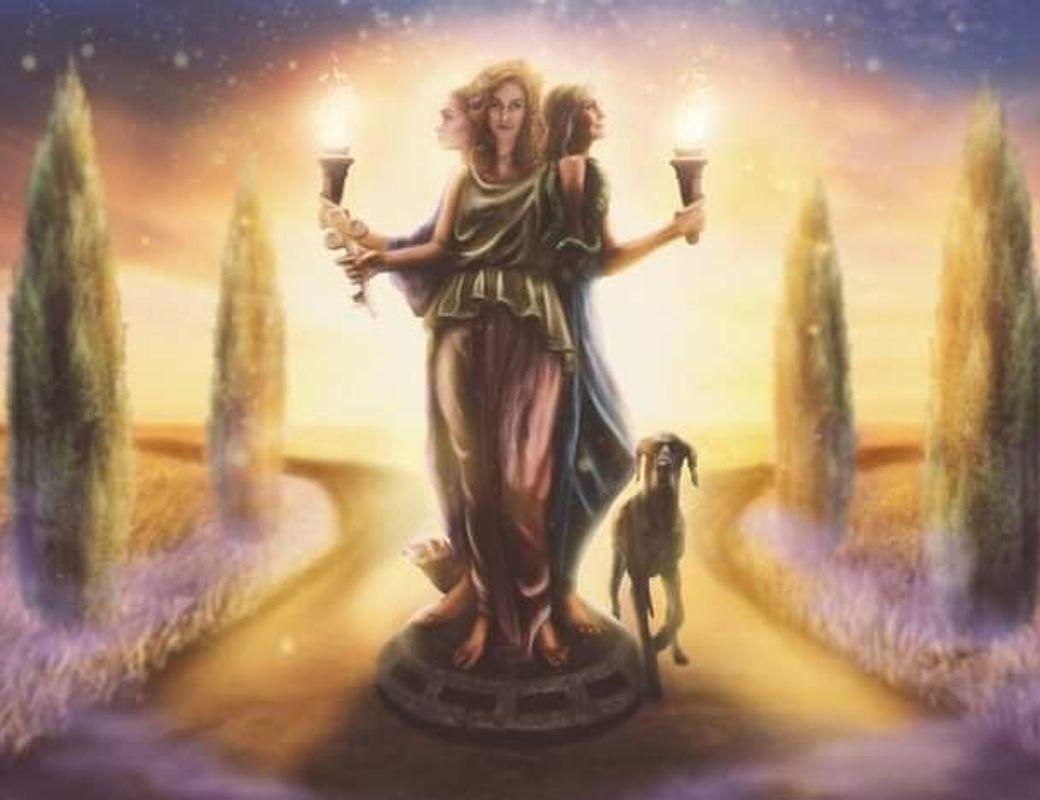
The name of Hecate has always sounded mysterious. She was the goddess of thresholds, transitions, magic, and deep knowledge. Yet throughout history, her image underwent significant distortions. Many shadow projections of early Christianity were cast upon her, and instead of a majestic guide, Hecate became imagined as something dark, frightening, and even threatening. However, when fear and prejudice are set aside, the archetype of Hecate reveals incredible resources for personal strength and transformation.
A Brief History of Hecate’s Cult
The earliest mentions of Hecate are found in Hesiod’s Theogony. Her cult reaches back to pre-Olympian times, with traces pointing to Caria in Asia Minor: in Lagina, a city of ancient Caria (in present-day Turkey), the temple of Hecate still remains. In myths, she appears as a goddess with Zeus’s special favor, granted dominion over earth, sea, and sky. Her cult spread across Greece and later into the Roman Empire.
Hecate is a triple goddess embodying three aspects: maiden, mother, and crone. She represents the three phases of the Moon, symbolizing the cycles of life and the constant flow from birth to completion. She is connected with the night, crossroads, the underworld, and at the same time with the protection of home and family.
Hecate in Myth
One of the best-known myths involving Hecate is the story of Persephone’s abduction by Hades. In it, Hecate appears as an ally of Demeter, helping her search for her daughter and later becoming Persephone’s companion in her journeys between the world of the living and the underworld. In this story, she does not appear as a threatening force but as a guide and helper who knows the way where others lose their path.
In various myths, Hecate is portrayed as an advisor to heroes, protector of those who seek knowledge, and patroness of magic. Her defining traits are wisdom, deep intuition, and the ability to illuminate the way through darkness.
The Evolution of Her Image
In the classical period, Hecate was honored at crossroads, where offerings were left, and prayers were made for protection in travel and aid in difficult choices. Over time, however, her image began to change.
In later periods, especially under the influence of Christianity, Hecate gradually became a symbol of “dark magic.” She was associated with witches, night terrors, danger, and even demonized. This was not her essence but rather a projection of collective human fears.
Thus, the majestic goddess of transitions and wisdom was pushed into the “shadow.” Yet this very shadow today can serve as a powerful resource for those who work with her archetype.
Here are some of Hecate’s many names that beautifully emphasize her elevated and protective side:
- Phosphoros – “light-bringer,” “torch-bearer”
- Soteira – “savior”
- Propolos – “guide”
- Kleidouchos – “she who holds the keys”
- Apotropaia – “guardian, protector”
Hecate in Modern Jungian Analysis
In depth psychology, the archetype of Hecate carries profound meaning. She represents the moment when we stand at a crossroads, unsure of which path to take. It is the archetype of transition - from one identity to another, from the past into the future.
Working with the archetype of Hecate can help to:
- find a way out of a confusing situation;
- make a difficult choice when no clear answer is visible;
- let go of the past that holds us back;
- support ourselves during crisis or transitional periods in life.
Imagining Hecate at our side, we connect with the part of the psyche capable of navigating the darkness. She grants strength and trust in our intuition, helping us see what is hidden and take a step forward even when the path is unlit.
Conclusion
Hecate is not the terrifying goddess of nightmares as she was sometimes portrayed, but a guide and ally. She symbolizes wisdom, the ability to navigate the unknown, and the art of transition.
By turning to the archetype of Hecate, we learn to accept change, trust the darker seasons of life, and find inner strength within them. Every threshold, every choice, and every step into the unknown can mark the beginning of a new stage. And Hecate is the one who carries the torch and lights the way.
Responses (14)

More from the Magazine

How to Make a Sigil When Your Brain Has Seventeen Tabs Open
A low-pressure, five-minute practice for clarity, focus, and intention
Your Witchcraft Doesn't Need to Cost More Than Your Grocery Bill
Build a meaningful practice with ordinary objects, intentional actions, and what you already own.
The Owl - Secrets of Wisdom
The symbolism of the nocturnal bird in mythology, magic, and spiritual practices