What Is a Folk Witch?
Folk witchcraft needs no fancy tools, just curiosity, understanding, and a grimoire of your own.
Article · 2 min read · ·
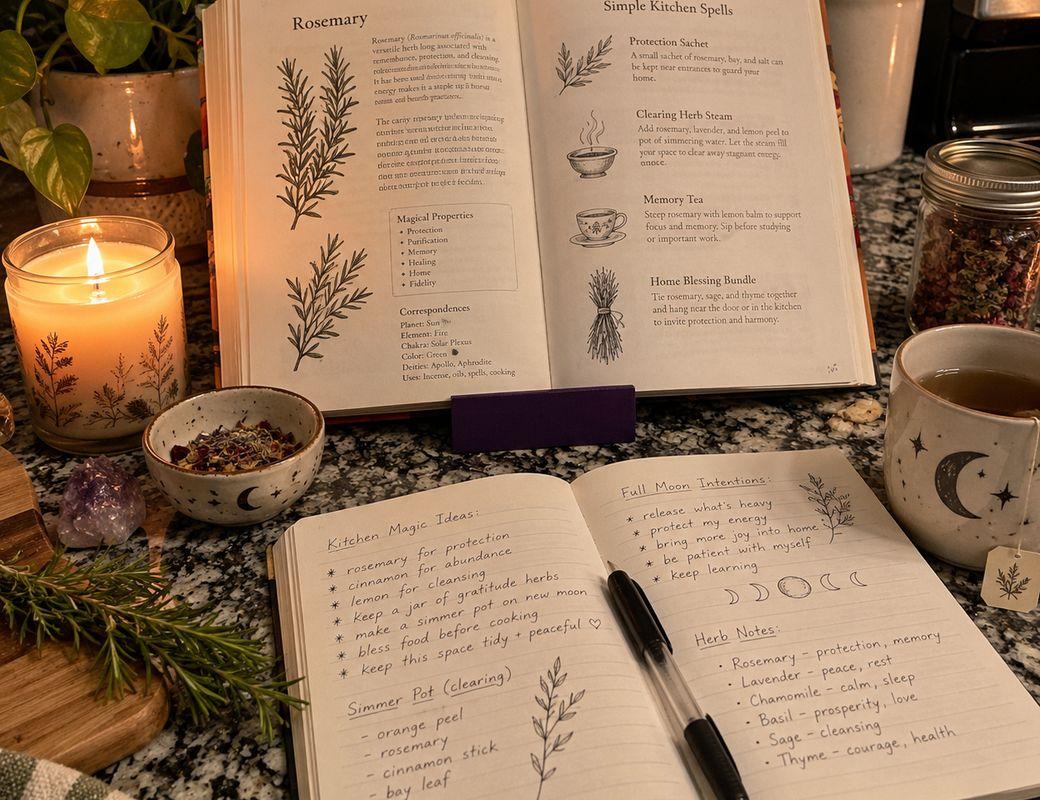
The folk witch is defined by a practice that has more to do with tradition, place, and the ordinary course of life than with any formal religion. It is driven by memory and curiosity.
One finds folk witchcraft in the quiet customs handed down from one generation to the next: the use of herbs or protective charms, an eye for the moon and the seasons, reading what nature has to say, or performing a small rite for luck, healing, or love. There was little point in committing such things to an elaborate grimoire or paying for a course of study. The work was done in the kitchen or the garden, in the fields, and in local superstition and family lore.
Social media would have you think otherwise about modern witchcraft, but there is no call for all the bells and whistles. Meaning does not come from having shelves of crystals, tools of a certain price, or an altar arranged for the sake of a photograph. Nor is it about amassing dozens of decks. Those are fine if they please you, but what is important is your own curiosity.
Curiosity as to who you are, and as to the land and history and plants and the odd little traditions of old. Folk witchcraft is as much a matter of asking why as it is of learning how. Why was rosemary put to use for protection? What made people hang particular plants over a door? Why were some days or weather patterns held to be of consequence?
Do not just take a spell at face value from the internet. Get to the source of the idea and put it to the test. Research it. If it resonates, keep it; if not, so be it.
A good folk witch will have a grimoire of their own, though not some flawless decorative volume. Make of it a living record of your findings: the folklore, the plant knowledge, the rituals and the failures, the questions and the discoveries.
There is no one way to be a folk witch. A practice in Appalachia is not the same as what you might see in Italy or the American South. Geography, culture, and history dictate the form.
In the end, it is wonderfully ordinary. A story your grandmother insisted was true. Seeds are put away from the garden. A candle put to flame with some intention. Rosemary by the door. You need not make yourself look the part. Be curious enough to make sense of the world, and you may well find out something of yourself in the process.
Responses
No responses yet — start the conversation.
More from the Magazine
Your Witchcraft Doesn't Need to Cost More Than Your Grocery Bill
Build a meaningful practice with ordinary objects, intentional actions, and what you already own.
The Owl - Secrets of Wisdom
The symbolism of the nocturnal bird in mythology, magic, and spiritual practices
How to Attract and Maintain Positive Energy
In Your Home and Other Spaces