Unlocking the Unseen Part Three: Mediumship and the Spirit Connection
The Third part in a Series on a Guide to Psychic Abilities
Article · 7 min read · ·
Read the previous articles in this series here:
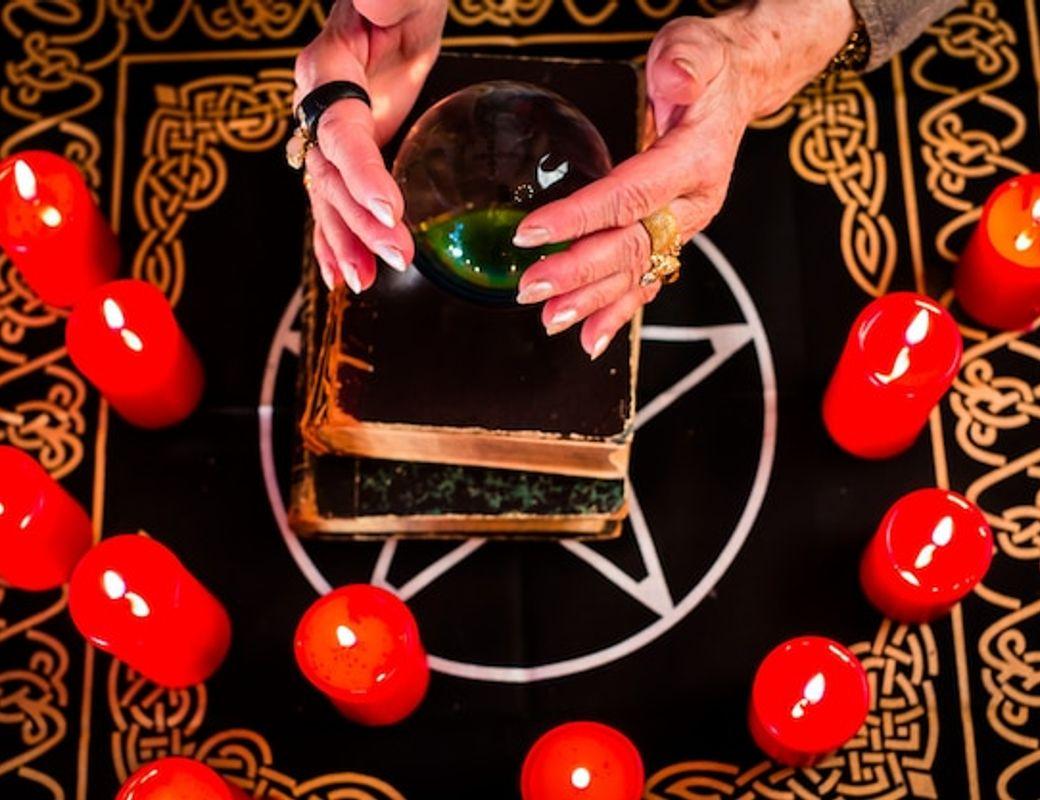
Across cultures and centuries, the veil between the living and the spirit world has captivated human imagination. From ancient oracles and shamans to modern spiritualists and psychic sensitives, the belief that it is possible to communicate with the dead has remained a central theme in both religion and mysticism. Mediumship—the ability to bridge the physical and spiritual realms—is one of the most profound and mysterious forms of psychic ability. It is a sacred gift, a responsibility, and a deeply personal experience that, for many, offers healing, closure, and a reaffirmation that life continues beyond the physical body.
In this third installment of Unlocking the Unseen, we explore the many facets of mediumship, breaking it down into three key forms: mental mediumship, trance mediumship, and physical mediumship. Each form is unique in how spirit communication occurs, the techniques used, and the sensations experienced by the medium. Whether a message is spoken, written, felt, or manifested physically, all forms of mediumship share one purpose: to prove that consciousness continues beyond death and that love transcends dimensions.
Mental Mediumship: Receiving Through the Mind and Senses
Mental mediumship is the most common form of mediumship practiced today. In this form, the medium acts as a receiver—tuning in to the spiritual realm using their intuitive senses. Messages may come in thoughts, feelings, images, sounds, or sudden knowing, and are then relayed to the sitter, often in the form of spoken words, symbolic impressions, or automatic writing.
The medium does not leave their body or go into a trance state; rather, they remain fully conscious and aware, interpreting the messages as they come. A spirit may convey a name, a scent, a personality trait, or a specific memory. For example, a medium might say, “Your grandmother is showing me a red cardinal and telling me that she always visited your window after she passed,” triggering a deep emotional validation for the sitter.
Some mental mediums are clairvoyant (seeing spirit), others are clairaudient (hearing spirit), and many are clairsentient (feeling spirit’s emotions or presence). Often, these “Clair senses” work together to form a cohesive message. The medium may describe how the spirit passed, what they looked like, or what message they want to deliver. Famous mental mediums such as John Edward, Lisa Williams, and Tyler Henry have popularized this form of spirit communication through television and live audience readings.
How to Develop Mental Mediumship:
Developing mental mediumship begins with strengthening your intuitive faculties and learning to quiet the analytical mind. Regular meditation, working with symbols, using divination tools like tarot or oracle cards, and keeping a spirit journal are helpful. Practicing automatic writing is also a powerful method to begin channeling messages in written form.
Joining a development circle provides structure and validation, as practicing with others often amplifies spirit activity. Over time, you’ll learn to distinguish between your own thoughts and messages from spirit by their emotional tone, speed, or symbolism.
Trance Mediumship: Becoming a Channel for Spirit
Trance mediumship involves a deeper level of connection, where the medium enters a relaxed, altered state of consciousness and allows a spirit being—often a guide, teacher, or loved one—to communicate directly through them. In this state, the medium may partially or fully surrender their awareness, permitting the spirit to speak through their voice, write through their hand, or use their energy field to relay teachings, guidance, or healing.
Unlike mental mediumship, where the medium interprets messages, trance allows spirit to take a more active role. The medium becomes the vessel—an open channel through which higher consciousness flows. Some trance mediums remain semi-aware and can recall parts of the experience, while others enter deep altered states and may remember nothing at all.
Historically, trance mediumship was central to the Spiritualist Movement of the 19th century. Mediums such as Leonora Piper, Estelle Roberts, and Maurice Barbanell (channel for Silver Birch) became well-known for delivering wisdom and evidence from the spirit world while in deep trance. These communications were often philosophical, focused on spiritual truths, or intended to uplift humanity.
How to Develop Trance Mediumship:
To develop trance mediumship, you must cultivate stillness, inner surrender, and a strong sense of trust. Begin with deep breathing, guided meditation, and visualization to ease into altered states. It’s essential to work with a trusted mentor or development group who understands the nuances of trance work and can create a safe and protected space.
Begin by channeling inspirational writing, then move into speaking aloud as the connection grows stronger. Trance mediumship takes time, patience, and consistency, but for many, it becomes a lifelong partnership with their guides and spiritual allies.
Physical Mediumship: Manifestations from Beyond the Veil
Physical mediumship is the rarest and most dramatic form of mediumship, in which spirit energy interacts with the physical environment in ways that can be directly observed, felt, or even recorded. Unlike mental or trance mediumship, which involve subjective impressions or altered states of consciousness, physical mediumship produces external phenomena that can be witnessed by others in the room—sometimes even documented through audio, photography, or instrumentation.
In a typical séance setting, participants may experience audible knocks, moving objects, or even spirit lights hovering near the medium. In more advanced cases, direct voice communication occurs—where voices are heard from the air around the room, not from the medium’s body. There have even been rare but powerful reports of materializations, where hands, faces, or full forms are seen in the séance room.
Notable physical mediums include Helen Duncan, Daniel Dunglas Home, and Eusapia Palladino, whose séances were studied by researchers and spiritualists alike. Helen Duncan, famously, was imprisoned under the Witchcraft Act in 1944 after allegedly revealing wartime information received from a sailor in spirit.
How to Develop Physical Mediumship:
Physical mediumship takes time, discipline, and the right environment. Begin by forming a dedicated development circle—a group of trusted individuals who sit regularly in a consistent setting. These circles help build spirit energy over time. Regular meditation, prayer, singing, and focusing on love and harmony raise the vibration of the room.
You may also use tools such as spirit trumpets, slate writing, or table tipping. Modern technology also plays a role: EVP recordings, spirit boxes, ITC (instrumental transcommunication), and even automatic writing or pendulums can be used to enhance contact. The Ouija board—though controversial—has long been used in séance settings as a form of spirit communication, especially when handled with caution, clear intention, and spiritual protection.
Spirits may also communicate via dreams, symbolic signs, or visits from angels and ascended masters. Beings such as Archangel Michael, Metatron, or Saint Germain may communicate through light, emotion, or intuitive downloads, offering higher guidance or healing.
A Note on Skepticism and Spirit Communication
Mediumship—especially physical—has faced centuries of skepticism. Fraudulent mediums have used trickery, leading to scientific studies and public doubt. While skepticism can help keep the field ethical and grounded, many authentic experiences remain unexplained and deeply moving for those involved.
For the aspiring medium, the goal is not to “prove” their gifts to skeptics but to approach the work with integrity, humility, and a desire to serve. When practiced ethically and with spiritual reverence, mediumship becomes a sacred tool of healing and connection.
Conclusion: A Sacred Bridge Between Worlds
Mediumship is not about spectacle—it is about service, healing, and the sacred act of reuniting loved ones across realms. Whether through mental impressions, trance states, or physical manifestations, each form of mediumship reminds us that the human soul does not end with death. Instead, it evolves, learns, and reaches back across the veil to offer love, comfort, and messages of hope.
This path calls for patience, dedication, discernment, and compassion. It is a lifelong spiritual practice that deepens our connection to the unseen, heightens our intuition, and ultimately expands our awareness of the universe as interconnected and eternal.
When we open ourselves to this work with reverence, and with care for our own spiritual hygiene and grounding, we not only receive messages from beyond—we become part of a sacred lineage of light bearers, tasked with reminding the world that love never dies.
Coming Soon in Part Four: Psychic Energy and the Empathic Connection
In the next installment of Unlocking the Unseen, we’ll explore the world of psychic energy—from reading auras and sensing vibrational fields, to the unique experiences of empaths, energy healers, and those who feel the emotional and physical states of others as their own. Learn how to identify your energetic sensitivity, protect your spiritual boundaries, and begin harnessing psychic energy for healing, insight, and personal growth.
Responses (4)
More from the Magazine
Your Witchcraft Doesn't Need to Cost More Than Your Grocery Bill
Build a meaningful practice with ordinary objects, intentional actions, and what you already own.

The Owl - Secrets of Wisdom
The symbolism of the nocturnal bird in mythology, magic, and spiritual practices

How to Attract and Maintain Positive Energy
In Your Home and Other Spaces