The Power of Symbols
Magical Emblems Through the Ages
Article · 13 min read · ·
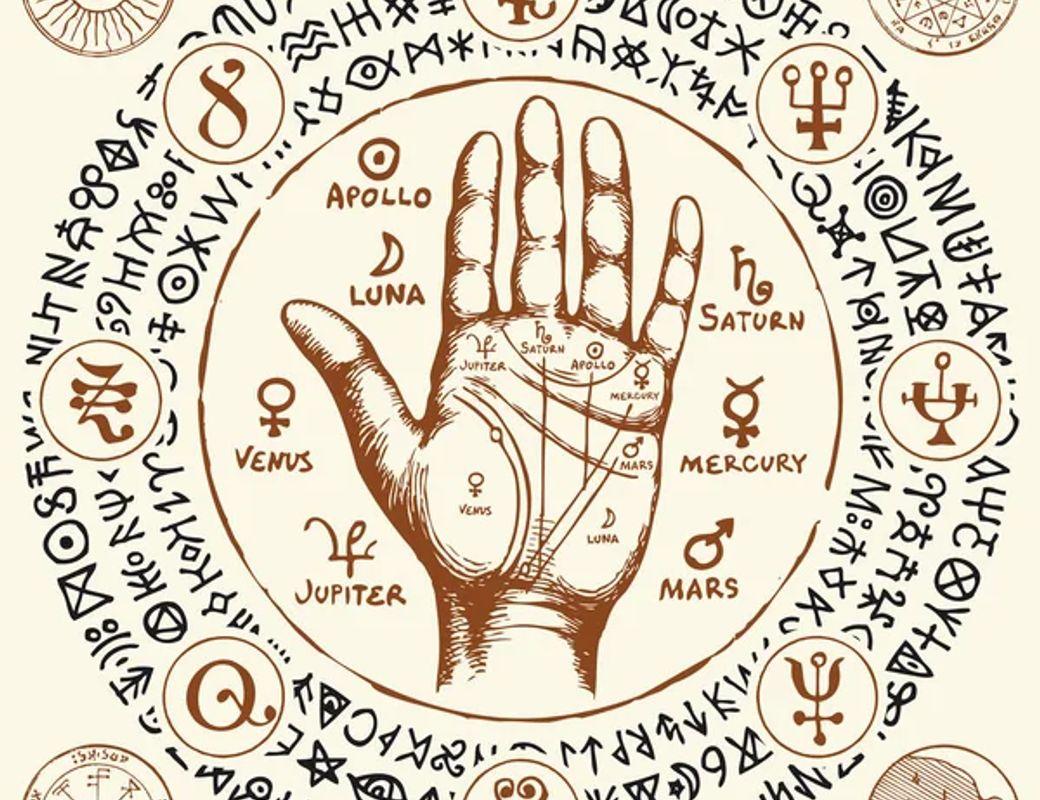
Since the dawn of civilization, humanity has looked to the divine, the mystical, and the unseen forces of nature to make sense of the world. Across cultures and centuries, magical symbols have served as bridges between the earthly and the ethereal, embodying protection, power, transformation, and sacred knowledge. These symbols were not mere decorations; they were tools—used in ceremonies, carved into amulets, etched onto altars, and invoked in spells.
In this article, we will explore the roots and deeper meanings of some of the world’s most powerful magical symbols—emblems that have shaped ritual, protected sacred knowledge, and guided spiritual seekers for millennia.
1. The Pentacle and the Pentagram
Two of the most recognized symbols in modern witchcraft and ceremonial magic are the pentagram and the pentacle, often confused but distinct in their presentation and use.
The pentagram is a five-pointed star, typically drawn with a single unbroken line. It has been used for thousands of years, appearing as early as 3000 BCE in Mesopotamian inscriptions. In Pythagorean thought, the pentagram represented mathematical perfection and the harmony of nature.
The pentacle, by contrast, is a pentagram enclosed within a circle. This additional boundary emphasizes unity, protection, and the sacred circle of life.
Meaning and Magical Use:
In Western occultism, each point of the pentagram represents one of the five classical elements: Earth, Air, Fire, Water, and Spirit. When upright (one point facing up), it symbolizes balance and spiritual ascension. When inverted, it is often (though not always) associated with materialism, chaos, or darker magical practices.
The pentacle is commonly placed on an altar in Wiccan rituals, representing Earth and used to consecrate objects, invoke elemental forces, or create protective boundaries during spellwork.
2. The Egyptian Ankh (☥)
The ankh is one of the most ancient and enduring magical symbols. Originating in Egypt over 5,000 years ago, the ankh resembles a cross with a looped top. It was often held by deities in art and hieroglyphs and is closely tied to the concept of eternal life.
Meaning and Magical Use:
Known as the “key of life” or “crux ansata,” the ankh symbolized vitality, divine protection, and the afterlife. Priests and magicians in ancient Egypt used the ankh in ceremonies of resurrection, healing, and initiation.
Amulets in the shape of ankhs were worn by both the living and the dead. In funerary rituals, the ankh was often placed with the deceased to ensure safe passage into the Duat (underworld). In modern esoteric traditions, it remains a potent symbol of immortality, sacred union, and balance between the divine masculine and feminine.
3. The Eye of Horus (Wedjat)
Another magical Egyptian symbol, the Eye of Horus, was associated with protection, healing, and wisdom. This eye belonged to the falcon-headed god Horus, who lost it in battle with Set, the god of chaos. The eye was magically restored by Thoth and became a powerful symbol of restoration and wholeness.
Meaning and Magical Use:
The Eye of Horus was inscribed on amulets, sarcophagi, and magical tools to ward off evil and misfortune. It was also used in surgical and medicinal texts to ensure divine assistance in healing. Each part of the stylized eye represents a fraction or component of sensory perception, connecting it to deep esoteric systems of knowledge and sacred geometry.
In modern mysticism, it is often used as a protective sigil or in divination work to enhance intuitive sight.
4. The Celtic Dara Knot
Among the ancient Celts, knotwork designs—complex interwoven patterns with no beginning or end—were rich in symbolism and spiritual meaning. One of the most powerful is the Dara Knot, derived from the Gaelic word doire, meaning “oak tree,” which held sacred significance for the Druids.
Meaning and Magical Use:
The Dara Knot symbolizes inner strength, resilience, and ancestral roots, much like the mighty oak. Its endless weave also reflects the themes of eternity, interconnection, and the cyclical nature of life and rebirth.
These knots were carved into sacred sites, stone crosses, jewelry, and manuscripts such as the Book of Kells. In Druidic and pagan ceremonies, knot symbols were often used in binding rituals, blessings, and to represent the soul’s journey through lifetimes.
5. The Ouroboros
One of the most ancient mystical symbols, the Ouroboros is a serpent or dragon devouring its own tail. Appearing in ancient Egyptian iconography and later in Greek, Gnostic, and alchemical texts, it symbolizes infinity, unity, and the cycle of death and rebirth.
Meaning and Magical Use:
The Ouroboros represents the eternal return—the endless cycle of destruction and creation. Alchemists adopted the symbol to express the transformative nature of the Magnum Opus (Great Work), where materials and the soul are transmuted.
In magical philosophy, it speaks of self-sufficiency, renewal, and the interconnectedness of all things. It’s often visualized in meditative or trancework to grasp the paradox of the universe: that beginning and end are the same.
6. The Seal of Solomon (Hexagram)
The Seal of Solomon, also known as the hexagram, is a six-pointed star formed by two interlocking triangles. Though commonly recognized today as the Star of David in Judaism, it has deep roots in mystical and magical traditions.
Meaning and Magical Use:
This symbol was believed to have been used by King Solomon to command spirits and demons, according to medieval grimoires. The upward triangle represents fire and masculine energy, while the downward triangle stands for water and feminine energy—together symbolizing the union of opposites and the harmony of divine forces.
Ceremonial magicians, especially in the Western Hermetic tradition, inscribed the hexagram in talismans, magical seals, and in invoking or banishing rituals to call upon planetary intelligences and balance polarities within the self.
7. The Triskelion and the Triquetra
Found in prehistoric sites such as Newgrange in Ireland, the triskelion, or triple spiral, consists of three spirals radiating from a central point. A related and equally significant symbol is the triquetra—a three-cornered knot composed of interlocking arcs.
Meaning and Magical Use:
Both symbols represent triplicity in nature and spirit—such as the realms of land, sea, and sky; life, death, and rebirth; or the Maiden, Mother, and Crone aspects of the divine feminine.
In Celtic Druidry, the triskelion signifies the motion of life and spiritual evolution, while the triquetra is often used to invoke divine protection or the sacred power of three. These symbols were used in initiation rites, seasonal ceremonies, and meditative practices, and remain powerful emblems in modern pagan and Wiccan traditions.
8. The Infinity Symbol (∞)
The infinity symbol, resembling a horizontal figure eight, is a more modern entry into magical symbolism but carries deep esoteric meaning drawn from older archetypes like the Ouroboros.
Meaning and Magical Use:
Representing eternity, limitless potential, and the cyclical nature of time, the infinity symbol has been used in modern metaphysical practices to anchor spells or meditations focused on abundance, reincarnation, eternal love, and cosmic balance.
It may be drawn during ritual to represent infinite energy, worn as a charm for protection or manifestation, or used in visualization techniques to expand consciousness beyond linear thinking.
9. The Evil Eye (Nazar)
A powerful symbol of protection, the Evil Eye—known in Greek as mati or in Turkish as nazar—is believed to ward off harm caused by envy or malevolent stares.
Meaning and Magical Use:
The symbol often appears as a stylized eye, usually blue and white, and is worn as jewelry or hung in homes and sacred spaces to deflect negative energy. The belief in the Evil Eye is ancient, with roots in Mesopotamia, Egypt, and the Mediterranean, and has persisted across many cultures.
In magical practice, the Evil Eye can be incorporated into protection spells, cleansing rituals, and talismans to block psychic attacks, jealousy, and curses. It serves not only as a shield but also as a reminder of the spiritual impact of intention and thought.
10. The Triple Goddess Symbol
Representing the divine feminine in her threefold form—Maiden, Mother, and Crone—the Triple Goddess symbol is composed of a waxing crescent, full moon, and waning crescent.
Meaning and Magical Use:
This symbol honors the cycles of the moon, the phases of womanhood, and the life-death-rebirth continuum. It is central to many Wiccan and neo-pagan paths and is often invoked in rituals of fertility, intuition, transformation, and lunar magic.
It is inscribed on chalices, altar cloths, or worn as jewelry by those who seek connection with the Goddess in her many aspects.
11. The Hamsa Hand (Hand of Fatima or Hand of Miriam)
The Hamsa, a palm-shaped amulet with an eye in its center, is a universal symbol of protection, blessings, and divine power.
Meaning and Magical Use:
Appearing in Middle Eastern, North African, Jewish, and Islamic traditions, the Hamsa is believed to ward off the Evil Eye, bring good fortune, and offer spiritual shelter. The hand symbolizes the divine presence watching over and guarding the bearer.
In magical use, it’s often hung over doorways, placed on altars, or worn as a talisman. The central eye acts as both a symbol of awareness and a shield against unseen threats.
12. The Lotus Flower
A sacred emblem in Hinduism, Buddhism, and Egyptian mysticism, the lotus flower symbolizes enlightenment, purity, and spiritual awakening.
Meaning and Magical Use:
Growing from the mud but blooming above the water, the lotus teaches that the soul can rise above worldly difficulties and unfold into divine wisdom. In magical and meditative practice, the lotus is used as a symbol of inner growth, chakra alignment, and connection to higher realms.
It is invoked in sacred rituals, energy healing, and spiritual transformation, reminding practitioners that beauty and divinity often emerge from shadow and struggle.
13. The Spiral
The spiral is one of the oldest mystical symbols found in prehistoric carvings across the globe—from Newgrange in Ireland to the Americas and beyond.
Meaning and Magical Use:
It represents evolution, journey, and spiritual development—the inward path to the self or the outward expansion of consciousness. The spiral can be seen in galaxies, seashells, and natural forms, and is a sacred geometry pattern of the universe.
In magical work, it is used in trancework, meditations, and pathworking to connect with ancient rhythms, the divine feminine, or the cycles of life.
14. The Flower of Life
The Flower of Life is a complex geometric figure made of multiple evenly spaced, overlapping circles arranged in a flower-like pattern. It appears in sacred sites around the world, from the Osirion temple in Egypt to ancient manuscripts and architecture in various mystical traditions.
Meaning and Magical Use:
Considered a visual expression of the blueprint of creation, the Flower of Life symbolizes unity, harmony, and the interconnectedness of all life. It is a powerful symbol in sacred geometry and spiritual philosophy, believed to contain the patterns of existence itself—including the Tree of Life, Seed of Life, Metatron’s Cube, and Platonic solids.
In magical practice, it is used to enhance meditative focus, activate spiritual awakening, and align energetic fields.
15. The Vesica Piscis
The Vesica Piscis is a shape formed by the overlapping of two identical circles, where the center of each lies on the circumference of the other. It has appeared in Christian art, alchemical texts, and sacred geometry since antiquity.
Meaning and Magical Use:
This symbol represents divine union, the merging of opposites, and the gateway between worlds. It has been associated with the sacred feminine, the womb of creation, and the intersection of the material and spiritual realms.
In magical and mystical traditions, the Vesica Piscis is a portal symbol used to access liminal spaces, balance dual energies, or invoke spiritual rebirth.
16. The Tree of Life
The Tree of Life is a universal symbol found in countless spiritual traditions—from Kabbalah to Norse mythology to Celtic Druidry. Often depicted as a tree whose roots and branches mirror each other, it represents the connection between heaven and earth, body and soul, and the cycles of life.
Meaning and Magical Use:
In Kabbalistic mysticism, the Tree of Life is a diagram of the ten Sephirot, or divine emanations, that illustrate the structure of the cosmos and the path of spiritual ascent. In other traditions, it symbolizes growth, ancestry, divine wisdom, and the unity of all existence.
This symbol is used in meditation, altar work, and visualization to connect with divine knowledge, explore spiritual lineage, and awaken inner wisdom.
17. The Seed of Life
The Seed of Life is a sacred geometric figure composed of seven overlapping circles, forming a rosette-like pattern. It is a foundational component of the Flower of Life and often seen as the starting point of creation.
Meaning and Magical Use:
The Seed of Life represents divine potential, cosmic birth, and the blueprint of the universe. It symbolizes the earliest stage of spiritual growth and consciousness—before manifestation takes full form.
Practitioners use the Seed of Life in spells and meditations related to new beginnings, fertility, manifestation, and energetic alignment, especially when working with sacred geometry or vibrational energy fields.
18. The Yin-Yang (☯)
Rooted in Taoist philosophy, the Yin-Yang is a circular symbol divided into black and white swirls, each containing a small dot of the opposite color. It represents the duality and harmony inherent in all aspects of life.
Meaning and Magical Use:
Yin symbolizes the feminine, receptive, dark, and intuitive aspects of nature, while Yang embodies the masculine, active, bright, and logical energies. Together, they express the principle that opposites are interdependent and ever-flowing—constantly shifting into and informing one another.
In magical and energy work, the Yin-Yang is invoked to balance polarities, harmonize internal energies, and understand the deeper rhythm of the universe. It’s a foundational symbol in martial arts, Chinese medicine, feng shui, and Eastern mysticism.
19. The Caduceus
The Caduceus is a staff entwined by two serpents, often topped with wings. While commonly mistaken today as a symbol of medicine, its deeper origins lie in Greek mythology, Hermeticism, and occult symbolism.
Meaning and Magical Use:
The Caduceus was carried by Hermes (Mercury)—the messenger god and guide of souls—symbolizing communication, transformation, alchemy, and the balance between opposites. The two serpents represent dual forces such as masculine/feminine, heaven/earth, or conscious/unconscious mind, while the central rod signifies the spine or energy channel in esoteric traditions like Kundalini yoga.
In magical and metaphysical practices, the Caduceus is used to symbolize spiritual awakening, energetic alignment, and the movement of life force energy (chi or prana) through the chakras. It appears in Hermetic magic, healing arts, and rituals aimed at transformation or ascension of consciousness.
20. The Sigil
Unlike fixed traditional symbols, a sigil is a custom magical symbol, often created by an individual practitioner for a specific magical intent. Rooted in chaos magic but with older roots in medieval grimoires, sigils are crafted through the stylization of a written intention.
Meaning and Magical Use:
The process of making a sigil involves reducing a statement of desire (“I attract prosperity”) into a unique symbol through letter elimination and artistic design. The final sigil is then charged with emotional or energetic focus—via meditation, trance, or ritual—and released into the unconscious to manifest the intention.
Sigils are discreet, personal, and adaptable—often drawn in chalk, carved in candles, or visualized during meditation. They are used in spellwork for protection, love, prosperity, or personal transformation.
Conclusion: Sacred Symbols as Living Portals
These symbols, etched into stone, painted on temple walls, inscribed in grimoires, or inked onto skin, are more than historical curiosities. They are living archetypes—active keys to the subconscious mind and spiritual realms. Whether worn for protection, used in ritual, or meditated upon for deeper insight, magical symbols continue to enchant, empower, and guide those who walk the path of mystery.
In every culture and every age, symbols remind us that language is not the only way to communicate with the universe—sometimes, a single sign holds the wisdom of a thousand words.
Responses (4)


More from the Magazine
Your Witchcraft Doesn't Need to Cost More Than Your Grocery Bill
Build a meaningful practice with ordinary objects, intentional actions, and what you already own.
The Owl - Secrets of Wisdom
The symbolism of the nocturnal bird in mythology, magic, and spiritual practices
How to Attract and Maintain Positive Energy
In Your Home and Other Spaces