The Green Man Archetype
A Symbol of Rebirth, Nature’s Vital Force, and the Eternal Cycle of Life
Article · 4 min read · ·
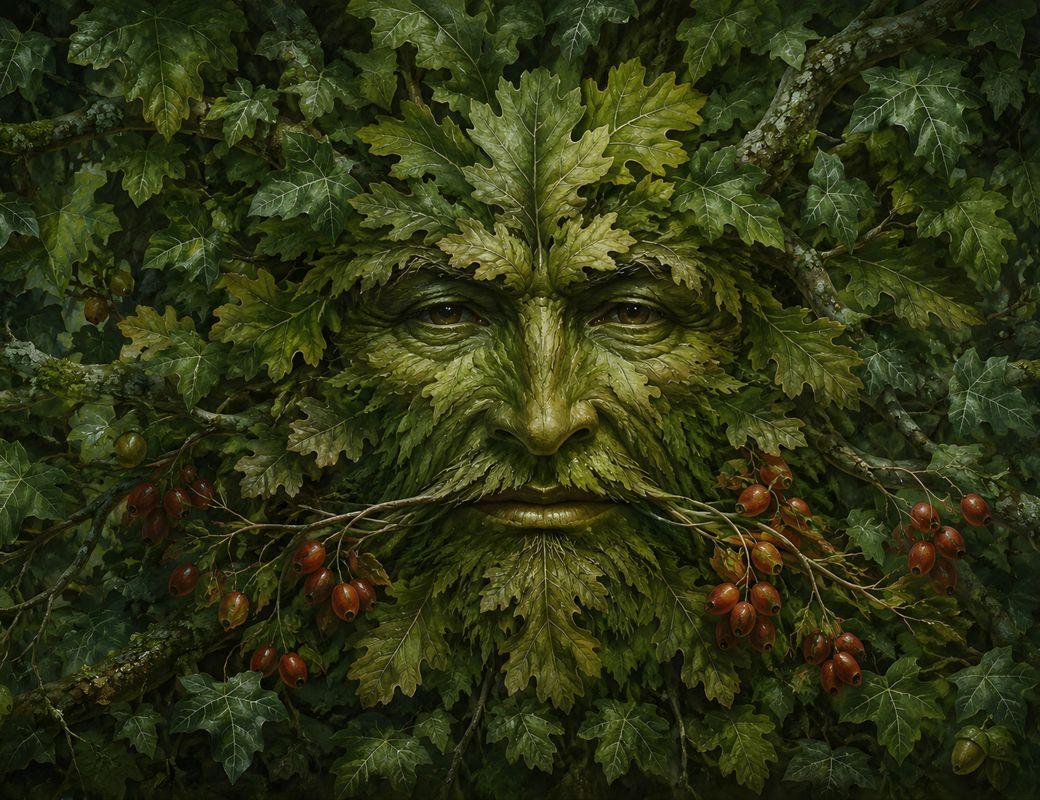
Among the many symbols found within pagan traditions, there is one image that has inspired mystics, artists, poets, and spiritual seekers for centuries. It is the Green Man - a mysterious spirit of nature whose face emerges from leaves, branches, and twisting vines. His image can be found in ancient stone carvings, medieval churches, folk legends, and modern spiritual practices.
The Green Man is one of the most recognizable symbols of rebirth, vitality, and the continuous renewal of nature. He reminds us of a simple yet profound truth: life never stands still. Everything moves through cycles of birth, growth, maturity, completion, and new beginnings.
Who Is the Green Man?
Despite the popularity of this figure, the Green Man is not usually considered a distinct deity in most traditions. Rather, he is an archetype or embodiment of nature’s life force itself.
His face is almost always depicted surrounded by foliage or literally emerging through vegetation. Sometimes leaves, flowers, or vines grow from his mouth or eyes. These images symbolize the inseparable connection between humanity and nature, reminding us that we are part of one great living organism.
Many scholars believe that the Green Man archetype existed in various cultures long before the modern name was coined. Elements of this figure can be found in Celtic legends, European folklore, forest spirits, and deities associated with vegetation and fertility.
The Green Man became especially popular within modern Pagan and Wiccan traditions, where he is often viewed as the masculine aspect of nature, the companion of the Great Goddess, and the guardian of forests, fields, and wild places.
A Symbol of Life’s Cycles
The central message of the Green Man is cyclical renewal.
Each year nature demonstrates this process. In spring, the first shoots emerge. Summer brings life to its fullest expression. Autumn is the season of harvest and reflection. Winter allows the earth to rest before a new cycle begins.
The Green Man is present in each of these phases.
He reminds us that endings are not failures. Fallen leaves become nourishment for new growth. Rest is not the same as inactivity. The darkness of winter prepares the soil for spring’s awakening.
For modern people, this lesson is especially important. We often strive for constant growth, productivity, and forward momentum, forgetting that even nature experiences periods of rest.
The Green Man Archetype in Psychology
Viewed through the lens of archetypal psychology, the Green Man represents our natural, instinctive self that seeks harmony with life.
This archetype reminds us of our connection to the body, natural rhythms, creativity, and inner vitality.
When we become disconnected from nature, ignore our own needs, or live entirely in a state of constant busyness, the Green Man seems to call us back to our roots.
His message is simple: growth does not always mean doing more. Sometimes it means learning how to listen to yourself.
How to Work with the Green Man Archetype
One of the best ways to connect with this archetype is through mindful interaction with nature.
Begin with simple observation. Take a walk through a park, forest, or garden. Pay attention to the trees, plants, changing seasons, birdsong, and the scent of the earth after rain.
Ask yourself a few questions:
✨What cycle am I currently experiencing in my life?
✨What part of my life is ready to grow and develop?
✨What has fulfilled its purpose and is ready to be released?
✨Where do I need to slow down, and where do I need to take action?
Keeping a seasonal journal can be a valuable practice. Observe changes in nature while also reflecting on your own inner transformations.
The Green Man archetype also pairs beautifully with creative activities. Drawing, gardening, working with plants, creating nature-inspired crafts, or even growing a small plant on a windowsill can become meaningful ways to strengthen this connection.
Another simple practice is expressing gratitude to nature. During a walk, notice the things that bring you joy: sunlight filtering through the trees, the fragrance of flowers, or the rustling of leaves. Conscious gratitude helps us feel like part of a larger living world.
The Green Man as a Teacher of Spiritual Growth
On a spiritual level, the Green Man teaches us to trust the natural processes of life.
We cannot force a seed to sprout before it is ready. We cannot rush the changing of the seasons. In the same way, many inner transformations require time, patience, and care.
The Green Man reminds us that true strength does not always appear through struggle or control. Often, it is expressed through our ability to work with life’s natural rhythms, recognize opportunities for growth, and accept the necessity of change.
His greatest lesson is that every ending contains the seed of a new beginning.
When we learn to see life as a continuous cycle of renewal, fear of change gradually gives way to trust. With that trust comes a deeper sense of connection - to ourselves, to nature, and to the world around us.
The Green Man reminds us that we are not separate from nature - we are part of it. And just as forests are reborn after every winter, each of us possesses the ability to find new strength, creativity, and renewal time and time again.
Responses (2)
More from the Magazine

Your Witchcraft Doesn't Need to Cost More Than Your Grocery Bill
Build a meaningful practice with ordinary objects, intentional actions, and what you already own.
The Owl - Secrets of Wisdom
The symbolism of the nocturnal bird in mythology, magic, and spiritual practices
How to Attract and Maintain Positive Energy
In Your Home and Other Spaces