The Descent of Inanna
The Predecessor of Persephone
Article · 4 min read · ·
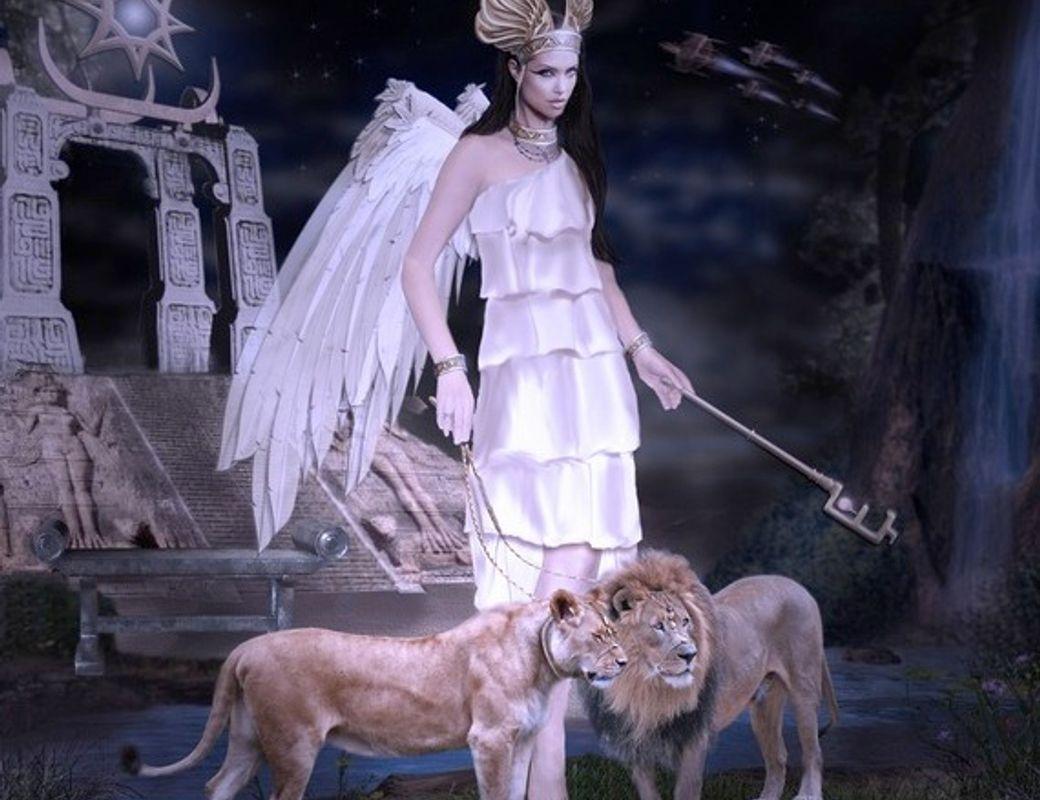
“From the Great Above she opened her ear to the Great Below.”
This ancient Sumerian story was never meant to frighten or overwhelm. It was told to explain why the land grows quiet, why life sometimes withdraws, and why renewal always returns. Long before Persephone’s name was spoken in Greece, the people of Mesopotamia listened to the tale of Inanna, a goddess whose journey taught them how the world breathes in and out through the seasons.
Inanna was revered as a goddess of love, fertility, and sacred order, but she was also a keeper of balance. She ensured that kings ruled justly, that crops flourished, and that the rhythms of life moved in harmony. In later centuries she would be known as Ishtar, yet her earliest stories speak less of dominance and more of responsibility—the weight of sustaining life itself.
Her descent into the Underworld was understood in many ways. Some said she went to honor the death of Gugalanna, the Bull of Heaven and consort of her sister Ereshkigal. Others believed she sought reconciliation with that grieving sister, whose realm was shaped by loss and sorrow. Still others saw the journey as a sacred necessity: a turning inward, a descent into stillness so that renewal could one day rise again.
Before she departed, Inanna prepared with care and intention. She adorned herself not out of vanity, but as a reminder of the sacred roles she carried—her crown, her beads, her garments, each symbol reflecting authority, devotion, and responsibility. She then entrusted her faithful attendant Ninshubur with clear instructions: if she did not return after three days and nights, help must be sought.
At the gates of the Underworld, Inanna was asked to release one symbol at a time. With each threshold crossed, she let go of certainty, of rank, of protection. By the final gate, she stood stripped of all titles and trappings, meeting the depths not as a queen, but as a being open to transformation.
The Underworld itself was not depicted as evil, but as heavy with grief—the place where endings are fully felt. There, Inanna encountered her sister Ereshkigal, ruler of that shadowed realm. Overcome by the weight of sorrow and stillness, Inanna fell silent, and her absence was immediately felt above.
Without her presence, the world paused. Growth slowed, desire faded, and the land rested as if holding its breath. To the Sumerians, this was not punishment, but winter—a sacred interval when life withdraws in order to endure.
When the allotted time passed, Ninshubur kept her promise. She sought the aid of Enki, god of wisdom and compassion. Enki did not respond with force or command. Instead, he shaped two gentle beings, fashioned from the dirt beneath his fingernails—creatures neither male nor female, neither living nor dead. They were sent not to challenge the Underworld, but to listen.
These beings entered Ereshkigal’s realm and mirrored her grief, acknowledging her pain rather than denying it. Moved by this recognition, Ereshkigal relented. Inanna was released, restored to life, and allowed to return—yet the balance of the worlds still required an exchange.
The cycle could not be broken. Someone had to take her place for a time.
When Inanna returned to the world above, she found that life had gone on without her. Those who mourned her were spared. But her husband, Dumuzi, god of agriculture and shepherds, had not shared in that grief. In keeping with the laws of balance, he was chosen to descend in her stead, spending part of the year in the Underworld. Later, his sister Geshtinanna, a goddess of poetry and reflection, would share this burden so that no one carried it alone.
Through this exchange, the seasons were explained. When Dumuzi descended, the land grew quiet and bare. When he returned, the fields turned green, animals bore young, and life stirred once more. The Sumerians understood this not as tragedy, but as cooperation between life and rest, growth and stillness.
Centuries later, the Greeks would tell a similar story through Persephone and her mother Demeter. Persephone’s time below marked winter; her return brought spring. Though shaped by a different culture, the message echoed the same truth: descent is not failure, and absence is not the end.
Both myths taught ancient people that the world moves in cycles, and that these cycles are sacred. Life cannot bloom endlessly without rest. Light gains meaning through darkness. Renewal is born from surrender.
For modern readers, Inanna’s story remains quietly powerful. It reminds us that withdrawal, grief, and stillness are not signs of weakness, but essential phases of transformation. Like the earth itself, we are allowed to pause, to release, and to return renewed.
Inanna’s descent is not a tale of loss, but of balance restored. It is a story that explains the seasons, honors compassion, and assures us that after every winter, life finds its way back to the light.
Responses
No responses yet — start the conversation.
More from the Magazine

Your Witchcraft Doesn't Need to Cost More Than Your Grocery Bill
Build a meaningful practice with ordinary objects, intentional actions, and what you already own.
The Owl - Secrets of Wisdom
The symbolism of the nocturnal bird in mythology, magic, and spiritual practices

How to Attract and Maintain Positive Energy
In Your Home and Other Spaces