The Book of Shadows: A Practical Guide
From notebooks and binders to digital grimoires, how to build a system that actually grows with you
Article · 23 min read · ·
Introduction
A Book of Shadows is often described as something mysterious, even secretive, but in practice it is far more grounded than the name suggests. At its simplest, it is a personal record of spiritual work: spells, rituals, dreams, observations, and the slow development of a lived practice over time.
It is not a book you are meant to get right on the first try. It is a book that becomes clearer the longer you use it.
For some, it begins as a single notebook filled with scattered notes and half formed ideas. For others, it is a structured binder with dividers and carefully organized sections. Increasingly, it exists in digital form, encrypted files and private documents that function as modern grimoires. Most practitioners eventually arrive at some combination of all three.
What matters is not the format, but the consistency of use.
A Book of Shadows is less about recording magic as something external and more about documenting how your practice actually behaves over time. What works, what does not, what changes as you change. It becomes a record not just of intention, but of experience.
And in that sense, it is less like a finished book and more like an unfolding map.
The question is not whether you are doing it correctly.
The question is how to build one that you will actually keep returning to.
Choosing Your Medium: Paper, Binder, Digital, or Hybrid
Before a single entry is written, the most important decision is not what goes inside the Book of Shadows, but what form it will take. The medium shapes everything that follows, including how often you use it, how easily you return to it, and how naturally it becomes part of your practice.
There is no single correct format. Each one carries different strengths, and each one changes the rhythm of how your record develops over time.
The handwritten notebook
A bound journal creates continuity. It has a beginning, an ending, and a physical presence that anchors the practice. Writing by hand slows thought, which often deepens focus and intention. It also creates a record that is uniquely personal in a way typed text rarely is.
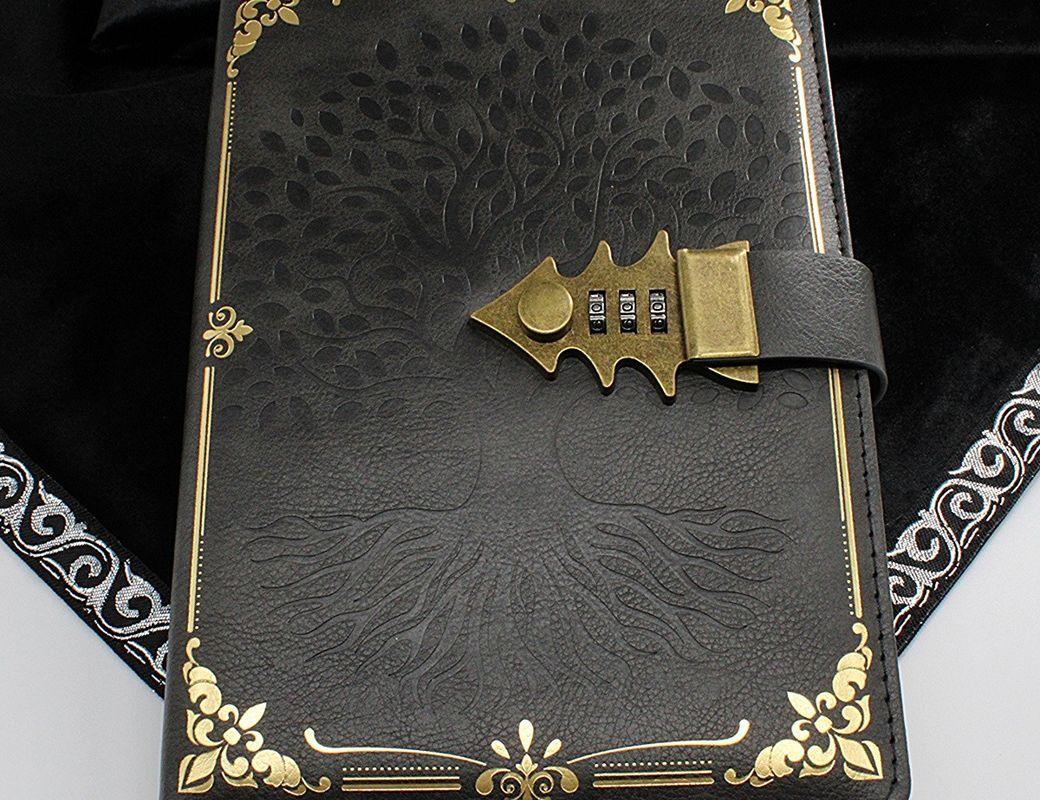
This can be as simple as a spiral notebook or as elaborate as a leather bound journal. Some practitioners prefer decorative books with locks, while others choose plain, unmarked notebooks that do not draw attention. What matters is not appearance, but whether you will actually use it.
The binder system
A three ring binder offers flexibility that bound books cannot. Pages can be added, removed, or reorganized as your practice evolves. This makes it especially useful in early stages, when structure is still forming and categories are not yet fixed.
Many practitioners use dividers for sections such as spells, correspondences, herbs, dreams, and divination. Over time, some eventually transfer their most important or successful entries into a more permanent bound journal, treating the binder as a working draft space.
The digital Book of Shadows
A digital system can be surprisingly powerful. Notes apps, encrypted documents, or private folders allow for fast entry, easy editing, and searchable archives. They are also highly portable and can be backed up to prevent loss.
This format works especially well for reference material, such as correspondences, research notes, or ongoing tracking of lunar cycles and divination results.
The limitation is sensory connection. A digital page rarely carries the same physical presence as handwritten work, and for some practitioners that affects how deeply the material is experienced.
The hybrid approach
Most long term practitioners eventually settle into some form of hybrid system. This often looks like handwritten ritual entries combined with a digital reference library. Some also photograph pages, sigils, or altar setups so they can be preserved and organized without risk of damage to the original.
In practice, this approach often becomes the most sustainable. It allows the physical act of writing to remain part of the ritual, while still benefiting from the flexibility of digital organization.
There is no wrong choice here, only the system that you will consistently return to. The most elaborate setup is meaningless if it prevents the book from being used.
Structuring Your Book Before You Begin Writing
Once you have chosen a medium, the next step is deciding how your Book of Shadows will be organized. While it can be tempting to immediately begin filling pages with spells, rituals, and notes, taking a little time to create a basic structure will save considerable frustration later.
This does not mean planning every page in advance. One of the strengths of a Book of Shadows is that it grows organically over time. However, having a loose framework provides a roadmap that makes information easier to find and encourages consistency in record keeping.
Start with a Table of Contents
One of the simplest and most effective organizational tools is a table of contents. In a bound journal, consider leaving several blank pages at the front of the book for this purpose. As new sections are added, they can be recorded and updated accordingly.
If you are using a binder, section dividers serve a similar function. Digital Books of Shadows may use folders, tags, or linked pages to create an organized navigation system.
The goal is not perfection. The goal is making sure that six months from now you can still find what you wrote today.
Common Sections to Include
Every Book of Shadows reflects the interests and practices of its creator, but certain categories appear frequently because they provide a useful foundation.
You might choose to include sections such as:
-
Personal beliefs and spiritual philosophy
-
Magical goals and intentions
-
Spells and rituals
-
Moon phases and lunar observations
-
Sabbats and seasonal celebrations
-
Herbs and oils
-
Crystals and stones
-
Tarot and divination
-
Dreams and meditation experiences
-
Correspondences and reference charts
-
Sigils and symbols
-
Research notes and source materials
Some practitioners include all of these. Others focus on only a handful. There is no requirement to cover every aspect of witchcraft or spirituality. Your Book of Shadows should reflect your practice, not someone else’s.
Leave Room to Grow
One of the most common mistakes beginners make is trying to create a perfectly organized system from the beginning. Interests change. New areas of study emerge. Practices evolve.
A section that seems unimportant today may become central a year from now.
For this reason, it is wise to leave blank pages between major sections in a bound journal or use a binder system that allows for expansion. Digital formats naturally accommodate growth, but even there it helps to avoid creating an overly complicated filing system that becomes difficult to maintain.
Think of your structure as a skeleton rather than a finished building. It provides support, but it is not the final form.
Creating a Reference Section
Many experienced practitioners find it helpful to keep certain information together in a dedicated reference section.
This might include:
-
Color correspondences
-
Planetary associations
-
Elemental correspondences
-
Moon phase meanings
-
Days of the week and their magical associations
-
Common herbs and their properties
-
Crystal correspondences
Because these pages are consulted frequently, keeping them together allows them to function almost like a personal magical encyclopedia.
Over time, this reference section often becomes one of the most valuable parts of the entire book.
Make the Structure Work for You
The best organizational system is not necessarily the most beautiful or the most elaborate. It is the one that supports your actual habits.
If you enjoy detailed categorization, multiple sections and dividers may feel natural. If you prefer a more intuitive approach, a simpler structure may serve you better.
Remember that the purpose of organization is to make the Book of Shadows easier to use, not to create another obstacle between you and the practice itself.
Once the basic framework is in place, the next step is transforming an ordinary notebook, binder, or digital file into something uniquely your own. That is where personalization and decoration begin to play a role.
Personalizing Your Book: Making It a Living Object
Once the structure of your Book of Shadows is in place, the next step is less about organization and more about relationship. This is the point where the book stops being a blank container for information and starts becoming something that feels uniquely yours.
Personalization is not decoration for its own sake. It is a way of anchoring intention into the physical object so that using it becomes a natural extension of your practice rather than a task you have to remember.
The Cover and First Impression
For many practitioners, the process begins on the outside. The cover sets the tone for the entire book, even if no one else ever sees it.
This can be simple or elaborate:
-
A plain notebook left intentionally unmarked
-
A leather journal that feels sturdy and enduring
-
A binder customized with color coding or printed designs
-
A cover decorated with sigils, symbols, or personal artwork
-
Fabric wrapping, stickers, or layered collage
What matters most is not aesthetic consistency, but resonance. The book should feel like something you want to open.
Internal Decoration and Visual Structure
Inside the book, visual elements can help guide both memory and focus. These do not need to be artistic in a formal sense. They simply need to make the space feel alive and navigable.
Common approaches include:
-
Hand-drawn section headers
-
Borders or simple illustrations around key pages
-
Color coding for different types of entries
-
Washi tape or tabs for quick navigation
-
Collage elements such as magazine cutouts or printed images
Over time, these visual markers often become part of how you recognize your own growth. You can literally see where your practice changed.
Ritual Markers and Symbolic Additions
Some practitioners choose to include small ritual gestures in the creation of their Book of Shadows itself. These are not required, but they can deepen the sense of connection to the work.
Examples include:
-
Drawing or charging a personal sigil on the first page
-
Writing a dedication or intention statement at the beginning
-
Using incense, herbs, or candles while setting up the book
-
Sealing important sections with wax or symbolic marks
-
Marking the opening page of each section with a symbol or keyword
These acts function less as decoration and more as threshold markers. They signal that the book is not just informational, but intentional.
Making It Functional, Not Just Beautiful
One of the most important considerations during personalization is balance. It is easy for decoration to become overwhelming or to shift focus away from actual use.
A Book of Shadows does not need to be visually perfect. In fact, overly precious design can sometimes make people afraid to write in it at all. A page is more valuable when it is used than when it is untouched.
Smudged ink, uneven handwriting, or simple sketches are not flaws. They are evidence of engagement.
Let It Evolve With You
Perhaps the most important part of personalization is allowing it to change over time. The book you begin with will not be the same book you return to a year later.
Early pages may be simple, even hesitant. Later pages often become more confident, more detailed, and more visually layered. That progression is part of the record itself.
A Book of Shadows is not meant to look finished. It is meant to reflect a practice in motion.
Once the book begins to feel like a living object, the next step is what actually fills it: spells, correspondences, dreams, and the working material of your practice.
What to Include in Your Book of Shadows
With the structure established and the book beginning to feel like your own, the next question becomes obvious: what actually belongs inside it?
The answer is both simple and surprisingly flexible. A Book of Shadows is meant to be a record of your practice, which means the contents should reflect the path you are walking rather than someone else’s idea of what a magical journal should contain.
Some books are filled with spells and rituals. Others focus heavily on herbalism, divination, dream work, or seasonal observances. Many contain a little of everything. There is no required curriculum and no universal checklist. Instead, think of the following categories as possibilities rather than obligations.
Spells and Rituals
For many practitioners, this is the heart of the Book of Shadows.
Rather than simply recording a spell, consider documenting the entire working. Include the intention, materials used, timing, preparation, method, and any observations made during the process.
Most importantly, leave space to record the outcome.
A spell recorded without follow-up is only part of the story. By revisiting entries and noting results, patterns begin to emerge. Over time, your Book of Shadows becomes less of a collection of instructions and more of a personal record of what methods consistently work for you.
Correspondences and Reference Pages
Reference material is often the most frequently consulted section of a Book of Shadows.
These pages may include:
-
Color correspondences
-
Planetary associations
-
Elemental relationships
-
Days of the week and their magical meanings
-
Moon phase correspondences
-
Zodiac associations
-
Numerological meanings
Keeping these resources together creates a personalized reference guide that can be expanded and refined over time.
Herbs, Oils, and Botanical Records
Many practitioners maintain detailed records of the plants and oils they work with.
These entries might include:
-
Common and botanical names
-
Traditional correspondences
-
Historical uses
-
Safety considerations
-
Personal experiences and observations
Some people also include pressed flowers, leaves, photographs, or sketches. These additions transform the book from a simple reference source into a record of direct experience with the natural world.
Crystals and Stones
A crystal section can function much like an herbal section.
You may wish to document:
-
Physical characteristics
-
Traditional associations
-
Sources and acquisition dates
-
Uses in rituals or meditation
-
Personal observations
Over time, this becomes a record not only of the stones themselves but of your evolving relationship with them.
Lunar and Seasonal Observations
The cycles of nature have always played an important role in many magical traditions.
This section might include:
-
New Moon intentions
-
Full Moon reflections
-
Eclipse observations
-
Sabbat celebrations
-
Seasonal correspondences
-
Personal experiences throughout the Wheel of the Year
Recording these patterns year after year often reveals insights that are easy to miss in the moment.
Dreams, Meditation, and Vision Work
Experiences that occur during sleep or deep meditation are often fleeting. Details can disappear within hours if they are not recorded.
A dedicated section for dreams, meditation sessions, visualization work, or spiritual experiences allows these moments to be preserved and revisited later.
What seems insignificant today may reveal a larger pattern months or even years down the road.
Tarot and Divination Records
Many practitioners find tremendous value in maintaining a divination journal within their Book of Shadows.
A typical entry might include:
-
The question asked
-
The spread used
-
Cards or symbols drawn
-
Initial interpretation
-
Follow-up observations
Returning to old readings can be surprisingly illuminating. It provides an opportunity to evaluate both the reading itself and your growth as a reader.
Sigils, Symbols, and Sacred Art
Not everything in a Book of Shadows needs to be written.
Many practitioners devote pages to:
-
Personal sigils
-
Sacred symbols
-
Altar sketches
-
Ritual diagrams
-
Artwork inspired by spiritual experiences
These visual records often communicate ideas and experiences that are difficult to capture through words alone.
Research Notes and Sources
One of the most overlooked yet valuable sections is a place for research.
Whether information comes from books, classes, articles, historical texts, or personal conversations, recording where ideas originate helps create a stronger and more reliable resource.
It also encourages a habit of thoughtful study rather than simply collecting information without context.
Personal Reflections and Spiritual Growth
This is often where the Book of Shadows becomes most meaningful.
Personal reflections bridge the gap between information and experience. They document not only what you learned, but how that knowledge changed you.
Questions, doubts, breakthroughs, successes, and failures all have a place here.
Years from now, these entries may become the most valuable pages in the entire book because they tell the story of your journey, not just the techniques you practiced.
Ultimately, the contents of a Book of Shadows are limited only by the scope of your interests and experiences. The book should grow alongside your practice, reflecting where you have been, where you are now, and where your path may lead in the future.
The challenge is not filling the pages. The challenge is returning often enough for those pages to become a genuine record of your life and work. That is where the long-term value of a Book of Shadows truly begins.
Maintaining Your Book: Turning It Into a Living Practice
Once your Book of Shadows begins to fill, the real work shifts from creation to continuity. This is the stage where many books quietly stall, not because the idea fades, but because the habit of returning to it never fully takes root.
A Book of Shadows is not meant to be written once and stored away. It only becomes meaningful through repetition, reflection, and return. Maintenance is what transforms it from a collection of entries into a living record of practice.
Record While It Is Fresh
The most important habit is timing.
Spells, rituals, dreams, and divination readings are most accurate when recorded close to the moment they occur. Details fade quickly, and what feels vivid in the moment can become fragmented within hours or days.
Whenever possible, write:
-
immediately after a working
-
directly after a reading
-
upon waking from a dream
-
or during a period of reflection after an experience
The goal is not polished writing. The goal is preservation.
Include Outcomes, Not Just Intentions
One of the most common patterns in early Books of Shadows is recording only what was done or intended, without returning to note what actually happened.
Over time, this creates an incomplete record.
Adding outcomes changes everything. It turns the book into feedback rather than theory. Even simple notes such as “no noticeable result,” “delayed effect,” or “unexpected shift occurred two days later” are valuable.
This practice is what allows patterns to emerge across time.
Revisit and Re-Evaluate Old Entries
A Book of Shadows gains depth when it is reread.
Returning to older pages allows you to:
-
notice recurring themes
-
evaluate the accuracy of past interpretations
-
refine correspondences based on lived experience
-
recognize personal growth in practice
What once seemed uncertain may now feel clear. What once felt effective may no longer resonate. The book evolves because you evolve.
Allow Your System to Change
It is natural for structure to shift over time.
Sections may expand, merge, or become unnecessary. New areas of interest will appear. Some practices will deepen while others fade.
A Book of Shadows should not resist this change. It should record it.
If your system stops fitting your practice, adjust it. Add pages. Reorganize sections. Rewrite headers. A flexible structure is not a failure of planning; it is a reflection of real growth.
Avoid Perfectionism
One of the biggest barriers to maintaining a Book of Shadows is the expectation that it must remain neat, consistent, or aesthetically complete.
In reality, the most valuable books are often imperfect. They contain crossed out notes, uneven handwriting, incomplete thoughts, and shifting organization.
These are not flaws. They are evidence that the book is actively being used.
A page you wrote imperfectly is far more useful than a page you never wrote at all.
Make It a Rhythm, Not a Task
The goal is not to force daily entries. It is to build a rhythm of return.
For some, this may mean writing after every ritual. For others, it may mean weekly reflection or monthly review during lunar cycles. What matters is consistency over time, not frequency.
The Book of Shadows should feel like something you return to naturally, not something you must remember to maintain.Over time, this rhythm becomes part of the practice itself.
Protecting and Preserving Your Book of Shadows
After investing time, energy, and personal experience into your Book of Shadows, it is worth considering how to protect it. For some practitioners, this simply means keeping the book in good condition. For others, it also means maintaining privacy.
The level of protection needed will depend entirely on your circumstances. Someone living alone and openly practicing their spirituality may have very different concerns than someone sharing a home with family members, roommates, or others who may not understand their beliefs.
Physical Protection
A Book of Shadows is often intended to last for years, sometimes decades. Taking a few simple precautions can help preserve its contents.
Consider storing your book:
-
Away from direct sunlight, which can fade ink and discolor paper
-
Away from damp or humid environments that encourage mold and warping
-
In a location where it is unlikely to be knocked, bent, or damaged
-
In a protective box, drawer, or case if it contains loose pages, pressed plants, or other delicate materials
If you use a binder, periodically check that pages remain secure and that plastic sleeves or dividers are still in good condition.
Digital Books of Shadows require preservation as well. Regular backups can prevent years of work from being lost due to accidental deletion, device failure, or software issues.
Privacy and Security
Not every practitioner feels the need to keep their Book of Shadows private, but many do.
Privacy can be as simple as choosing a plain notebook that does not immediately reveal its contents. A simple journal on a shelf often attracts less attention than an ornate volume covered in occult symbols.
Other options include:
-
Keeping the book in a drawer, cabinet, or lockbox
-
Using a journal with a built-in lock
-
Storing digital files behind passwords or encryption
-
Using initials, symbols, or personal shorthand for sensitive information
-
Keeping particularly private pages separate from the main volume
The purpose is not secrecy for its own sake. It is creating a space where you can write honestly without concern that someone else will read your thoughts, reflections, or spiritual experiences.
Creating a Dedicated Home
Many practitioners find it helpful to give their Book of Shadows a consistent place.
It might live:
-
On or near an altar
-
In a special drawer or cabinet
-
On a bookshelf alongside spiritual texts
-
In a dedicated storage box with other ritual tools
Having a designated location not only protects the book but also encourages regular use. When you always know where it belongs, it becomes easier to reach for it after a ritual, divination session, or moment of inspiration.
Digital Preservation
For those maintaining a digital or hybrid Book of Shadows, preservation takes a slightly different form.
Consider:
-
Maintaining multiple backups
-
Using cloud storage in addition to local storage
-
Exporting important files periodically
-
Organizing folders clearly so information remains easy to locate years later
A digital system may not suffer from fading ink or water damage, but it has vulnerabilities of its own. Good organization and regular backups are the modern equivalent of caring for a treasured manuscript.
Protect the Practice, Not Just the Book
Ultimately, the most important thing being preserved is not the notebook, binder, or file itself. It is the record of your experiences, discoveries, and growth.
More Than a Notebook: The True Purpose of a Book of Shadows
By the time a Book of Shadows has been in use for several months, something interesting begins to happen. What started as a blank notebook, binder, or digital folder gradually becomes something far more personal.
The spells recorded within it tell only part of the story.
The dream entries, tarot readings, moon observations, research notes, successes, mistakes, questions, and reflections begin to weave together into a larger narrative. Patterns emerge. Interests shift. Beliefs deepen. What once seemed important may fade, while ideas that barely received a page or two can grow into central parts of a practice.
This is why a Book of Shadows is so much more than a collection of magical techniques.
It becomes a record of transformation.
Unlike a published book, a Book of Shadows is never truly finished. There is no final chapter, no definitive edition, and no point at which everything that could be learned has been learned. It remains open because the person creating it remains in motion.
A spell that failed may later reveal an important lesson. A dream that made little sense at the time may gain significance years later. A tarot reading revisited after a long period may contain insights that were invisible when it was first recorded.
The value of the book often comes not from the individual entries, but from the connections that become visible when those entries are viewed together.
In many ways, a Book of Shadows serves as a mirror. It reflects not only what you practice, but how you practice. It reveals habits, interests, strengths, and areas that may need further exploration. It documents both knowledge acquired and wisdom earned through experience.
Perhaps most importantly, it provides continuity.
Life changes. Circumstances change. Practices evolve. There may be periods when spiritual work becomes a daily focus and others when it recedes into the background. Through all of those shifts, the Book of Shadows remains a record of where you have been and what you have learned along the way.
Years from now, you may find yourself opening pages you have not read in a long time. You may discover forgotten insights, old goals, abandoned experiments, or moments of inspiration that still resonate. In that moment, the book becomes more than a reference guide.
It becomes a conversation between past and present versions of yourself.
That, ultimately, is the enduring value of a Book of Shadows. Not that it contains every answer, but that it preserves the journey of seeking them.
Conclusion
Creating a Book of Shadows does not require artistic talent, extensive experience, expensive materials, or a perfectly defined spiritual path. It begins with something much simpler: the decision to start recording your experiences.
Whether you choose a spiral notebook from a stationery aisle, a carefully crafted leather journal, a three-ring binder filled with dividers, a digital archive, or a combination of several systems, the format matters far less than the commitment to use it.
The most treasured Books of Shadows are rarely the most beautiful. They are the most lived in.
Their pages show evidence of years spent learning, questioning, experimenting, and growing. They contain not only rituals and correspondences, but the story of a practice unfolding over time.
If you are beginning your first Book of Shadows, give yourself permission to start imperfectly. Leave room for mistakes, revisions, and discoveries. Allow the book to evolve naturally alongside your interests and experiences.
Most importantly, remember that you are not creating a finished product. You are creating a companion for the journey ahead.
One entry, one dream, one spell, and one page at a time.
Responses (4)

More from the Magazine

Your Witchcraft Doesn't Need to Cost More Than Your Grocery Bill
Build a meaningful practice with ordinary objects, intentional actions, and what you already own.

The Owl - Secrets of Wisdom
The symbolism of the nocturnal bird in mythology, magic, and spiritual practices

How to Attract and Maintain Positive Energy
In Your Home and Other Spaces