Spilling the Tea
The History, Symbolism, and Practice of Tea Leaf Reading
Article · 13 min read · ·
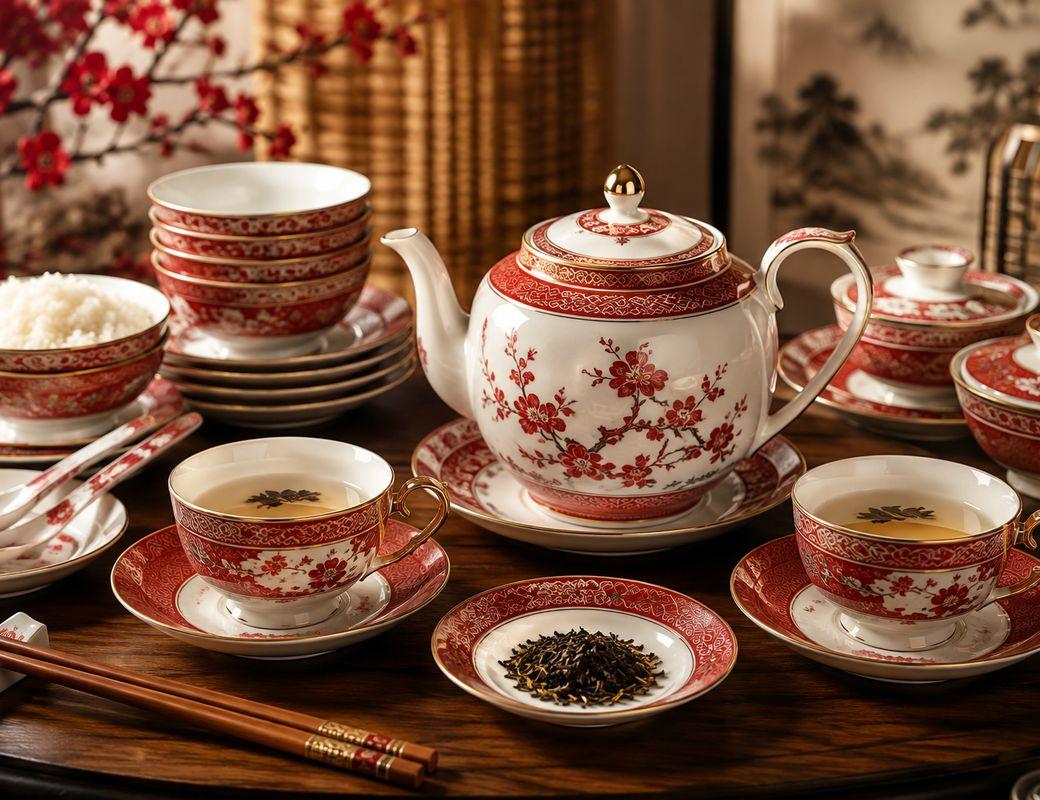
We’ve all heard the phrase “spill the tea.” These days, it usually means sharing the gossip, revealing a secret, or finally telling everyone what really happened. But long before spilling the tea became part of our everyday vocabulary, people were turning to their teacups in search of a very different kind of revelation.
The practice is formally known as tasseography, although you may also hear it called tasseomancy or tasseology. At its simplest, tasseography is a form of divination that interprets the shapes and patterns left behind by tea leaves, coffee grounds, or even wine sediment. The name itself comes partly from the French word tasse, meaning “cup,” combined with Greek-derived endings associated with writing, divination, and study.
Tea leaf reading transforms an ordinary ritual into something a little more mysterious. A cluster of leaves might resemble a bird, a heart, a winding road, or perhaps something meaningful only to the person looking into the cup. Where the symbol appears can matter just as much as what it resembles, and intuition often plays as important a role as traditional meanings.
Over the centuries, the practice became especially popular in Europe, eventually finding a comfortable home alongside other forms of folk divination and fortune telling. Yet tasseography has never been only about predicting what will happen next. There is something wonderfully contemplative about slowing down, concentrating on a question, drinking a cup of tea, and then taking the time to notice what remains behind.
In this article, we’ll explore how tea leaf reading developed, how it became part of European divination traditions, and why people continue to practice it today. Then we’ll prepare a cup of our own, learn how to perform a traditional reading, explore the different areas of the cup, and look at some of the common shapes and patterns you might discover among the leaves.
So put the kettle on, brew your favorite loose-leaf tea, settle into a comfortable chair, and let’s discover what the leaves have to say.
From Cup to Divination
Tea leaf reading may feel like an ancient practice, but its documented history is considerably more recent. Tasseography began to establish itself in Europe during the seventeenth century, as expanding trade routes brought Chinese tea into England and other parts of the continent. As loose-leaf tea became increasingly familiar, the fragments left behind after drinking offered a new medium for a very old human impulse: searching for meaning in unexpected patterns.
Some accounts trace tea leaf reading all the way back to ancient China, an appealing connection given the country’s long relationship with tea. The historical evidence for that claim, however, is uncertain. While tea itself has an ancient history, the recognizable practice of interpreting leaves left inside a drinking cup is much better documented in Europe.
Romani fortune-tellers became closely associated with tasseography and helped spread the practice across European communities. It fit easily into a wider tradition of popular divination that included palmistry, card reading, dreams, and the interpretation of everyday signs and omens. Tea reading had another advantage as well: it required almost nothing beyond objects already found in many homes.
By the Victorian period, tasseography had become particularly fashionable. The nineteenth century was fascinated by spiritualism, séances, mediumship, fortune-telling, and the possibility that the unseen might reveal itself through seemingly ordinary things. Tea drinking was already a familiar social ritual, so divination could enter the parlor almost unnoticed. Once the last sip was gone, an ordinary teacup could become a small map of possibilities.
Attempts were also made to give those possibilities a more recognizable language. A Highland Seer, published in 1881, is credited with helping codify many of the symbols associated with tea leaf reading. Birds might suggest news, hearts could indicate love, circles could represent completion, and lines might point toward movement or a journey.
Yet tasseography never became a completely fixed system, and that is part of its charm. Traditional meanings offer guidance, but the reader must also pay attention to intuition, personal associations, and the shapes that seem to emerge naturally from the leaves. Two people may look into the same cup and see something entirely different.
That combination of tradition and intuition has kept tea leaf reading remarkably accessible. There are symbols to learn and techniques to follow, but there is no need to memorize an enormous dictionary before beginning. The first step is much simpler.
You need to make a proper cup of tea.
Preparing the Cup
Setting the Stage for a Tea Leaf Reading
Tea leaf reading does not require elaborate tools or a complicated ritual. Part of its appeal is its simplicity. You need loose-leaf tea, hot water, a cup and saucer, and a question or intention to guide the reading.
The cup itself is important. Choose one that is plain, light-colored, and preferably wide at the mouth. Patterns or dark colors inside the cup can make the leaves difficult to distinguish, while a light surface allows the shapes to stand out more clearly. You will also need a saucer, since the cup will eventually be inverted to drain the remaining liquid.
Loose-leaf tea works best because the fragments left behind create the shapes and patterns used in the reading. The person receiving the reading is traditionally called the querent. You can read your own leaves or read for someone else, but traditionally, the querent drinks from the cup that will be interpreted.
Before taking the first sip, choose a question or area of life you would like to explore. It does not need to be perfectly worded. You might focus on a relationship, an upcoming decision, a period of change, or simply ask what you should be paying attention to at this moment. Setting an intention gives the reading a point of focus.
Drink the tea slowly while keeping that intention in mind. There is no need for intense concentration. Simply allow yourself a few quiet moments to consider the question as you drink.
When you reach the bottom of the cup, leave a small amount of liquid behind with the remaining leaves rather than drinking it completely dry. Take a moment to return to the question or intention you carried with you while drinking.
The tea is finished, but the reading is just beginning. With the leaves gathered at the bottom of the cup, it is time to set them in motion and see what shapes begin to emerge.
Turning the Cup
Setting the Leaves in Motion
Once you have finished drinking the tea and only a small amount of liquid and leaves remain, it is time to prepare the cup for reading. This step allows the leaves to move freely before settling into the patterns you will interpret.
Hold the cup and gently swirl it three times. The goal is not to shake the leaves vigorously, but to move them around the inside of the cup so they can spread naturally across its surface. Once you have finished swirling, turn the cup upside down onto the saucer and allow the remaining liquid to drain for a moment.
When you turn the cup upright again, leave the leaves exactly where they have settled. The scattered fragments, streaks, clusters, and open spaces are all part of the reading. What initially appears random may begin to suggest shapes and patterns as you spend some time observing the cup.
Traditionally, the handle provides the starting point. It represents the querent and can also be associated with home, familiar surroundings, or circumstances closest to them. Beginning near the handle, work clockwise around the inside of the cup rather than moving immediately from one interesting shape to another.
Position can also provide context. Symbols near the rim are generally associated with the present or near future, while those farther down the cup may point toward events that are more distant or matters developing beneath the surface. Leaves near the bottom are often interpreted as representing the more distant future or deeper underlying influences.
Before identifying individual symbols, take in the cup as a whole. Notice whether one area is crowded with leaves while another is relatively empty. Look for long lines, isolated shapes, heavy clusters, or anything that naturally draws your attention. These broader patterns can provide useful context for the individual symbols you find later.
There is no need to make every collection of leaves into a recognizable image. Tasseography combines traditional symbolism with personal intuition, and different readers may notice different things in the same arrangement. Allow the clearest shapes and strongest impressions to guide you first.
Once you have a sense of the cup as a whole, you can begin looking more closely at the images within it. Lines, circles, animals, letters, and other recognizable forms each offer another piece of the reading, and learning how to interpret those patterns is where the language of the leaves begins to take shape.
Reading the Leaves
Common Patterns and Symbols
Once you have taken in the cup as a whole, you can begin looking more closely at the individual shapes within the leaves. Some may appear immediately, while others become clearer only after you change the angle of the cup or spend a little more time looking.
Traditional tasseography uses a vocabulary of common symbols, but these meanings are best treated as starting points rather than strict rules. The location of a symbol, the shapes surrounding it, and the question being asked can all influence its interpretation.
Lines often suggest movement or a journey. A clear line may indicate a path opening ahead, while a particularly thick or heavy line can suggest restriction, delay, or something holding the querent back.
Dots are generally associated with increase, activity, or a series of smaller events. A scattering of dots might suggest a particularly busy period rather than one significant development.
Birds traditionally represent news, messages, or communication. A bird appearing close to the handle may suggest that the news concerns the querent directly or someone close to home. Birds can also carry associations with freedom or movement.
Hearts are among the more straightforward symbols and usually relate to love, affection, or relationships. Their position in the cup and the symbols nearby can offer clues about whether the message concerns something already developing or something still ahead.
Rings and circles can represent completion, commitment, marriage, or the closing of a cycle. A clear, unbroken circle may suggest something reaching fulfillment, while an incomplete one might point toward a situation that is still developing.
An anchor is traditionally associated with stability, particularly in business or relationships. A strong, clearly defined anchor can suggest security and prosperity, while an unclear or distorted one may indicate uncertainty or instability.
Animals are often interpreted according to their familiar characteristics. A cat, for example, might suggest independence or hidden motives. Other animals can be approached in much the same way by considering the qualities traditionally associated with them as well as what that particular animal means to the querent.
Letters and numbers can sometimes be interpreted more literally. A letter might represent someone’s initial, while a number could suggest a date, quantity, age, or period of time. Context matters, especially when one of these symbols connects naturally with the question being asked.
As you begin identifying symbols, pay attention to how they relate to one another rather than reading each one in isolation. A heart beside a ring creates a different impression from a heart surrounded by heavy lines. A bird near the rim may suggest news arriving soon, while the same shape deep in the cup could point toward something farther away.
This is where tasseography becomes less about memorizing definitions and more about interpretation. Traditional meanings provide a foundation, but intuition helps connect those individual symbols into a larger story.
Once the cup has shared its story, however, there is one final part of the practice. Just as you began the reading with intention, you can bring it to an end with the same care.
Closing the Cup
Bringing the Reading to an End
Just as you began your tea leaf reading with a question or intention, it can be helpful to close the practice with a few quiet moments of reflection. There is no elaborate ceremony required. The purpose is simply to acknowledge that the reading has come to an end and consider what you want to take from it.
Before clearing away the cup, look over the leaves one final time. Think about the symbols that appeared, where they were positioned, and how they seemed to connect with one another. Rather than focusing on every small detail, consider the larger message that emerged from the reading.
If you keep a journal, this is a good time to record what you saw. You might sketch the most prominent symbols, write down your interpretation, and note the question you asked. Over time, looking back at previous readings can help you recognize recurring symbols and develop your own understanding of what certain images mean to you.
You may also want to spend a moment considering whether the reading offered guidance rather than a prediction. A difficult symbol does not necessarily mean that something bad is destined to happen, just as a positive symbol should not be treated as a guarantee. The leaves can be approached as a way of exploring possibilities, patterns, and perspectives that may not have been obvious when you first asked your question.
When you feel finished, simply thank the practice in whatever way feels natural to you. Some readers may offer a quiet word of gratitude, while others may simply acknowledge the reading and move on. The remaining tea leaves can then be discarded or composted, and the cup washed and returned to its ordinary purpose.
Perhaps that is a fitting way to end a tasseography reading. For a little while, an everyday teacup became a place for symbols, questions, and intuition. Then the leaves are cleared away, the cup is washed, and the ordinary world resumes.
What you noticed while looking into it, however, may stay with you a little longer.
More Than Fortune-Telling
A Final Reflection
There is something quietly appealing about tea leaf reading. It asks for very little: a cup of tea, a few moments of stillness, and a willingness to look closely at what remains behind.
For centuries, people have turned to divination because uncertainty is part of being human. We want to know what lies ahead, whether a decision will work out, where a relationship might lead, or what changes may be waiting just beyond the horizon. Tasseography offers one way of sitting with those questions without demanding that every answer be certain.
Perhaps that is why the practice has endured. Tea leaf reading exists somewhere between tradition and intuition. There are established symbols and methods to guide you, but no two cups will ever look exactly alike. The reader must observe, interpret, and decide what feels meaningful within the patterns that appear.
In that sense, tasseography can be as much an exercise in reflection as fortune-telling. Looking into the cup may encourage you to notice something you have been avoiding, approach a familiar problem from a different direction, or simply give yourself enough quiet space to hear your own thoughts more clearly.
There is also something wonderfully accessible about finding mystery in such an ordinary ritual. You do not need elaborate tools or years of study to begin. The same cup of tea you might make on a quiet afternoon can become an opportunity to slow down, set an intention, and spend a few minutes listening to your intuition.
Maybe the leaves predict the future. Maybe they help us see the present a little differently. Perhaps the real magic of tasseography has always existed somewhere between the two.
Either way, the next time you put the kettle on, you might want to reach for the loose-leaf tea.
After all, you never know what might be waiting at the bottom of the cup.