Sacred Feminine
The Rise, Fall, and Reclaiming of the Divine Feminine
Article · 11 min read · ·
There may be controversial topics in this article.
Throughout human history, the role of the feminine has undergone a dramatic transformation—from veneration to vilification, from empowerment to persecution, and now, in modern times, a powerful resurgence.
✨✍️ This article is part of our new MoonX Creators Program. Want to join and become an author? Learn more here
The Divine Feminine—a sacred embodiment of creation, nurturing, intuition, and spiritual wisdom—has long been honored in ancient traditions around the world. However, patriarchal systems, religious doctrines, and political structures systematically eroded its influence. Today, as society begins to recognize and reclaim the power of the feminine, we witness a collective reawakening: a return to balance, healing, and spiritual wholeness.
I. The Age of the Goddess: Ancient Matriarch and Goddess Worship
In ancient civilizations—such as Sumer, Egypt, the Indus Valley, Minoan Crete, and pre-Roman Europe—goddesses played central roles in both religion and daily life. The Earth was seen as a mother, the womb of creation. Fertility goddesses like Isis, Inanna, Demeter, and Gaia were revered for their life-giving powers and wisdom.
These societies, while not always completely matriarchal, honored women in positions of spiritual and social authority. Priestesses served as powerful intermediaries between the divine and the people. Archaeological evidence—such as the Venus figurines from Paleolithic Europe and Asia (including the famous Venus of Willendorf)—suggests that prehistoric peoples revered the female form as the embodiment of creation and nurturance, laying the foundation for goddess worship.
As societies evolved, matrilineal and even matriarchal structures flourished across the globe. For instance:
- In Africa, tribes such as the Akan and Tuareg passed heritage through mothers.
- In Asia, the Mosuo of China upheld female-led households.
- In North America, the Iroquois Confederacy granted women significant political authority, including property rights and leadership roles.
- Archaeological evidence from the Minoan civilization in Crete and early Anatolian societies further indicates strong goddess-centered traditions.
These cultures developed rich spiritual traditions centered on the Divine Feminine. Powerful goddesses were honored—each embodying different aspects of life, marriage, and motherhood:
- Inanna/Ishtar (Mesopotamia): Goddess of love, war, and fertility.
- Isis (Egypt): Celebrated as the mother goddess of magic, healing, and protection.
- Hera (Greece): Revered as a goddess of marriage and motherhood.
- Quan Yin (China): Embodiment of compassion and mercy.
- Amaterasu (Japan): Sun goddess and a central figure in Shinto tradition.
- Coatlicue (Aztec): Earth goddess of creation and destruction.
- Mawu (West Africa): Goddess of the moon and creation.
- The Rainbow Serpent (Australian Aboriginal mythology): A creator deity symbolizing nature’s cycles.
- Brigid (Celtic): Goddess of healing, poetry, and smithcraft.
- The Morrigan (Celtic): Goddess of battle, sovereignty, and fate.
- Freya (Norse): Goddess of love, fertility, war, and magic.
- Frigg (Norse): Goddess of marriage and destiny.
- Lakshmi (Hinduism): Goddess of wealth, beauty, and prosperity.
Over time, as societies became more hierarchical and war-driven, male deities began to supersede these goddesses. In Greece, patriarchal narratives transformed Hera into a subordinate consort, while in Egyptian mythology, Isis became known primarily as the wife of Osiris. Similarly, in Norse mythology, both Freya and Frigg gradually became subservient to male gods like Odin and Thor. Monotheistic systems in Christianity and Islam later erased the multiplicity of female deities, reflecting the broader suppression of women’s rights and influence.
II. The Rise of Patriarchy and the Role of the Christian Church
As human civilization transitioned from agrarian, community-centered societies to urban, war-driven states, power became centralized in the hands of men. This evolution resulted in profound legal, social, and spiritual suppression of women.
Religious narratives played a critical role in this transformation. In Greek mythology, the story of Pandora—crafted as a beautiful yet deceptive creation meant to unleash evils upon the world—served to portray the feminine as a dangerous, enticing force. Similarly, the biblical account of Eve depicts her as the first fallen woman; her disobedience in the Garden of Eden is held as the origin of original sin, marking women as inherently flawed and prone to excess. In contrast, Lilith, who in some ancient traditions was considered the insubordinate first wife of Adam—refusing to submit and defying patriarchal expectations—was demonized and transformed into the mother of all demons, symbolizing uncontrolled female sexuality.
Influential thinkers such as Saint Augustine argued that women were inherently inferior and used the doctrine of original sin to justify their subjugation. Under this framework, powerful feminine qualities were seen as threats to social order, while the Virgin Mary was exalted as the ideal of chastity, obedience, and subservience—a model that women were urged to emulate. Additionally, the Spanish conquest of the Americas accelerated the suppression of indigenous goddess worship, replacing native spiritual practices with a Christian, male-dominated doctrine.
III. Witch Hunts and the Demonization of Women
Between the 15th and 18th centuries, the infamous witch hunts in Europe and colonial America exemplified the violent suppression of the feminine. Tens of thousands of women—often healers, midwives, and spiritual practitioners—were tortured and executed under accusations of witchcraft. Medieval inquisitors searched women’s bodies for “marks of the beast”—unusual moles, scars, or features such as large breasts—interpreting these as evidence of a demonic pact. Such traits were seen not as natural variations but as signs of dangerous, uncontrolled femininity that needed eradication.
Notorious texts like the Malleus Maleficarum explicitly targeted women, portraying them as inherently susceptible to demonic influence and as temptresses who seduced men into sin. These doctrines fueled horrific punishments and justified the systematic suppression of women’s knowledge and power—a deliberate effort to erase the sacred feminine from both spiritual and societal life.
In medieval Europe, women’s legal and social rights were severely curtailed:
- They could not legally inherit property, with ownership passing exclusively to male relatives.
- They were treated as the property of their fathers, husbands, or brothers, with minimal autonomy.
- Women could not manage their own finances or make independent decisions.
- Divorce was virtually impossible, and adultery was a capital offense for women, while men faced far more lenient consequences.
- In cultures like ancient Greece and within many Islamic societies, women were forbidden from leaving their homes without a male chaperone.
- Education was largely inaccessible to women, except through convents or limited aristocratic instruction aimed primarily at preparing them for domestic roles.
These oppressive measures ensured that women remained subservient and isolated, reinforcing the suppression of the Divine Feminine in every facet of life.
IV. The Rise of the Sacred Feminine: The Suffragette Movement
In response to centuries of oppression, women in the 19th and early 20th centuries began mobilizing for their rights, igniting a powerful resurgence of the sacred feminine in the public sphere. The suffragette movement emerged as a transformative force, challenging entrenched patriarchal systems and reclaiming female power.
Pioneering activists such as Susan B. Anthony, Elizabeth Cady Stanton, and Sojourner Truth led organized campaigns for women’s voting rights, utilizing conventions, protests, and grassroots organizing. Their relentless efforts culminated in the passage of the 19th Amendment on August 18, 1920, a landmark achievement that granted American women the right to vote. This victory was not only a legal triumph but also a profound cultural shift, reasserting the importance of the Divine Feminine in shaping society and laying the foundation for modern feminist movements.
V. Advancements Through the Feminist Movement and Sexual Revolution
Building on the momentum of the suffragette movement, the latter half of the 20th century witnessed sweeping advancements in women’s rights—a modern resurgence of the Divine Feminine. The feminist movement challenged not only political and legal barriers but also the social and cultural constraints imposed on women:
Legal Reforms:
- No-fault divorce laws, introduced in places like California in 1969, revolutionized marital law by allowing women to leave abusive or unsatisfactory marriages without assigning blame.
- The Equal Credit Opportunity Act of 1974 enabled women to obtain credit and open bank accounts in their own name, ensuring financial independence.
Workforce and Education:
- Women increasingly broke into fields traditionally dominated by men, gaining access to higher education and entering the workforce, which expanded their roles beyond the domestic sphere.
- This shift paved the way for single motherhood and empowered women to choose not to marry, building independent lives.
Sexual Revolution and Reproductive Rights:
- The widespread availability of birth control pills in the 1960s provided women with unprecedented control over their reproductive lives.
- Landmark legal cases such as Roe v. Wade (1973) safeguarded a woman’s right to choose, affirming sexual autonomy and family planning as essential aspects of personal freedom.
Cultural and Social Liberation:
- In 1968, feminists organized a protest against the Miss America pageant—discarding bras, makeup, and heels into a “Freedom Trash Can” as a symbolic gesture against the sexist and racist beauty standards promoted by the event (no actual bra-burning occurred).
- The sexual revolution challenged the stigma surrounding virginity, celebrated free love, and empowered women to embrace their sexuality without shame.
- Movements like #MeToo have been vital in exposing systemic abuse and promoting healing, enabling women to overcome trauma and reclaim their power.
Women in the Military and Equal Rights:
- During World War I, the formation of the Marinettes marked a pivotal moment when women were first enlisted in the U.S. Marine Corps to fill clerical roles, allowing more men to fight on the front lines.
- In World War II, the Women Airforce Service Pilots (WASP) program allowed female pilots to undertake non-combat missions, demonstrating their capabilities and paving the way for future integration.
- More recent policy changes, beginning around 2013 and fully realized by 2015, have allowed women to serve in combat roles.
- The ongoing fight for the Equal Rights Amendment (ERA)—first drafted in 1923 and passed by Congress in 1972—remains central to ensuring gender equality. Although procedural challenges persist, recent ratifications by states in the 2010s indicate that the movement for the ERA is alive and well.
VI. Feminism Today and the Rebirth of the Divine Feminine
Modern feminism—now often informed by intersectionality and eco-feminism—has made significant strides in challenging systemic sexism, racism, and other forms of discrimination. Today’s movements are as much about reclaiming the sacred feminine as they are about legal equality. Contemporary women are turning to spiritual practices, goddess-centered rituals, and neo-pagan traditions to reconnect with ancient wisdom.
Spiritual Practices:
• A renewed interest in goddess spirituality, witchcraft, and ritual magic has allowed many to reclaim traditions that honor the sacred feminine.
Environmental Activism:
• Eco-feminism, which links environmental stewardship with the nurturing aspects of femininity, has become a powerful force in the fight for climate justice.
Body Positivity and Cultural Liberation:
- Women are increasingly embracing natural beauty, with plus-size models and diverse beauty standards gaining prominence in mainstream media.
- Many reject traditional grooming norms, such as the pressure to shave body hair, and instead choose styles that celebrate their individuality.
Modern Challenges:
- In many Islamic countries and certain regions of Africa, deeply entrenched patriarchal norms continue to restrict women’s rights—limiting travel, education, and legal independence.
- In the United States and other Western nations, far-right movements have recently attempted to roll back women’s rights.
For example, legal setbacks like the Dobbs decision have dramatically limited access to abortion, underscoring that the struggle for gender equality is ongoing.
These movements collectively reflect a resurgence of the Divine Feminine—a reawakening that honors both the ancient and modern contributions of women, and challenges us to create a balanced, inclusive future.
VII. How You Can Embrace Your Inner Goddess and Sacred Feminine Energy
Embracing your inner goddess is a personal journey toward reclaiming the sacred feminine within. Here are some practical tips to integrate this energy into your daily life:
- Connect with Nature: Spend time outdoors, walk barefoot on natural ground, or cultivate a garden to harmonize with the earth’s rhythms.
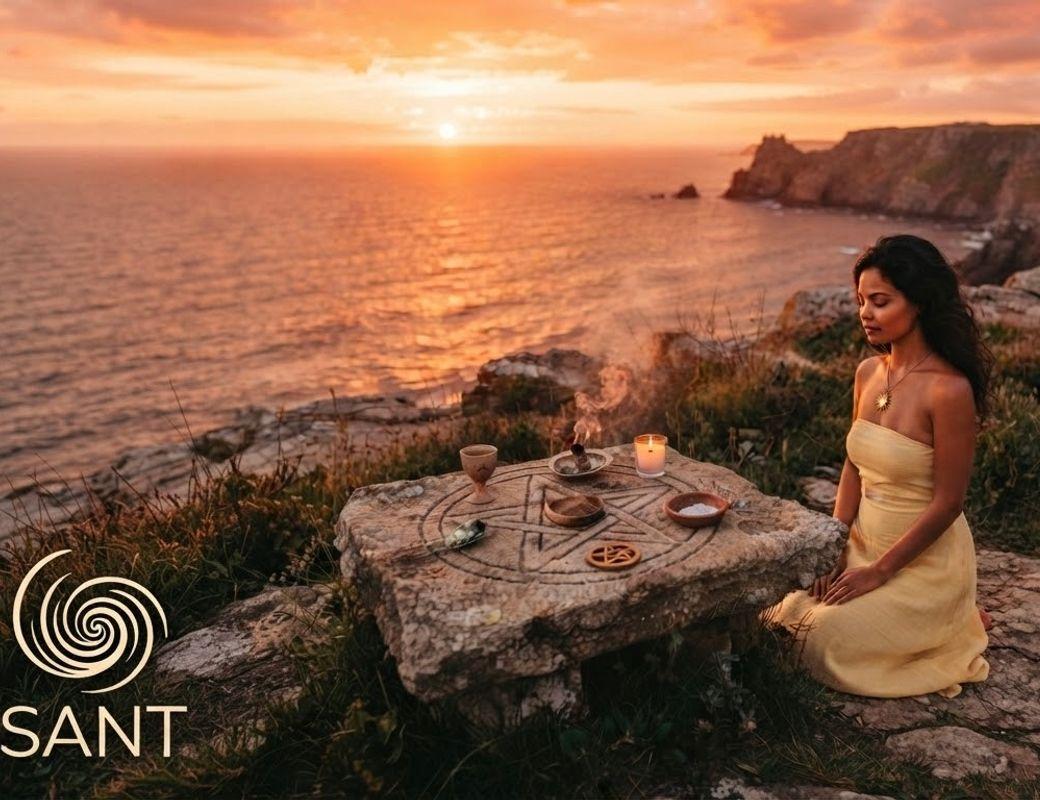
- Create Sacred Rituals: Establish a personal ritual—light candles, meditate, or journal in a dedicated space where you can reflect and recharge.
- Honor Your Cycles: Track your physical and emotional rhythms; use the phases of the moon to set intentions, release negativity, or celebrate growth.
- Express Creatively: Engage in art, dance, writing, or any form of creative expression to tap into your intuitive energy.
- Practice Self-Care: Prioritize activities that nurture your body and mind—such as yoga, mindfulness, or a soothing bath.
- Celebrate Authenticity: Dress and groom in ways that feel true to you, rejecting societal pressures and embracing your individuality.
- Join Supportive Communities: Connect with women’s circles, spiritual groups, or eco-feminist networks to share wisdom and grow together.
- Trust Your Intuition: Listen to your inner voice and allow it to guide your decisions and creative expressions.
Conclusion: The Full Circle of the Divine Feminine
From the earliest Venus figurines and goddess worship in matrilineal societies to the dark eras of patriarchal domination, witch hunts, and legal subjugation, the Divine Feminine has endured. Despite centuries of systematic suppression, this sacred energy persists in hidden traditions and in the resilient spirit of women throughout history.
Today, as modern movements reclaim female power and celebrate the balance between masculine and feminine energies, the Divine Feminine is rising once again. This reawakening promises to restore balance, nurture creativity, and foster a future defined by equality, wisdom, and empowerment for all.
Comments


Show more