Into the Flame
Jack-o’-Lantern Lights and Samhain Nights
Article · 14 min read · ·
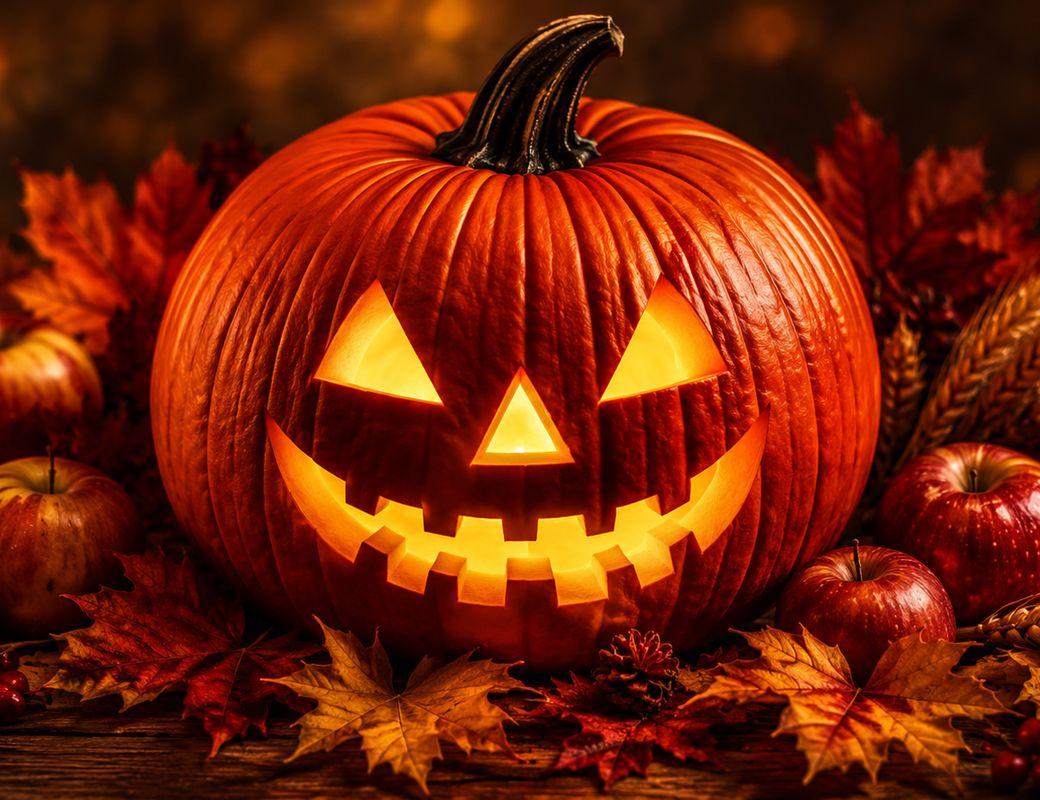
Every October, we put fire inside a pumpkin.
We hollow it out, carve a face into its skin, place a candle inside, and set it near the door. The jack-o’-lantern is so familiar that most of us rarely stop to consider how strange the tradition actually is.
Why a face?
Why a flame?
And why a pumpkin?
The answer begins long before pumpkins became symbols of Halloween.
For centuries, people told stories of strange lights appearing after dark over bogs, marshes, lonely roads, and burial grounds. They flickered where no lantern should have been, hovering in the distance or seeming to move when approached. Some believed they were spirits. Others called them omens, fairy fires, or wandering souls. Eventually, one of those mysterious lights would acquire a name we still use today.
The jack-o’-lantern.
But the glowing face on the porch has traveled a long way from those lonely lights in the darkness. Its story winds through folklore and legend, old autumn customs, migration and adaptation, with each generation adding something of its own.
Perhaps that is why the jack-o’-lantern has endured. Beneath the familiar orange grin is something much older: our fascination with the small light burning at the edge of the dark.
So this autumn, before we carve another face and set a candle inside, let’s follow that light backward.
Back before the pumpkin.
Back before Jack.
Back to the bog, where something is already glowing in the darkness.
The Lights in the Bog
Long before there was a Jack, there was a light.
For centuries, travelers across Europe reported seeing strange flames hovering over marshes, bogs, and other lonely stretches of wet ground. They appeared after dark, often just beyond reach, flickering in places where no lamp or fire should have been burning. Follow one, the stories warned, and it might lead you away from the road and deeper into dangerous ground.
The phenomenon became known by many names.
The Latin ignis fatuus means “foolish fire.” In France, it was feu follet. German folklore knew similar wandering lights as Irrlicht. In Wales, the eerie canwyll corff, or corpse candle, could appear as an omen of death. And in English tradition, one name became particularly enduring: the will-o’-the-wisp.
A wisp was a small bundle of sticks or straw that could be lit and carried like a torch. “Will with the wisp” turned the mysterious flame into something more familiar and considerably more unsettling. The light was no longer simply hovering in the darkness.
Someone was carrying it.
Who that someone might be depended upon where the story was told. Wandering lights were associated with fairies, troublesome spirits, restless souls, and supernatural tricksters. Some were believed to mark hidden treasure. Others were omens. Many were dangerous guides, drawing the curious away from familiar paths and toward marshes where one wrong step could end badly.
The details changed, but the warning remained remarkably consistent.
Do not follow the light.
Today, will-o’-the-wisp is often explained as a natural phenomenon connected with gases produced by decaying organic matter in wetlands, although the precise mechanisms behind historical sightings remain more complicated than the old textbook explanation of marsh gas simply bursting into flame. Other natural sources of unusual lights have also been proposed.
For the people who encountered them centuries ago, however, chemistry was beside the point.
They saw a light where no light belonged.
And human beings are very good at telling stories about things that appear in the darkness.
Over generations, those stories gave the wandering flame intention. It could tempt, warn, deceive, or lead. It became something caught between the ordinary and the supernatural, close enough to resemble a lantern but strange enough to belong to another world.
Eventually, the nameless figure carrying that light would acquire a more particular identity.
Will would become Jack.
And the wandering flame would find its lantern.
Stingy Jack and the Wandering Flame
By the time the wandering light became Jack’s, the old warning had become a story.
Irish folklore tells of a man remembered as Stingy Jack, a clever trickster whose greatest talent was getting the better of everyone around him, including, according to legend, the Devil himself.
Like most folktales passed through generations, there is no single definitive version of Jack’s story. Details shift from one telling to another, but the heart of the legend remains much the same.
Jack encounters the Devil and somehow manages to trap him.
In one popular version, Jack persuades the Devil to turn himself into a coin to pay for a final drink. Once the transformation is complete, Jack slips the coin into his pocket beside a silver cross, preventing the Devil from changing back. Jack agrees to release him only after extracting a promise that his soul will be left alone.
Another version moves the trick from the tavern to an apple tree. Jack convinces the Devil to climb into its branches, then carves a cross into the trunk below. Once again, the Devil is trapped, and once again, Jack bargains for his freedom.
For a time, Jack appears to have won.
But tricking the Devil is considerably easier than tricking death.
When Jack eventually dies, his life has hardly earned him a place in heaven. Hell offers no refuge either. The Devil remembers their bargain and refuses to claim his soul.
Jack has managed to escape damnation only to discover that he has nowhere else to go.
According to the legend, the Devil gives him a burning coal from the fires of hell, a single ember to illuminate the darkness ahead. Jack places it inside a hollowed turnip and begins his endless wandering between worlds.
He becomes Jack of the Lantern.
Jack-o’-lantern.
It is easy to see why the story attached itself so naturally to the older folklore of wandering lights. The mysterious flame already had centuries of stories surrounding it. It already belonged to restless spirits, dangerous roads, lonely places, and travelers who had lost their way.
Stingy Jack gave that light a face.
More importantly, he gave it a reason to wander.
And somewhere along the way, the lantern in Jack’s hand would leave the story and enter the hands of ordinary people.
Before the pumpkin, there would be the turnip.
The Turnip Before the Pumpkin
Once Jack’s wandering flame found its lantern, the story begins to take a more recognizable shape.
But the first faces glowing in the autumn darkness were not carved into pumpkins.
Across Ireland and Britain, people hollowed out turnips and other root vegetables, carved faces into them, and placed candles or small lights inside. The results were considerably different from the round, orange jack-o’-lanterns that would come later. A turnip is smaller, harder, and far less cooperative beneath a knife. Its natural twists and roots gave the finished lanterns narrow eyes, crooked mouths, and features that could look startlingly human once illuminated from within.
The practice was not limited to one place or one purpose.
Carved vegetable lanterns appear in British and Irish seasonal customs as objects of mischief, celebration, and sometimes protection. They could be carried through the streets, used to frighten neighbors and passersby, or placed where their glowing faces emerged unexpectedly from the darkness. Over time, they became particularly associated with the autumn season and Halloween.
This is also where the history becomes a little less tidy than the legend.
It is often said that ancient Celts carved turnips at Samhain to frighten away evil spirits, but the historical record does not give us such a clear, continuous line from ancient Samhain to the modern jack-o’-lantern. Samhain was an important seasonal threshold in early Irish tradition, marking the beginning of winter and appearing throughout medieval literature as a time when the ordinary world and supernatural one could come unusually close. The carved turnip lanterns we can document, however, belong to much later folk customs.
That distinction does not make the tradition any less interesting.
In fact, it shows how folklore usually develops.
Stories overlap. Customs borrow from one another. An old seasonal festival gathers newer practices around it. A wandering light becomes a wandering soul. A frightening face becomes a game, a warning, or a bit of mischief. Eventually, it becomes difficult to say where one tradition ends and another begins.
Stingy Jack fit easily into that world.
His glowing turnip offered an explanation for a lantern that already looked as though it belonged to something caught between the living and the dead. Whether every person carving one knew Jack’s story hardly mattered. By the nineteenth century, the image itself had become powerful: a hollowed face with a light burning behind its eyes.
For generations, those faces were carved from the harvest available close to home.
Then millions of Irish people began leaving that home.
They carried their stories and customs across the Atlantic, where another autumn crop was waiting.
And unlike the stubborn little turnip, this one seemed almost made to be carved.
A New Face for an Old Flame
The turnip lantern crossed the Atlantic in the memories and traditions of immigrants.
During the nineteenth century, particularly during and after the Great Famine of the 1840s, large numbers of Irish people left their homeland for North America. They carried with them stories, songs, beliefs, and seasonal customs, including traditions that would eventually help shape the American celebration of Halloween.
But traditions rarely arrive in a new place unchanged.
In North America, the old carved lantern encountered something new: the pumpkin.
Pumpkins were anything but new to the continent. Indigenous peoples had cultivated pumpkins and other squashes for thousands of years before European colonization, and by the nineteenth century they were firmly established in American agriculture and autumn life.
For anyone accustomed to hollowing out a turnip, the advantages were obvious.
Pumpkins were larger and softer. Their interiors could be scooped clean, leaving plenty of room for a candle, while their broad orange surfaces offered space for faces that could be far more expressive than anything carved into a stubborn little root vegetable.
The transformation was remarkably simple.
The flame stayed.
The face changed.
And in the process, two autumn traditions began to meet.
Long before carved pumpkins became associated with Halloween, pumpkins already belonged to the American harvest. They appeared in kitchens and fields, at autumn gatherings, and increasingly in literature celebrating rural life and the changing season. The pumpkin already carried its own sense of place.
The carved lantern brought something different with it.
It carried the older world of wandering lights, strange faces, restless spirits, and stories told against the approaching dark.
Together, they made an almost perfect match.
As the nineteenth century progressed, carved pumpkins became increasingly associated with Halloween in the United States. The older turnip lantern did not disappear from Irish and British traditions, but in America, the jack-o’-lantern was acquiring the round orange face we recognize today.
An old flame had found a new home.
And before long, that pumpkin would make its way into one of the most enduring American ghost stories ever written.
On a lonely road.
In the hands of a headless horseman.
When the Jack-o’-Lantern Became Halloween
By the second half of the nineteenth century, the pieces of the story were beginning to come together.
Halloween itself was changing in America. Irish and Scottish immigrants brought seasonal customs with them, while American communities already had their own harvest gatherings, ghost stories, games, and autumn celebrations. As those traditions mingled, Halloween gradually developed a character of its own.
And increasingly, there was a pumpkin glowing at the center of it.
Accounts from the period describe Halloween pumpkins hollowed out, carved with faces, illuminated from within, and placed in windows and doorways. The old vegetable lantern had found its American form, but the change from turnip to pumpkin did more than make carving easier.
It changed the face looking back at us.
The small, pale turnip lanterns of earlier traditions could be genuinely unsettling. Pumpkins offered a larger canvas, allowing their faces to become more expressive. They could be frightening, certainly, but they could also grin, laugh, scowl, or look ridiculous. The lantern that had once belonged primarily to dark roads, wandering spirits, and supernatural warnings was beginning to acquire a playful side.
Halloween was undergoing much the same transformation.
As the celebration became more popular, its supernatural associations remained, but they became intertwined with parties, costumes, games, decorations, and neighborhood mischief. Ghosts and witches had not disappeared. They had simply become part of a night when people could enjoy being frightened.
The pumpkin was particularly well suited to that balance between eerie and playful, and American storytelling had already given it a place in the dark.
Washington Irving’s The Legend of Sleepy Hollow had shown how easily an ordinary harvest pumpkin could become something uncanny. Irving’s pumpkin was neither carved nor illuminated, but the image of it lying shattered beside Ichabod Crane’s abandoned hat became part of one of America’s best-known ghost stories. Later illustrations, stage productions, films, and Halloween imagery carried that association further, eventually giving the Headless Horseman the glowing pumpkin head so familiar today.
Over time, the boundaries between these once-separate traditions began to blur.
The pumpkin belonged to the American harvest. Sleepy Hollow had given it a place in American ghost lore. The jack-o’-lantern brought older associations with strange lights, carved faces, wandering souls, and things encountered after dark. Halloween gave all of them a place to meet.
That may be the real reason the jack-o’-lantern became such a perfect emblem for the holiday.
It could be frightening without being truly threatening. Its face could leer from the darkness while the candle inside made it warm and inviting. It belonged equally well beside a ghost story, at an autumn party, or glowing from a family doorstep.
As Halloween settled into the form we recognize today, postcards, decorations, advertisements, parties, and eventually films repeated the image until the round orange jack-o’-lantern became inseparable from the holiday.
The strange light over the bog had traveled a very long way.
It had gathered folklore, acquired a name, found a face, crossed an ocean, and changed with the people who carried it.
Now, at last, it had become Halloween.
The Light We Still Carry
The jack-o’-lantern has changed considerably since the first wandering lights flickered through European folklore.
Most of us no longer place a carved pumpkin outside because we believe a restless spirit is roaming the road. We are not trying to imitate Jack’s turnip lantern or warn travelers away from dangerous bogs. For many people, carving a pumpkin is simply part of autumn, as familiar as fallen leaves, apple cider, and the first cold nights of the season.
But familiarity has not completely erased the older story.
We still hollow out something gathered from the earth. We still give it a face. We still place a flame inside and carry it into the darkness.
Perhaps that is why the jack-o’-lantern has survived when so many other seasonal customs have faded. It has never needed to keep only one meaning.
It has been a mysterious light and a supernatural warning. It has belonged to wandering souls and troublesome tricksters. It has been carved into turnips and pumpkins, carried through streets, placed in windows, used to frighten neighbors, and eventually welcomed onto front porches as one of the most recognizable symbols of Halloween.
Each generation changed it without completely losing what came before.
That is often how folklore survives. Traditions are rarely preserved untouched. They travel. They borrow. They adapt to new places and new people. Sometimes their original meanings become blurred or forgotten entirely, while something at the heart of the custom remains compelling enough to be carried forward.
With the jack-o’-lantern, that something may simply be the light itself.
There is something deeply human about placing a small flame against the dark. Long before electric porch lights and glowing plastic decorations, fire meant warmth, safety, gathering, and the reassurance that darkness did not have the final word. Yet the jack-o’-lantern complicates that comforting light by placing it behind a face.
It welcomes us and unsettles us at the same time.
Maybe that is exactly why it belongs to Halloween.
Halloween has always been comfortable with contradictions. It allows the frightening to become playful, the dead to be remembered among the living, and the darkness to become something we willingly step into for a night. The jack-o’-lantern holds all of those tensions inside one familiar orange shell.
So when the pumpkins begin appearing on porches again this autumn, it may be worth looking at them a little differently.
Behind the crooked smiles and candlelit eyes is a much older flame, one that has passed through centuries of folklore, crossed an ocean, changed its face, and somehow remained recognizable.
We no longer have to follow the mysterious light into the bog.
We bring it home.
And every October, we light it again.
Responses
No responses yet — start the conversation.