Herbal witchcraft history, and a word of warning
Herbs, Hexes, and Haphazard Mistakes
Article · 5 min read · ·
I was just trying to clean my energy, maybe manifest a better credit score or at least stop eating snacks like a stressed-out goblin. But as with all good spiritual rabbit holes, I ended up ankle-deep in herbs I couldn’t pronounce, standing in my kitchen with sage burning, a tea kettle screaming, and Google open to “what is mugwort and why does it smell like feet?”
This is the story of my clumsy, curse-dodging, slightly fire-hazardous descent into herbal witchcraft, mixed with enough real history to make you feel like you learned something…
In technical, witchy academic terms: it’s the magical and medicinal use of plants by people who often don’t trust modern medicine, but will absolutely trust a dead Hungarian grimoire written in chicken blood.
Herbal witchcraft is essentially what happens when a garden and a spellbook have a baby. Practitioners, a.k.a. the herb-slinging, tea-brewing, soul-soothing weirdos we all aspire to be…use roots, leaves, barks, and flowers for everything from love spells to hex breaking to making their house smell like an enchanted forest-themed Yankee Candle.
But before we get to me accidentally inhaling too much rosemary and having a vision of my high school gym teacher (don’t ask), let’s break down where this all came from.
Long before Pinterest told us to put lavender in our bath and stir our coffee clockwise for good vibes, ancient civilizations were deep in the dirt, figuring out that plants had power.
-
Ancient Egypt: These folks were ahead of the game, using herbs like frankincense and myrrh for everything from embalming to spiritual purification. Basically, they were the first essential oil girlies.
-
Greece & Rome: Hippocrates (yeah, the “do no harm” guy) was slinging herbal remedies like a medieval apothecary influencer. They used thyme for courage, bay leaves for prophecy, and oregano for… everything. Probably even hangovers.
-
Medieval Europe: This is where the “witch” part really kicks in. Local healers — often women, midwives, or weird old crones who lived near rivers and knew too much — were herbalists. Naturally, the Church decided they were evil, because nothing screams “threat to society” like a woman with a garden and opinions.
-
Africa, Indigenous America, and Asia: Herbal medicine was (and still is) deeply embedded in spiritual life. Plants weren’t just used — they were honored. Ritual, respect, and ancestral wisdom shaped the way herbs were harvested and used, long before Whole Foods decided sage bundles needed a $12 price tag.
My first foray into herbal witchcraft was less “wise forest witch” and more “confused man trying to smudge a basement.”
I bought a pre-made kit online. It came with a tiny bag of dried stuff, a crystal I was told not to lick, and a hand-written spell that looked like it was written by a feral child with glitter glue.
I lit the candle, stated my intentions, and put the cleansing herb bundle to the flame. It immediately caught fire, not a small flame, but as if I had a handful of flash paper.
I flailed my arm in an attempt to put out the inferno that was now engulfing my hand, I panicked, I threw the fireball across the room, it bounced off the floor leaving a large explosion of embers that was now setting my carpet on fire.
Panic doesn’t even start to describe the feeling. I grabbed the closest source of salvation I could see, my jar of moon water. With the fire now extinguished and me having a mild infarction sitting on the floor, I couldn’t help but wonder if this was a sign, or that I should maybe buy my ritual supplies from a reputable source.
Then there was the time I tried to make my own “protection oil.” I mixed rosemary, garlic, and olive oil… and essentially made magical salad dressing. I anointed my doorways with it, but now every time I walk past, I crave croutons and vengeance.
Let me bless you with some herbal basics so you too can feel like a magical hedge wizard without needing a PhD in botany.
-
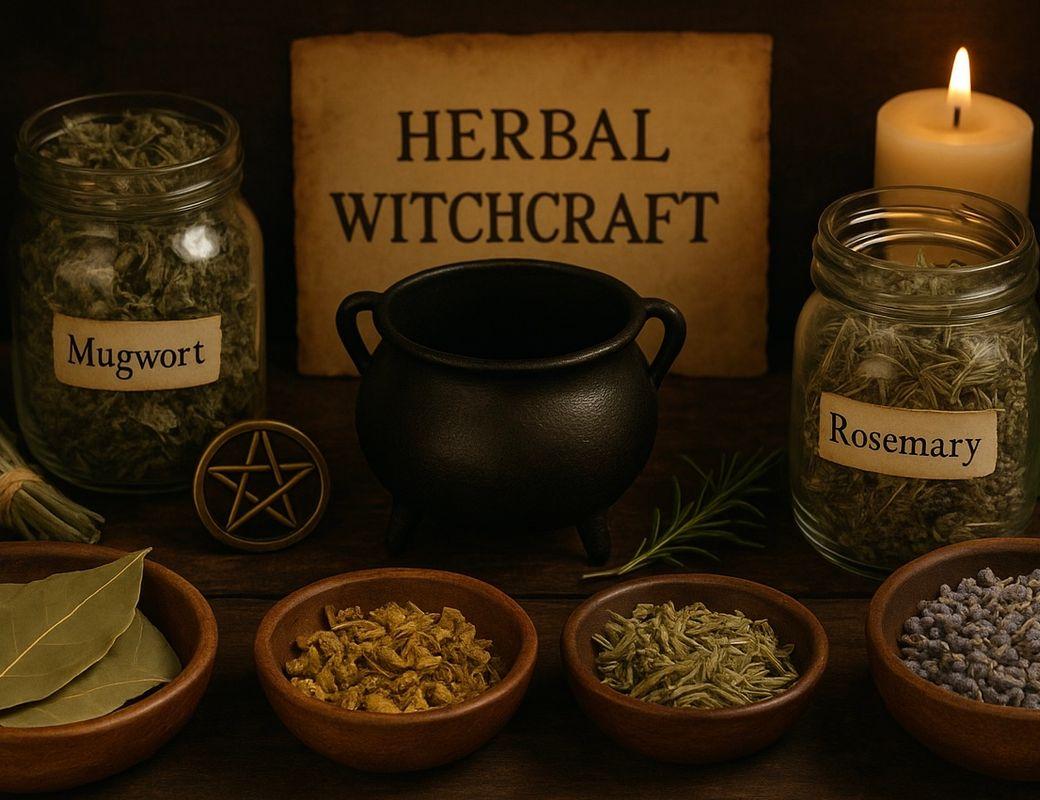
Rosemary: Protection, memory, clarity. Also great in potatoes. Dual use.
-
Lavender: Calming, sleep aid, makes you smell like you hugged a fairy.
-
Mugwort: Astral travel, dream magic. Also makes your house smell like you’ve been making soup in a haunted cottage.
-
Bay Leaf: Write your wishes on them and burn them for manifestation. Or throw them in soup. Either way, magic.
-
Peppermint: Energy, focus, and a spiritual kick in the pants.
Pro tip: Label your jars. I learned this the hard way after steeping “self-love tea” that turned out to be a mix of catnip and cayenne. My tongue still hasn’t forgiven me.
Herbal witchcraft isn’t just cosplay for your inner forest goblin. It’s a reconnection. To the Earth. To our ancestors. To ourselves.
It slows us down. It teaches us to listen, to plants, to seasons, to the whispers of our own gut that says maybe don’t drink that dandelion tea you left in the sun for 3 days.
It’s not about being perfect. It’s about being intentional. Even if your first attempt ends in you googling “can I sage my dog if he’s acting possessed?”
So here I am, still clumsy, still learning, still occasionally using the wrong herb and wondering why my spell to attract abundance just brought more ants into the kitchen.
But that’s the beauty of it. Herbal witchcraft isn’t about getting it right. It’s about showing up. Messy, curious, and maybe slightly on fire.
You don’t need to know the Latin name of everything. You just need a willingness to learn, a pinch of humor, and a healthy respect for the fact that thyme might not solve your life problems, but it’ll definitely make your chicken taste better while you figure them out.
Now if you’ll excuse me, I have a tea to steep, a ritual to botch, and a house to sage again because apparently, I left the garage open and a skunk walked in. Nature’s familiar, I guess.
Responses (4)


More from the Magazine
Your Witchcraft Doesn't Need to Cost More Than Your Grocery Bill
Build a meaningful practice with ordinary objects, intentional actions, and what you already own.

The Owl - Secrets of Wisdom
The symbolism of the nocturnal bird in mythology, magic, and spiritual practices
How to Attract and Maintain Positive Energy
In Your Home and Other Spaces