𝓖𝔂𝓹𝓼𝓲𝓮𝓼 🔮
𝚃𝚑𝚎 𝚜𝚙𝚒𝚛𝚒𝚝𝚞𝚊𝚕𝚒𝚝𝚢 𝚝𝚑𝚊𝚝 𝚍𝚊𝚗𝚌𝚎𝚜 𝚏𝚛𝚎𝚎𝚕𝚢 𝚠𝚒𝚝𝚑 𝚝𝚑𝚎 𝚠𝚒𝚗𝚍
Article · 3 min read · ·
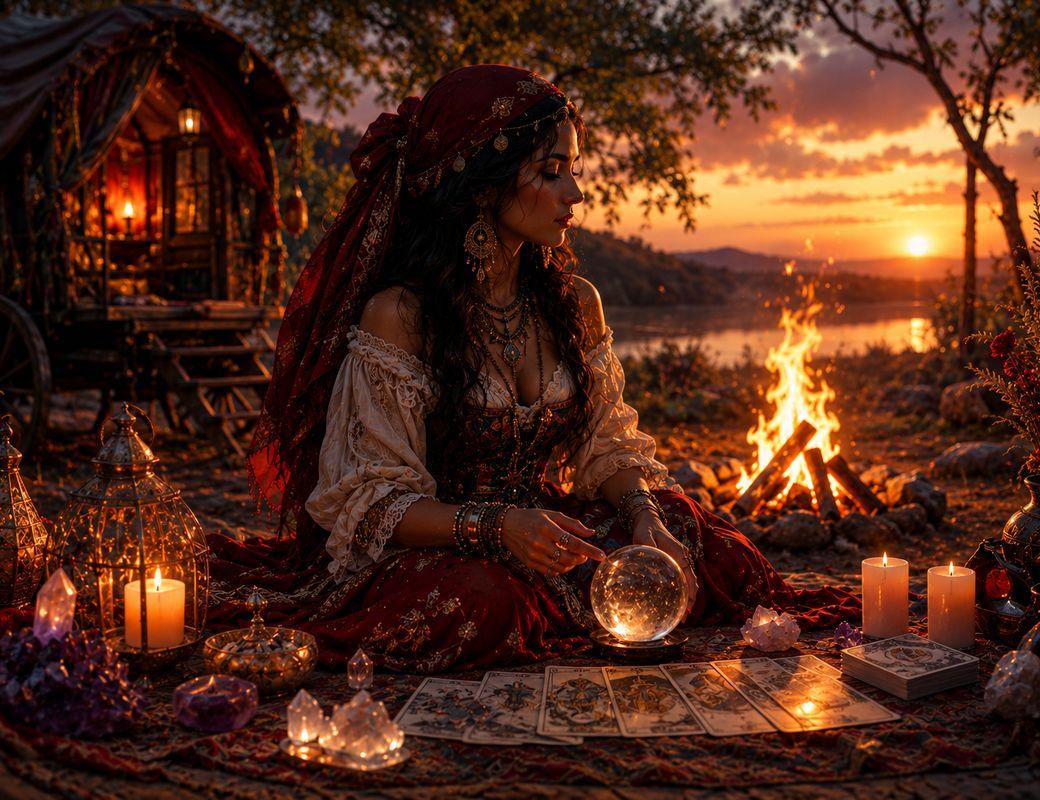
Few peoples inspire as much fascination as the Gypsy people.
Their colorful skirts, captivating music, caravans, bonfires, and divination practices have traveled through centuries, fueling the imagination of those seeking to understand life's mysteries. But behind the legends lies a rich culture marked by freedom, connection with nature, and a spirituality deeply intertwined with the cycles of existence.
More than just a people, Gypsies represent an archetype: the free spirit that follows the paths of the heart, guided by intuition and ancestral wisdom.
The Gypsy people, also known as the Romani people, have origins tracing back to northern India. Over the centuries, groups migrated across various continents, carrying with them traditions, customs, music, beliefs, and spiritual knowledge.
Having lived an itinerant lifestyle for much of their history, they developed a profound capacity for adaptation and an intimate relationship with nature's signs, the movements of the sky, and the energy of the places they passed through.
This lived experience strengthened a spirituality based on observation, experience, and connection with the invisible.
Gypsy spirituality is not bound to temples or rigid dogmas.
It manifests in music, in dance, in celebrations, in reading symbols, and in the relationship with nature's forces.
For many Gypsy traditions, spirituality is something alive, present in daily life, in encounters, in choices, and in the way of honoring ancestors.
Among the most prominent elements are:
🔥 Fire, symbol of transformation.
🌊 Water, associated with purification and intuition.
🌬️ Wind, linked to freedom and spiritual messages.
🌿 Earth, source of prosperity and connection with life.
These four elements appear constantly in rituals, offerings, and energetic harmonization practices.
The Art of Reading Signs
One of the most well-known practices of Gypsy mysticism is the interpretation of signs.
Cards, hands, dreams, moons, stars, coins, candles, and everyday objects can be used as instruments of guidance.
Tradition teaches that the universe is constantly communicating through symbols and meaningful coincidences.
Therefore, developing intuition is considered one of the greatest spiritual treasures.
The Gypsy deck
Also known as Lenormand, has become one of the world's most popular divination tools.
Composed of simple and direct symbols, it seeks to reveal trends, challenges, and opportunities present in a person's journey.
More than predicting events, the deck is used as an instrument for reflection and self-knowledge.
Each card functions as a mirror capable of illuminating aspects that often go unnoticed.
Dance, Music, and Energy
For the Gypsy people, joy has a spiritual role.
Dance is not merely entertainment.
It is the movement of energy.
Music is not merely artistic expression.
It is connection with the soul.
That's why celebrations and festivities occupy an important place in many Gypsy traditions. Dancing around the fire, singing, and sharing food are ways to strengthen community bonds and elevate the spirit's vibration.
The Strength of Ancestors
Respect for ancestors is one of the pillars of Gypsy spirituality.
Many practices include tributes to those who came before, recognizing that a family's wisdom doesn't disappear with the passage of time.
Ancestors are seen as guardians of memory, protection, and teachings transmitted between generations.
In a fast-paced world, Gypsy culture offers us valuable lessons.
It teaches us to trust our intuition more.
To value encounters.
To celebrate life even in difficult times.
To understand that true wealth lies not only in what we possess, but also in the experiences we live.
The greatest teaching is freedom.
Not just the freedom to travel unknown roads, but the freedom to be who we truly are.
The Free Spirit of the Soul
There's a bit of the Gypsy people within each person who dreams.
Within each soul that seeks answers by looking at the stars.
Within each heart that feels the call of adventure, spirituality, and discovery.
Gypsy mysticism reminds us that life is a journey.
And that true magic isn't in the final destination. It's in the path traveled, in the stories shared, and in the courage to move forward guided by the light of one's own soul.
✨Light on your paths ☀︎︎
𝐵𝓎
𝒮𝒶𝓃𝓉 𖦹
Responses (5)

More from the Magazine

Your Witchcraft Doesn't Need to Cost More Than Your Grocery Bill
Build a meaningful practice with ordinary objects, intentional actions, and what you already own.
The Owl - Secrets of Wisdom
The symbolism of the nocturnal bird in mythology, magic, and spiritual practices
How to Attract and Maintain Positive Energy
In Your Home and Other Spaces