Finding Balance
The History, Folklore, and Spiritual Meaning of the Yin-Yang Symbol
Article · 24 min read · ·
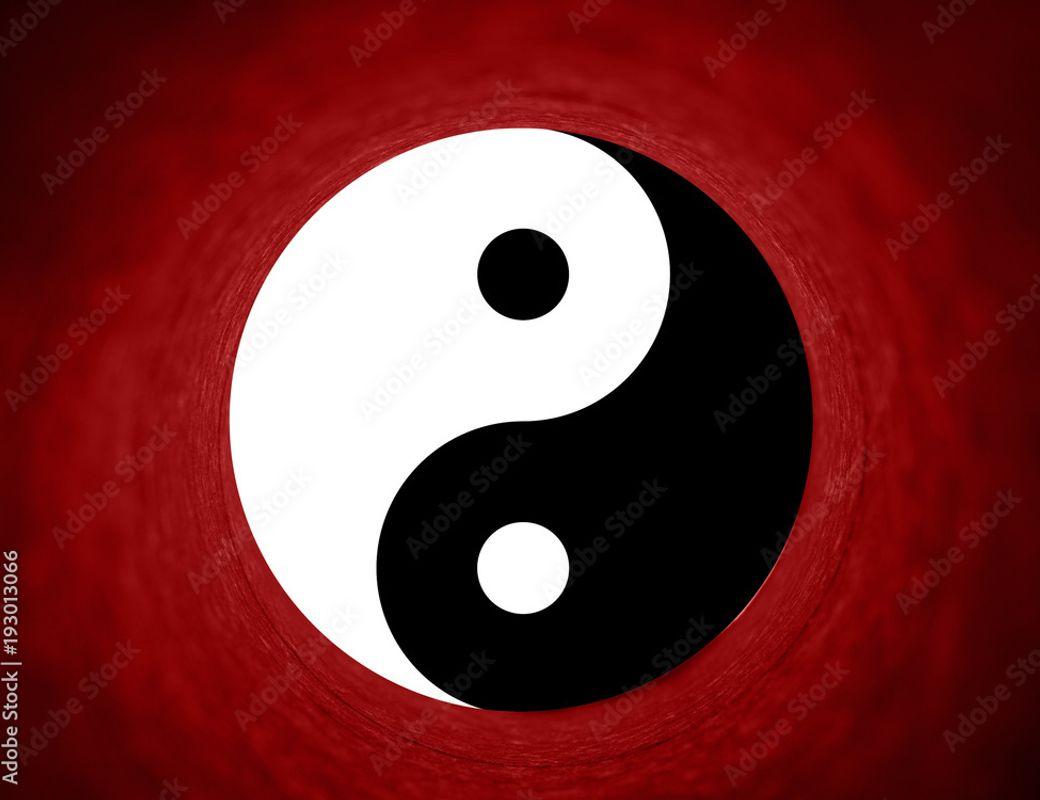
Few symbols have traveled as far across cultures, or endured as long through history, as the familiar black and white circle known as the yin-yang. It appears on jewelry and clothing, in works of art, in martial arts schools, and throughout popular culture. For many people, it has become a universal emblem of peace, balance, or spirituality. Yet despite its widespread recognition, the yin-yang remains one of the most misunderstood symbols in the world.
A common misconception is that the symbol represents a struggle between good and evil, light conquering darkness, or opposing forces locked in eternal conflict. In reality, the philosophy of yin and yang teaches something far more profound. Rather than depicting a battle, it illustrates the harmony that emerges when complementary forces exist in balance. Neither side is superior to the other, and neither can exist independently. Each gives meaning to the other, creating an endless cycle of transformation that shapes both the natural world and human life.
The concept of yin and yang emerged in ancient China through careful observation of nature. Early philosophers recognized recurring patterns in the changing seasons, the alternation of day and night, the waxing and waning of the Moon, and the continual rhythms of growth, decline, death, and renewal. From these observations developed a philosophical framework that sought to explain not only the workings of the cosmos but also the principles of health, governance, morality, and spiritual harmony.
For more than two thousand years, the philosophy of yin and yang has influenced Chinese religion, Daoist thought, Traditional Chinese Medicine, martial arts, Feng Shui, astrology, and countless aspects of daily life. More than a decorative design, the famous black and white circle, properly known as the Taijitu, serves as a visual reminder that balance is not a fixed destination but an ever-changing process. Every moment contains the possibility of change, every ending gives rise to a beginning, and within every force lies the seed of its apparent opposite.
This article explores the rich history of the yin-yang philosophy, the symbolism of the Taijitu, its roots in Chinese mythology and folklore, and the enduring wisdom that has allowed this ancient symbol to remain one of humanity’s most enduring expressions of harmony, unity, and the interconnected nature of existence.
The Ancient Origins of Yin and Yang
Long before the familiar black and white circle became a symbol recognized around the world, the ideas of yin and yang were taking shape in the minds of ancient Chinese scholars. These concepts did not arise from a single philosopher or religious tradition. Instead, they developed gradually over centuries through careful observation of the natural world and humanity’s place within it.
The earliest meanings of the words themselves were surprisingly simple. Yin originally referred to the shaded side of a hill or mountain, the place where sunlight did not reach directly. Yang described the sunlit side, warm and illuminated by daylight. These were not moral judgments or symbolic opposites in the modern sense. They were practical descriptions of how sunlight transformed the landscape, creating two complementary aspects of the same mountain.
As Chinese civilization developed, thinkers began to recognize that this relationship between shade and sunlight reflected a much broader pattern throughout nature. Day inevitably gave way to night. Summer faded into autumn, which yielded to winter before the return of spring. Rivers rose and fell with the seasons. The Moon waxed and waned in predictable cycles. Life itself followed a continuous rhythm of birth, growth, decline, death, and renewal. Rather than existing in isolation, these apparent opposites depended upon one another to sustain the natural order.
Evidence of these early ideas can be found as far back as the Shang Dynasty (c. 1600 to 1046 BCE), when diviners inscribed questions onto oracle bones in an effort to communicate with ancestors and divine the future. Although the fully developed philosophy of yin and yang had not yet emerged, these inscriptions reveal a society deeply attuned to cycles, balance, and the forces that governed the heavens and the earth.
During the Zhou Dynasty (1046 to 256 BCE), these observations evolved into a more sophisticated philosophical system. Scholars sought to understand the underlying principles that governed the universe, believing that every natural phenomenon reflected an invisible order. Yin and yang became a way of describing this dynamic relationship, not as static opposites but as complementary forces constantly interacting, influencing one another, and giving rise to change.
One of the most influential texts associated with this worldview is the Yijing, or Book of Changes. Compiled over many centuries and eventually becoming one of the foundational classics of Chinese thought, the Yijing presents the universe as a living process of continual transformation. Through a system of hexagrams composed of broken and unbroken lines, it illustrates how circumstances are never fixed but always evolving. This emphasis on change became one of the defining characteristics of yin-yang philosophy. Nothing remains permanent. Balance is not achieved by resisting change but by understanding and adapting to its rhythms.
By the time Daoist philosophers such as Laozi and Zhuangzi were writing in the late Zhou period, the concepts of yin and yang had become central to discussions about living in harmony with the Dao, often translated as “the Way.” According to this philosophy, wisdom did not come from attempting to dominate nature but from observing its rhythms and learning to move with them rather than against them.
These ancient ideas would continue to shape Chinese philosophy for thousands of years, influencing everything from medicine and astronomy to martial arts, architecture, agriculture, and spiritual practice. What began as simple observations of sunlight and shadow had grown into one of humanity’s most enduring philosophies, offering a vision of the universe founded not on conflict, but on harmony, balance, and continual transformation.
Understanding the Taijitu : The Symbol Behind the Philosophy
Although the philosophy of yin and yang developed long before the now-familiar black and white emblem, the symbol itself eventually became its most recognizable expression. Known as the Taijitu, meaning “Diagram of the Supreme Ultimate,” it serves as a visual representation of the universe in a state of constant motion and balance. Every curve, color, and shape within the design carries meaning, illustrating ideas that have been central to Chinese philosophy for centuries.
At first glance, the Taijitu appears deceptively simple. A perfect circle is divided into two swirling halves, one black and one white, each containing a small circle of the opposite color. Yet this elegant design conveys a remarkably sophisticated understanding of existence.
The outer circle represents wholeness and unity. It reminds us that all of creation exists within a single interconnected reality. Rather than separating opposing forces into isolated categories, the circle encloses them as parts of one greater whole. Heaven and earth, life and death, movement and stillness all belong to the same cosmic order.
The flowing curve that divides the circle is equally significant. Unlike a straight line, it suggests movement rather than separation. Yin and yang are not fixed states locked in opposition. They continually flow into one another, just as dawn gradually becomes day, day fades into evening, and night eventually gives way to morning. Nature rarely changes in sudden, absolute shifts. Instead, transformation occurs through gradual, continuous cycles.
The black half traditionally represents yin, a principle associated with darkness, receptivity, stillness, coolness, introspection, the Moon, and the feminine aspect of nature. The white half represents yang, associated with light, activity, warmth, expansion, the Sun, and the masculine aspect of nature. These associations are descriptive rather than prescriptive. They are intended to explain natural patterns, not assign value or superiority. Neither yin nor yang is considered better than the other. Both are essential, and each depends upon the other for its existence.
Perhaps the most distinctive feature of the Taijitu is the small dot found within each half. The white dot within the black field and the black dot within the white field illustrate one of the philosophy’s deepest insights: nothing is ever entirely yin or entirely yang. Within the darkest night lies the promise of dawn. The height of summer marks the beginning of autumn’s approach. Even in moments of great strength there is vulnerability, and in times of apparent weakness there is the potential for renewal. Every condition contains the seed of its opposite.
This principle helps explain why balance is never static. As one force reaches its fullest expression, it naturally begins to transform into the other. Noon slowly gives way to afternoon, the full Moon begins to wane, and the vibrant energy of youth gradually matures into wisdom. Change is not viewed as a disruption of harmony but as harmony itself unfolding over time.
Because of this, the Taijitu should never be understood as a symbol of conflict. Western interpretations sometimes portray it as representing opposing forces engaged in an eternal struggle, but traditional Chinese philosophy teaches the opposite. Yin and yang are partners in an ongoing dance, each creating the conditions for the other to flourish. Their relationship is cooperative rather than competitive, dynamic rather than static.
This vision of interconnectedness has influenced countless aspects of Chinese culture. Physicians sought balance within the body, architects designed spaces that harmonized with natural energies, martial artists learned to alternate firmness with flexibility, and philosophers encouraged people to live in accordance with the rhythms of nature. The Taijitu became more than a philosophical diagram, it became a timeless reminder that harmony is achieved not by eliminating differences but by recognizing how seemingly opposite forces complete one another.
Today, the Taijitu remains one of the world’s most enduring symbols. Its elegant simplicity continues to invite reflection, encouraging us to see life not as a series of opposing extremes, but as an ever-changing balance in which all things are connected.
Yin and Yang in Chinese Mythology and Folklore
Long before yin and yang became a philosophical principle, ancient Chinese stories sought to explain the mysterious relationship between opposing forces that shaped the universe. Through creation myths, legends of celestial beings, and stories passed down through generations, Chinese folklore often portrayed existence as a delicate balance between complementary energies. The forces of Heaven and Earth, darkness and light, chaos and order, destruction and renewal were not viewed as enemies, but as necessary parts of a greater cosmic harmony.
One of the most famous creation stories connected to this worldview is the legend of Pangu, the primordial giant who is said to have emerged from the cosmic egg that contained the universe in its earliest state. According to legend, before creation there was a state of formless chaos where Heaven and Earth existed together in a single, undivided mass. Within this cosmic egg rested Pangu, who awakened after thousands of years and began the process of separating the heavens from the earth.
Using his immense strength, Pangu pushed upward to create the sky and pressed downward to form the earth, standing between them as the force that maintained their separation. Each day, Heaven rose higher and Earth became thicker, while Pangu continued his work of maintaining balance between these two great forces. When he eventually died, his body transformed into the features of the natural world: his breath became the wind and clouds, his voice became thunder, his eyes became the Sun and Moon, his blood became rivers, and his body became mountains and landscapes.
Although the story varies across different traditions, the symbolism reflects a central yin-yang idea: creation itself emerges through the interaction of complementary forces. Heaven and Earth are not opposing enemies; they are interconnected elements that together create the conditions necessary for life. The universe is born not from one force overpowering another, but from a relationship between different energies working together.
Another important figure in Chinese mythology connected with balance and harmony is Nuwa, the ancient creator goddess often associated with humanity’s origins. In many legends, Nuwa shapes humans from clay and later repairs the damaged pillars of Heaven after a great catastrophe threatens to destroy the order of the world. Her actions represent restoration and renewal, reinforcing the belief that when harmony is disrupted, balance must be restored.
The idea of yin and yang can also be seen in the relationship between some of China’s most famous mythological creatures. The dragon, or long, has traditionally represented yang energy, associated with power, movement, the heavens, rain, and transformation. Unlike the destructive dragons found in many Western traditions, Chinese dragons were often viewed as benevolent beings connected with prosperity, wisdom, and the forces of nature.
The phoenix, known as the fenghuang, is frequently associated with yin qualities, including grace, beauty, virtue, and renewal. Together, the dragon and phoenix became a symbol of harmony and balance, especially in representations of marriage and partnership. The dragon represented the active, dynamic force, while the phoenix embodied the receptive and nurturing force. Their union symbolized the ideal relationship between complementary energies.
The natural world itself was also understood through stories and folklore as a reflection of yin and yang principles. The changing seasons, the movement of the Sun and Moon, the cycles of agriculture, and the rhythms of life and death all demonstrated that existence was governed by patterns of transformation. Ancient Chinese communities observed that prosperity came when humans lived in harmony with these cycles, while imbalance could lead to disorder and suffering.
Traditional folklore often warned of the dangers that occurred when yin and yang became disturbed. Excessive heat, drought, floods, illness, or social unrest could be interpreted as signs that harmony between opposing forces had been disrupted. Restoring balance became not only a spiritual goal but also a practical necessity for maintaining health, prosperity, and order.
Through these myths and legends, yin and yang became more than abstract philosophical concepts. They became a way of understanding humanity’s relationship with the cosmos. The stories reminded people that life was not a struggle between opposing sides, but an ongoing exchange of energies that created movement, growth, and renewal.
The wisdom found within these ancient tales continues to resonate today. They offer a vision of the universe where opposites are not enemies, but partners in a greater design. Darkness does not exist to defeat light, and endings are not merely losses, but necessary steps in the endless cycle of transformation.
Yin and Yang and the Five Elements: The Building Blocks of the Universe
Within traditional Chinese philosophy, yin and yang were never viewed as isolated concepts. They were part of a much larger understanding of how the universe functioned, one that sought to explain the relationship between humanity, nature, and the invisible forces that shaped existence. One of the most important systems connected to this worldview is the theory of the Five Elements, known as the Wuxing, which describes the dynamic interactions of Wood, Fire, Earth, Metal, and Water.
Although often translated as “elements,” the Five Elements are not understood in the same way as the classical Western idea of earth, air, fire, and water. Rather than being physical substances that make up the world, the Wuxing represents five phases or patterns of energy. They describe processes of transformation, movement, and change that occur throughout nature and within human life.
Together, yin and yang describe the fundamental balance between opposing yet complementary forces, while the Five Elements explain how those forces move and interact. Yin and yang provide the foundation, while the Five Elements illustrate the many ways that energy transforms and expresses itself throughout the universe.
Wood: The Energy of Growth and Renewal
Wood represents expansion, growth, and the upward movement of life. It is associated with springtime, when plants emerge from the earth and the natural world awakens after winter’s stillness. Wood carries the qualities of flexibility and resilience, much like a tree that bends with the wind while continuing to grow.
In yin-yang philosophy, Wood contains both yin and yang qualities. Its roots reach downward into the darkness of the soil, representing yin, while its branches stretch upward toward the light, representing yang. This balance reflects the idea that all growth requires both stability and movement, grounding and expansion.
Fire: The Energy of Transformation and Passion
Fire represents warmth, activity, transformation, and illumination. It is connected with summer, the season when yang energy reaches its greatest strength. Fire brings light and life, but it must remain balanced. When controlled, it provides warmth and nourishment; when excessive, it can become destructive.
The dual nature of Fire reflects the yin-yang principle perfectly. A flame gives light but also consumes. It creates energy while requiring fuel to continue burning. Fire reminds us that even powerful forces must exist within a state of harmony.
Earth: The Energy of Stability and Nourishment
Earth represents balance, stability, and the center point between opposing forces. It is associated with nourishment, fertility, and the ability to support all living things. In traditional Chinese thought, Earth acts as a place of harmony where the energies of Heaven and Earth come together.
Like the soil that receives seeds and transforms them into life, Earth represents the receptive qualities often associated with yin. Yet it also possesses yang qualities through its ability to sustain, create, and provide structure. Earth teaches that true strength can come from patience, endurance, and quiet support.
Metal: The Energy of Structure and Refinement
Metal represents clarity, organization, strength, and transformation through refinement. Like raw ore that is shaped into something valuable, Metal symbolizes the process of purification and improvement.
Associated with autumn, Metal reflects the natural world’s movement toward release and preparation. Trees shed their leaves, fields are harvested, and nature begins conserving energy for the coming winter. In this way, Metal reminds us that letting go is not an ending, but an essential part of renewal.
Water: The Energy of Wisdom and Adaptation
Water represents fluidity, intuition, and the power of adaptation. Associated with winter and the deepest yin energy, Water reflects stillness, reflection, and the hidden forces beneath the surface of life.
Yet Water is not a symbol of weakness. Ancient Chinese philosophers often viewed water as one of nature’s greatest examples of strength because it adapts to any shape while slowly shaping the world around it. A river can carve through stone, and the ocean can transform coastlines over time. Water demonstrates that flexibility and patience can be powerful forces.
The Cycles of Creation and Control
The Five Elements do not exist separately. They are connected through cycles that demonstrate the constant movement of yin and yang energy. The Sheng cycle, often called the generating or nourishing cycle, describes how each element supports the next: Wood feeds Fire, Fire creates Earth through ash, Earth produces Metal, Metal enriches Water, and Water nourishes Wood.
There is also the Ke cycle, or controlling cycle, which represents the need for moderation and balance. In nature, every force must be regulated. Too much growth can become overgrowth, too much fire can become destruction, and too much water can become flooding. Balance is maintained through the relationship between creation and restraint.
This understanding reflects one of the central teachings of yin and yang philosophy: harmony does not mean the absence of opposing forces. Instead, harmony comes from recognizing how different energies interact and learning how they can exist together.
The Five Elements became deeply woven into Chinese culture, influencing medicine, astrology, Feng Shui, agriculture, martial arts, and spiritual practices. Through this system, ancient thinkers developed a way of viewing the universe as a living, interconnected process where every action creates a reaction and every force exists within a larger pattern of balance.
Together, yin and yang and the Five Elements created a worldview that encouraged humanity to observe nature, respect its rhythms, and recognize that we are not separate from the universe around us, but an essential part of its ongoing cycle of transformation.
Yin and Yang in Daily Life: Harmony in Home, Body, and Spirit
Although yin and yang began as a philosophical way of understanding the universe, these principles eventually became woven into many aspects of everyday Chinese life. For centuries, they have influenced how people approached their homes, health, movement, and relationship with the natural world. Rather than remaining an abstract idea found only in ancient texts, yin and yang became a practical philosophy, offering guidance on how to live in balance with oneself and the environment.
One of the most well-known expressions of yin and yang can be found in Feng Shui, the traditional Chinese practice of arranging spaces to encourage harmony and the balanced flow of qi, or life energy. Rooted in the belief that humans are deeply connected to their surroundings, Feng Shui seeks to create environments where opposing qualities exist together in harmony.
Within a home, yin and yang are represented through balance rather than strict symmetry. Bright, active spaces designed for gathering and conversation may be balanced with quiet areas meant for rest and reflection. Natural light is welcomed alongside softer, more peaceful elements. Hard surfaces may be paired with warm textures, and open spaces balanced with areas that provide comfort and grounding. The purpose is not to eliminate one quality in favor of another, but to create a space where different energies support one another.
The same principles extend into the natural world. Traditional Chinese gardens often combine flowing water with solid stone, open spaces with shaded areas, and movement with stillness. These designs reflect the belief that beauty emerges when different forces exist in relationship rather than isolation.
Yin and yang also became an important foundation in Traditional Chinese Medicine, where health is viewed as a reflection of balance within the body. The body, emotions, environment, and lifestyle are considered interconnected, and well-being depends on maintaining harmony between different energies. Practices such as acupuncture, herbal traditions, qigong, and tai chi developed from this understanding, focusing on supporting the body’s natural balance and aligning with the rhythms of nature.
The connection between yin and yang and the changing seasons is especially important within this worldview. Spring represents renewal and growth, carrying the rising energy of yang. Summer reflects abundance and activity, when yang reaches its height. Autumn brings a period of release and transition, while winter represents stillness, reflection, and the deeper qualities of yin. Living in harmony with these cycles means recognizing that every season has its purpose and that periods of rest are just as necessary as moments of action.
The philosophy is also deeply connected to Chinese martial arts, particularly practices such as tai chi. These traditions teach that strength does not always come from force. Instead, true mastery comes from balance, awareness, and adaptability. A practitioner learns when to move and when to remain still, when to apply strength and when to yield. Like the flowing shape of the Taijitu, martial arts rooted in yin-yang philosophy emphasize continuous movement and harmony between opposing forces.
Beyond formal practices, yin and yang offers wisdom for everyday life. It reminds us that extremes can create imbalance. Constant activity without rest can lead to exhaustion, while too much stillness can prevent growth. Joy and sorrow, solitude and connection, ambition and acceptance all have a place within the natural rhythm of existence.
The enduring appeal of yin and yang lies in its ability to transform a complex philosophical idea into a simple but powerful lesson: harmony does not come from choosing one side over another. It comes from recognizing that seemingly opposite forces are connected and that each has a role in creating balance.
For thousands of years, the yin-yang philosophy has encouraged people to observe nature, respect cycles of change, and seek alignment between body, mind, and spirit. In a modern world that often celebrates extremes, its ancient wisdom remains a reminder that balance is not a destination, but an ongoing journey.
The Enduring Legacy of Yin and Yang: A Symbol Beyond Borders
For thousands of years, the philosophy of yin and yang has remained one of the most recognizable and influential ideas to emerge from Chinese civilization. What began as an ancient observation of nature’s rhythms eventually became a profound way of understanding the universe, human relationships, health, and personal growth. Today, the familiar black and white Taijitu can be found across the world, appearing in art, fashion, meditation practices, and popular culture.
However, as the symbol has traveled across cultures, it has also gained interpretations that sometimes differ from its original meaning. One of the most common misunderstandings is viewing yin and yang as a representation of good versus evil or two forces locked in constant conflict. In traditional Chinese philosophy, this is not the case. Yin and yang are not enemies competing for dominance. They are complementary forces that depend upon one another, each containing qualities of the other and contributing to the balance of the whole.
Another misconception is that yin and yang represent rigid categories, such as one side being permanently active and the other permanently passive. In reality, the philosophy is far more fluid. Yin can transform into yang, and yang can transform into yin. The universe is understood as a continuous process of change, where circumstances shift and balance must constantly be restored.
This idea of transformation is one reason the yin-yang symbol continues to resonate with people today. It reflects a universal human experience: life is filled with moments of growth and decline, certainty and uncertainty, joy and hardship. The symbol reminds us that difficult periods are not permanent, just as moments of success and happiness are not meant to remain unchanged forever. Everything exists within a larger cycle of movement and renewal.
The yin-yang also offers a different way of understanding strength. In many modern societies, strength is often associated with control, resistance, or constant achievement. Yin-yang philosophy suggests another perspective: true strength can also be found in flexibility, patience, reflection, and the ability to adapt. Like water flowing around obstacles or a tree bending with the wind, harmony often comes through cooperation rather than force.
This timeless philosophy has allowed the yin-yang to transcend its cultural origins while still retaining its connection to ancient Chinese thought. People around the world continue to find meaning in its message of balance, whether through meditation, personal reflection, artistic expression, or simply as a reminder to seek harmony in daily life.
At its heart, the yin-yang symbol represents a simple but powerful truth: nothing exists alone. Light is understood because of darkness. Movement is appreciated because of stillness. Beginnings are connected to endings. Every part of existence is woven into a greater pattern of relationship and transformation.
The enduring power of the yin-yang is not found only in its beautiful design, but in the wisdom it carries. It invites us to look beyond opposites and recognize the connections that unite all things. In a world often divided by extremes, this ancient symbol continues to offer a message that is as relevant today as it was thousands of years ago: balance is not about choosing one side, but learning how all sides work together.
Conclusion: The Eternal Wisdom of Yin and Yang
The yin-yang symbol has endured for thousands of years because it speaks to a truth that transcends time, culture, and geography. While its origins lie in the ancient philosophies of China, its message is universal. Life is rarely defined by absolutes. Instead, it unfolds through cycles of change, where opposing forces exist not to compete but to complement one another.
From the earliest observations of sunlight and shadow on a mountainside to its influence on philosophy, mythology, Feng Shui, martial arts, and everyday life, yin and yang has offered generations a framework for understanding both the natural world and the human experience. It reminds us that balance is not a fixed state to be achieved once and for all, but a continual process of adapting to life’s ever-changing rhythms.
Perhaps that is why the Taijitu remains one of the world’s most enduring symbols. Its elegant design reflects the harmony found throughout nature, where day gives way to night, the seasons follow one another in an endless cycle, and every ending quietly prepares the way for a new beginning. Within each moment lies the potential for transformation, and within every challenge exists the possibility of growth.
In an age often marked by division, uncertainty, and the pursuit of extremes, the ancient philosophy of yin and yang offers a timeless reminder that wisdom is found in moderation, resilience, and balance. It encourages us to embrace both action and rest, strength and compassion, ambition and contentment, recognizing that each has its place in a meaningful life.
More than a philosophical concept or a beautifully crafted symbol, yin and yang invites us to see the world as the ancient Chinese sages once did, as a living, interconnected whole where every force, every season, and every experience contributes to the greater harmony of existence. It is this enduring vision of unity within diversity that has allowed the yin-yang to inspire countless generations and ensures that its wisdom will continue to resonate for many more to come.