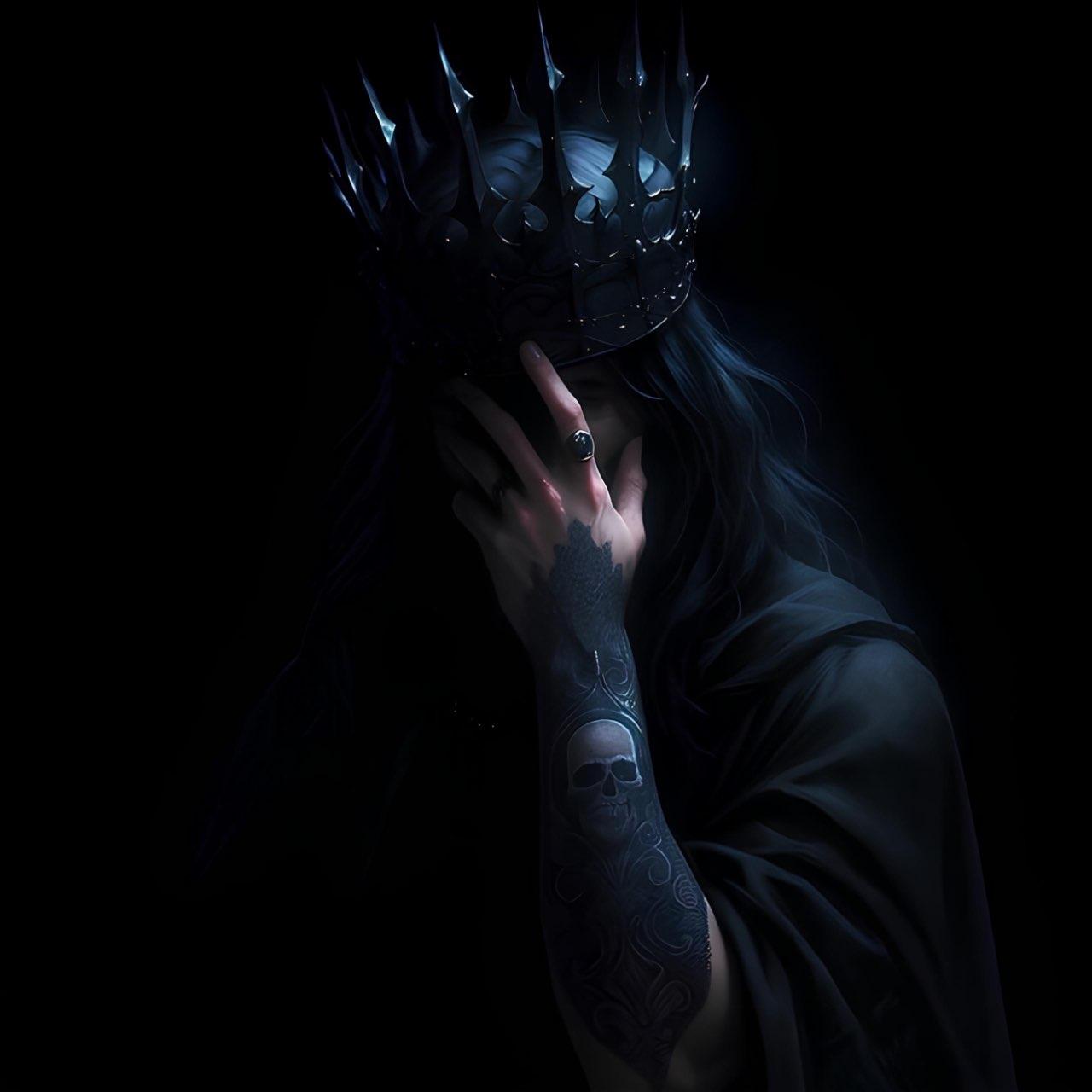
What Must Die to Be Reborn
Scorpio, the Death Card, and the Archetype of Transformation
Article · 21 min read · ·
There are few tarot cards capable of changing the atmosphere of a reading as quickly as Death.
Turn over The Sun, and people smile. Turn over The Lovers, and they immediately start wondering about romance. But place the Death card on the table, with its skeletal rider and mysterious black banner, and even someone who knows very little about tarot may suddenly become nervous. The card has spent generations being used in films, novels, and television as shorthand for impending doom. Someone draws Death, the music changes, and the audience knows something terrible is supposedly coming.
Fortunately, tarot is considerably more complicated than Hollywood.
Death, the thirteenth card of the Major Arcana, is not generally interpreted by modern tarot readers as a prediction of literal physical death. Its territory is much broader and, in many ways, more personal. The card speaks of endings, transition, release, and those moments when something has reached the end of its natural purpose, creating an opportunity for change.
A relationship can evolve. A career can take an unexpected direction. An old belief can give way to a deeper understanding. A version of ourselves that once kept us safe may eventually become too restrictive for the person we are becoming. Sometimes we choose these transitions. Sometimes they arrive unexpectedly. Either way, they invite us to reconsider what we need, what we value, and where we want to go next.
That is where Scorpio enters the story.
Scorpio is often reduced to a handful of dramatic stereotypes: secretive, intense, jealous, sexual, mysterious. Yet beneath those familiar descriptions lies something far more interesting. Scorpio is a fixed water sign, a combination associated with emotional depth, persistence, concentration, and an instinct for what lies beneath the surface. Traditionally ruled by Mars and associated with Pluto in modern astrology, Scorpio has gradually become one of the zodiac signs most strongly connected with power, vulnerability, regeneration, and transformation.
It is therefore easy to assume that Scorpio and the Death card have always belonged together.
They have not.
Tarot is older than the astrological system that eventually paired individual Major Arcana cards with zodiac signs. The specific correspondence between Scorpio and Death developed through later Western occult traditions, particularly the elaborate systems of tarot, astrology, Kabbalah, and ceremonial magic constructed by occultists during the nineteenth century. That history matters because it allows us to appreciate the connection without pretending it stretches unchanged back into antiquity.
Once the pairing was made, however, it proved remarkably meaningful.
Scorpio and Death meet at the threshold between what was and what comes next. Both acknowledge that change can be difficult, especially when it involves something familiar or deeply valued. Yet they also remind us that making peace with life’s transitions can bring greater clarity, emotional freedom, and a renewed sense of purpose.
Some endings are painful, and some require time to understand. Others arrive gently, almost unnoticed, until we realize that something within us has already begun to change.
But both Scorpio and the Death card carry the same essential message: not everything is meant to remain as it is forever, and that is part of what makes growth possible.
Perhaps that is why the Death card belongs so naturally to Scorpio season. It arrives at the darkening edge of the year carrying one of tarot’s most thought-provoking questions:
What has finished its work in your life, and what might become possible if you finally allow it to end?
The Card Without a Name
Long before Death became the skeletal knight familiar to modern tarot readers, the card was already confronting people with a much older certainty: life is temporary, circumstances change, and nothing in the material world remains exactly as it is forever.
In several historic tarot traditions, particularly decks associated with the Tarot de Marseille, the thirteenth card is unusual because it often appears without a printed name. The number is there, and the imagery leaves little doubt about the subject, but Death itself is not always written across the card.
A skeletal figure moves through a field with a scythe, surrounded by scattered human remains and fragments emerging from the earth. To modern eyes, the scene can seem unsettling, but within the visual culture of late medieval and early modern Europe, reminders of mortality were familiar.
European art frequently reminded its audiences that wealth, beauty, youth, authority, and social position offered no protection from the passage of time. The tradition of memento mori, Latin for “remember that you must die,” used skulls, skeletons, extinguished candles, wilting flowers, hourglasses, and other symbols to emphasize the temporary nature of earthly life.
Although these images could be somber, their purpose was not necessarily to inspire fear. They also encouraged people to recognize the value of the time they possessed. By remembering that life was finite, individuals were invited to consider how they lived, what mattered most, and what kind of legacy they wished to leave behind.
In that sense, the imagery was as much about appreciating life as contemplating its eventual conclusion.
By the time Pamela Colman Smith illustrated the Rider-Waite-Smith tarot in 1909 under the direction of Arthur Edward Waite, the imagery had changed considerably.
Instead of a figure wielding a scythe, Death appears as a skeleton dressed in black armor, riding calmly forward on a white horse. He carries a black banner marked by a white flower. Before him lies a fallen king, while a religious figure, a woman, and a child confront the approaching rider in different ways.
No one in the scene can simply command Death to stop.
Yet Smith’s landscape contains something the frightening reputation of the card often causes people to overlook.
In the distance, between two towers, light appears on the horizon.
The card does not depict darkness without end. Beyond the immediate scene, the landscape continues, illuminated by the promise of another day.
That detail is essential to understanding the card’s symbolism.
Death is not simply about destruction. It represents the moment when one condition gives way to another. Something has reached its natural limit, allowing a different stage of experience to begin.
This does not mean every ending should be presented as a blessing.
There is a tendency in modern spiritual language to rush toward phrases such as “everything happens for a reason” or to insist that every loss immediately opens a better door. The Death card offers a more balanced perspective. An ending may involve grief, uncertainty, disappointment, or a genuine sense of loss. Those emotions deserve acknowledgment rather than dismissal.
At the same time, recognizing that a chapter has ended can help us approach the future with greater understanding.
The Death card encourages us to consider what an experience has taught us, what remains valuable, and what we may be ready to carry forward.
Sometimes the most meaningful transformation begins not with a dramatic event, but with the quiet realization that we are ready for something different.
That recognition brings us directly to Scorpio.
Scorpio: Beneath the Surface
Scorpio has acquired one of the most dramatic reputations in the zodiac. It is frequently described as dark, secretive, dangerous, seductive, obsessive, or vengeful, as though every Scorpio were quietly plotting something from the corner of the room.
These stereotypes make entertaining astrology memes, but they flatten a much more complicated sign into a collection of clichés.
To understand Scorpio, it helps to begin with its element and modality.
Scorpio is a fixed water sign. Water is traditionally associated with emotion, intuition, sensitivity, relationships, and the inner world. Fixed energy holds, concentrates, preserves, and intensifies.
Imagine deep water rather than a rushing stream. The surface may appear perfectly still while currents move unseen below it.
That is a useful metaphor for Scorpio.
This is a sign associated with what exists beneath appearances: private emotions, hidden motivations, intimacy, vulnerability, power, trust, and the truths people sometimes prefer not to examine too closely.
Scorpio does not necessarily create these complexities. Rather, its symbolism encourages a willingness to explore them.
This capacity for emotional honesty can become one of Scorpio’s greatest strengths. Looking beneath the surface is not simply about uncovering difficult truths. It can also lead to greater self-awareness, stronger relationships, deeper trust, and a more compassionate understanding of ourselves and others.
Its traditional planetary ruler makes this easier to understand.
Long before Pluto was discovered, Scorpio belonged to Mars.
In traditional astrology, Mars ruled both Aries and Scorpio, although its character was expressed differently through each sign. Aries is cardinal fire, direct, initiating, visible, and quick to act. Scorpio is fixed water. The same martial qualities of determination, courage, and perseverance become concentrated and internalized.
Scorpio does not always charge directly toward an obstacle. Sometimes it waits. Sometimes it watches. Sometimes it endures.
That quality of endurance matters because meaningful change is rarely as instantaneous as we like to imagine.
We talk about transformation as though it were a single decision, but personal growth often develops gradually. Understanding an emotional pattern, rebuilding confidence, recovering from disappointment, or changing a deeply rooted habit may require patience and sustained effort.
Scorpio’s symbolism reminds us that resilience is not merely the ability to withstand difficulty. It is also the capacity to learn from experience and emerge with a stronger understanding of ourselves.
The association with Pluto came much later.
Pluto was discovered in 1930, and modern astrologers gradually connected the new planet with Scorpio. Pluto’s name, drawn from the Roman god of the underworld, made the association particularly compelling.
Modern astrology came to connect Pluto with power, regeneration, buried emotions, psychological depth, and profound transformation.
That symbolism fits Scorpio so neatly that Pluto is now frequently described as Scorpio’s ruler. Historically, however, Mars came first. Traditional astrologers continue to use Mars, while many modern astrologers use Pluto or recognize Mars as the traditional ruler and Pluto as the modern one.
Keeping those histories separate actually makes Scorpio more interesting.
Mars gives Scorpio its capacity for determination and endurance. Pluto, in modern astrological symbolism, offers a language for exploring the deeper psychological changes that may accompany important life transitions.
One speaks to courage and perseverance. The other has come to represent self-discovery, renewal, and the transformation of deeply rooted patterns.
Together, they help explain why Scorpio eventually became such a compelling partner for the Death card.
When Death Met Scorpio
The connection between Scorpio and Death can feel so natural that it is tempting to imagine it has always existed. The history of tarot tells a different story.
The earliest tarot cards were not created with a complete system assigning planets, zodiac signs, Hebrew letters, and elements to every card. Those layers accumulated gradually as tarot moved from a Renaissance card game into the world of Western occultism.
The decisive period came during the occult revival of the nineteenth century.
European occultists were increasingly interested in creating systems in which astrology, tarot, Kabbalah, alchemy, ceremonial magic, and other esoteric traditions could be interpreted through a shared symbolic framework.
Tarot became particularly attractive because its twenty-two Major Arcana offered a structure onto which other sets of symbols could be mapped.
One of the most influential organizations to develop these correspondences was the Hermetic Order of the Golden Dawn, founded in Britain in the late 1880s.
Within its elaborate magical system, the Major Arcana were assigned astrological and elemental correspondences. Death was connected with Scorpio.
This is an important distinction.
The Death card did not originally represent Scorpio, nor is the pairing evidence of some hidden astrological code preserved unchanged within tarot since the Renaissance. It is a product of a particular period in the development of Western esotericism.
Yet the people who created these correspondences were working with established symbolic associations.
Scorpio already carried astrological qualities that made Death a compelling match. As a fixed water sign traditionally ruled by Mars, Scorpio could represent persistence, emotional intensity, determination, and the ability to navigate difficult experiences.
The scorpion itself added another layer to the symbolism, a small creature capable of defending itself with a venomous sting and disappearing into hidden places.
Later interpretations expanded Scorpio’s transformational symbolism.
Modern esoteric astrology sometimes describes Scorpio through a progression of symbolic creatures, most commonly the scorpion, eagle, and phoenix. These images should not be mistaken for an ancient universal doctrine of Scorpio. They belong to later astrological and occult interpretation.
The phoenix makes the idea particularly vivid.
The legendary bird is consumed by fire and rises again from what remains. Its story has become a familiar symbol of regeneration, suggesting that even profound change can lead to renewal.
The correspondence became even more compelling after Pluto entered modern astrology. With the planet’s eventual association with Scorpio came an additional symbolic vocabulary of psychological depth, hidden forces, power, and transformation.
By then, Scorpio and Death seemed almost made for one another.
Yet the most meaningful aspect of the phoenix is not simply its dramatic return.
It is the reminder that change is part of a larger process.
We often focus on the moment of renewal while overlooking the period of reflection, adjustment, and understanding that may precede it. Personal transformation rarely follows a predictable schedule, and growth does not always announce itself through dramatic events.
Sometimes renewal begins quietly, through a change in perspective or a new understanding of something we have experienced.
The Death card gives that process symbolic form, while Scorpio encourages us to approach it with emotional honesty and patience.
Together, they suggest that transformation is not merely about becoming someone new. It is also about discovering which parts of ourselves are worth preserving as we grow.
Death, the Great Equalizer
Long before a skeleton rode across the Rider-Waite-Smith card, Europeans were accustomed to meeting Death in art, sermons, churches, manuscripts, poetry, and public imagination.
He might carry a scythe, dance beside the living, stand beside a grave, or appear unexpectedly at the shoulder of someone who had been far too occupied with earthly concerns to remember that life was temporary.
One of the most striking expressions of this idea was the Danse Macabre, or Dance of Death.
Emerging in late medieval Europe, the Dance of Death portrayed skeletons or personifications of Death accompanying people from every level of society toward the grave.
Popes, emperors, kings, bishops, merchants, peasants, young people, and children could all appear within the procession. Their positions in life were different, but their destination was the same.
That was precisely the point.
Medieval society was intensely hierarchical. Rank determined enormous portions of a person’s life, yet mortality ignored the distinctions people spent their lives maintaining.
A crown could command subjects, but it could not command the passage of time.
The same idea appears centuries later in Pamela Colman Smith’s Death card.
Look carefully at the figures surrounding the skeletal rider. A king has already fallen beneath the horse. A bishop stands before it. A woman turns away, while a child faces the rider with a very different response.
Wealth, religious authority, adulthood, innocence, and social position are all present, but none grants exemption from the changes represented by the card.
Symbolically, this makes a broader statement about the human experience.
Life changes regardless of our circumstances.
We can plan carefully, build secure lives, establish identities, and create meaningful routines. Yet children grow, relationships evolve, careers develop, and our understanding of the world changes with experience.
Even the roles that once seemed central to our identity may eventually shift.
The crown falls eventually, even when the crown is only the story we have been telling ourselves about who we are.
This is where the old memento mori tradition becomes more than a somber fascination with mortality.
To remember that life is temporary is also to remember that life is precious.
Impermanence gives our choices meaning. It encourages us to appreciate the people we love, recognize opportunities while they are available, and make thoughtful decisions about how we spend our time.
If everything remained forever, there would be little urgency to nurture relationships, pursue meaningful goals, or appreciate the beauty of a particular season before it passes.
The Death card therefore contains an important paradox.
Its imagery confronts us with impermanence, but that confrontation can encourage a deeper appreciation of living.
Scorpio takes the reflection further.
If our titles, responsibilities, circumstances, and familiar identities change, what remains essential about who we are?
Perhaps the answer lies in the values we carry, the relationships we nurture, and the wisdom we develop through experience.
Those questions lead naturally into one of humanity’s oldest symbolic landscapes, the journey into the underworld.
The Descent Before the Return
Human beings were telling stories about journeys into the underworld long before anyone connected Scorpio with the Death card.
Across mythology, the underworld is rarely an ordinary destination. It exists beyond a boundary separating the familiar world from a place governed by different rules.
Those who descend may be searching for someone, confronting mortality, seeking knowledge, fulfilling a divine purpose, or undergoing an experience that cannot happen safely on the surface.
Within the Greek tradition, Persephone offers one of the most familiar examples.
Her story survives in different forms, but the Homeric Hymn to Demeter gives us one of its most influential ancient versions.
Persephone is taken into the underworld by Hades, while her mother Demeter grieves above. Demeter’s withdrawal brings devastation to the earth until an arrangement is reached that allows Persephone to return for part of the year.
Modern retellings sometimes reduce the story to a simple metaphor for death and rebirth or the changing seasons.
The ancient myth is more complicated.
It involves abduction, grief, divine power, motherhood, separation, agricultural fertility, and the relationship between the worlds of the living and the dead.
Still, one element is particularly useful when considering transformation.
Persephone does not return unchanged.
The maiden who gathered flowers before her descent becomes a figure who belongs partly to the underworld itself. She crosses a boundary that cannot simply be uncrossed. Her return does not erase what happened below.
Yet Persephone’s story also contains a powerful image of continuity.
Despite the separation between mother and daughter, their connection remains. The earth eventually becomes fertile again, and the changing seasons establish a recurring rhythm of departure and return.
The story acknowledges loss while also preserving the possibility of renewal.
The Greek hero Heracles also descends into Hades as part of his final labor, while Orpheus enters the underworld hoping to retrieve Eurydice.
Their stories end very differently.
Heracles returns after confronting the realm of death and bringing Cerberus to the world above. Orpheus nearly succeeds in bringing Eurydice back, only to lose her when he looks behind him before they have completed their ascent.
These myths remind us that the underworld does not guarantee a happy ending.
If we use descent myths only as inspirational stories about personal growth, we strip away much of what makes them powerful. Their ancient audiences understood that courage, love, and determination did not always produce the outcome someone desired.
Yet the stories also explore the value of perseverance, devotion, and wisdom.
These myths did not originate as stories about Scorpio or tarot, but they illuminate a much older human understanding of transformation.
Experiences change us.
Sometimes they teach us patience. Sometimes they reveal our limitations. Sometimes they deepen our compassion for others or help us recognize strengths we did not know we possessed.
The goal is not to remain forever in the symbolic underworld.
It is to return with greater understanding.
And perhaps that is one of the most hopeful aspects of the Death card. Even when circumstances cannot be restored to precisely what they were, the wisdom gained through experience can still accompany us into the future.
When Death Appears in a Reading
After exploring the history, mythology, and symbolism surrounding the Death card, we arrive at a more practical question. What does it actually mean when Death appears in a tarot reading?
Despite its intimidating appearance, the card is not generally interpreted by modern tarot readers as a prediction of literal physical death. Its meaning depends on the question being asked, the surrounding cards, and its position within the spread. More often, it suggests that something in the querent’s life is changing or approaching an important turning point.
When upright, the Death card is traditionally associated with completion, transition, and significant change. It may indicate that a particular chapter is drawing to a close or that circumstances are evolving in ways that require a different approach.
For example, someone considering a career change might draw Death alongside cards associated with opportunity or personal fulfillment. In that context, the card could suggest that an established professional identity is giving way to a new direction. It does not necessarily mean the person should immediately resign from their job. Rather, it invites them to examine whether their current path still reflects their ambitions and values.
In a relationship reading, Death might suggest that the relationship itself is changing. This does not automatically indicate separation. Sometimes relationships grow stronger when old patterns are recognized and healthier ways of communicating are established.
The card’s meaning is shaped by context, not by its frightening reputation.
When reversed, Death is frequently interpreted as resistance to change, uncertainty about the future, or difficulty adjusting to a new situation. The querent may recognize that something needs attention but feel hesitant about taking the next step.
Here, Scorpio’s fixed-water nature becomes particularly relevant. Scorpio is associated with determination, loyalty, and emotional endurance, all valuable qualities. Yet even perseverance benefits from flexibility. There are moments when adapting to new circumstances requires as much courage as remaining committed to an established course.
A reversed Death card may therefore encourage someone to examine what is making a decision difficult. Is the hesitation based on practical concerns that deserve careful consideration, or is it rooted in fear of the unfamiliar?
Neither interpretation requires dramatic action. Tarot can serve as a symbolic framework for reflection, helping people consider their circumstances from a different perspective.
This distinction is particularly important when reading for others.
Because the Death card carries such a powerful cultural reputation, an inexperienced querent may immediately assume the worst. A responsible reader should explain its symbolism clearly rather than encourage fear or suggest that the card predicts an unavoidable tragedy.
The most constructive interpretations leave room for personal choice, thoughtful decisions, and individual circumstances.
Ultimately, the Death card does not tell us exactly what the future will bring. It invites us to consider how we are responding to the present and whether our choices continue to reflect the lives we want to create.
That is where its association with Scorpio becomes especially meaningful. Beneath the dramatic imagery lies an opportunity for greater emotional honesty, self-awareness, and confidence in our ability to navigate life’s changing circumstances.
What Must Die to Be Reborn
Perhaps the most interesting thing about the Death card is how differently we understand it once we look beyond its appearance.
What initially seems frightening becomes a reminder of something deeply human. Our lives are not static, and neither are we.
The people we were ten years ago are not exactly the people we are today. Experience has shaped our perspectives, influenced our priorities, and taught us things we could not have understood before living through them.
Some of those lessons came easily. Others required patience, courage, and a willingness to reconsider what we thought we knew.
Scorpio’s symbolism encourages us to appreciate that deeper process of self-discovery. Its emotional intensity need not be understood as something negative. At its best, it represents the ability to look honestly at ourselves, recognize our strengths and vulnerabilities, and develop a more meaningful understanding of what matters.
The Death card complements that perspective by reminding us that personal growth does not require us to reject everything that came before.
Our experiences remain part of us. The relationships we have nurtured, the knowledge we have gained, and the challenges we have overcome all contribute to the people we are becoming.
And perhaps that is the most reassuring message hidden within this seemingly intimidating card.
We do not have to know exactly what comes next to approach the future with hope. We can appreciate what has brought us this far while remaining open to the possibilities ahead.
Remember the light appearing between the two towers in Pamela Colman Smith’s illustration.
It is a small detail, easily overlooked beside the skeletal rider and dark banner. Yet it changes the entire atmosphere of the card. Beyond the immediate landscape, the sun is shining.
The image leaves us with something more meaningful than a warning.
It offers perspective.
Scorpio encourages us to look beneath the surface, where our deepest understanding often begins. The Death card reminds us that even when the road ahead is unfamiliar, there may still be possibilities waiting beyond what we can presently see.
And sometimes, the most important part of transformation is not what we leave behind, but the wisdom and hope we carry forward.
Responses
No responses yet — start the conversation.
More from the Magazine
Fireball Season: The Taurids and the Folklore of Falling Stars
Some meteor showers arrive like a crowd. The Taurids arrive like a single voice in a quiet room.
Weekly Forecast: 1–7 November
A quieter week to listen inward and move with the lunar flow.
FESTIVAL DE BELTANE
O FOGO QUE ABRE A METADE CLARA DO ANO