The Planet Parade: When Six Planets Share the Sky
The Strange Human Need to Look Up.
Article · 4 min read · ·
Specially today we will all want to look up!
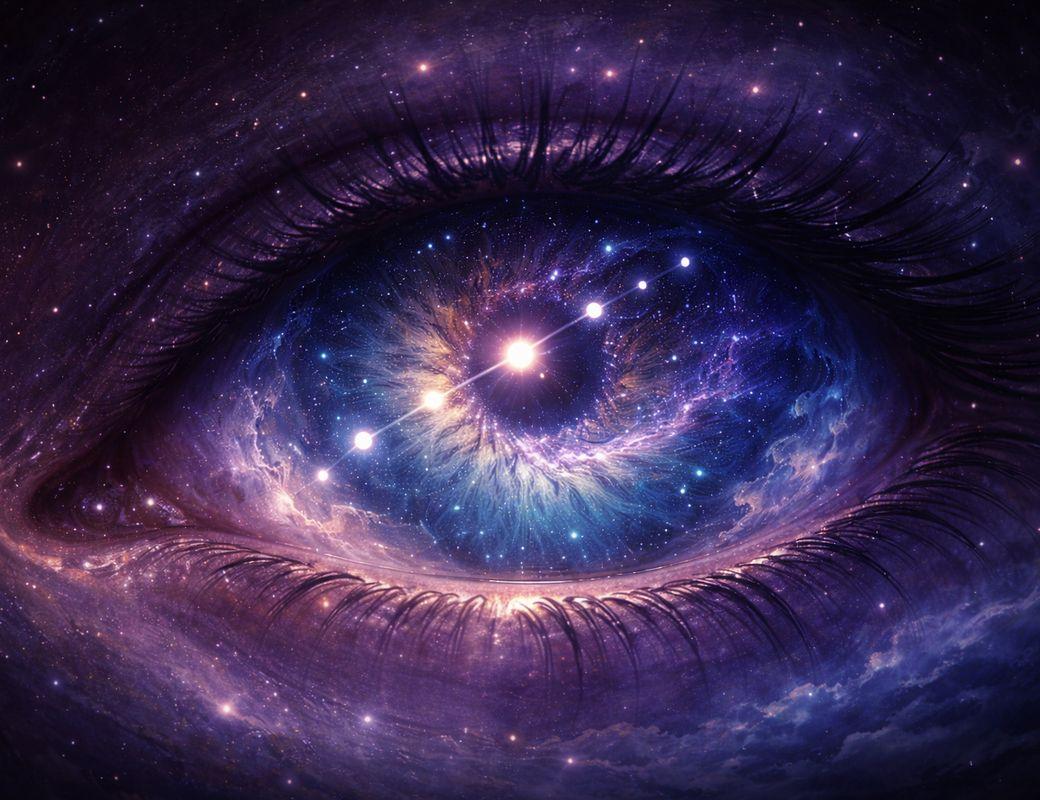
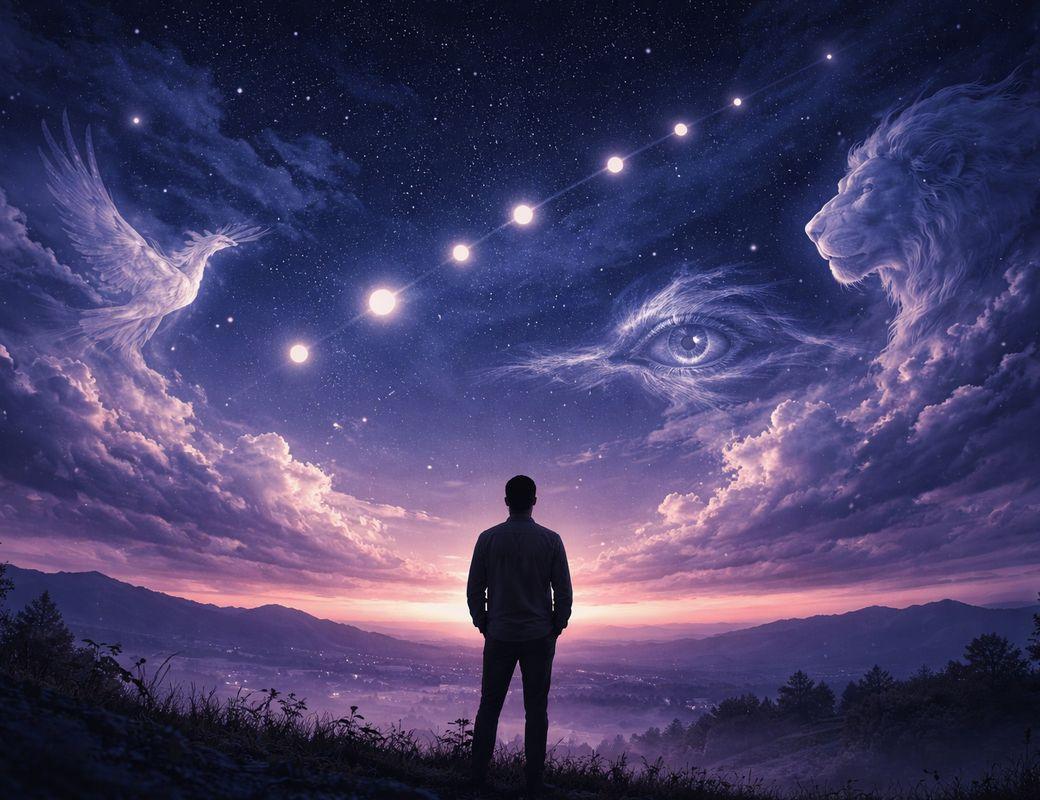
Because Tonight, February 28, 2026, something quietly beautiful is happening above us: Astronomically, this is called a planetary alignment, often referred to as a “planet parade,” where Mercury, Venus, Saturn, Uranus, Neptune, and Jupiter appear gathered along the same arc of sky just after sunset.
The Science Behind the Spectacle
It means this isn’t a literal straight line in space.The planets are still separated by vast distances… That’s because all the major planets orbit roughly on the same flat plane around the Sun, like grooves in a cosmic vinyl record. Every so often, their orbital rhythms synchronize in a way that makes them appear grouped together from our viewpoint. That’s what we’re witnessing now: geometry, gravity, celestial mechanics which are predictable, calculable, elegant.
The most striking view happens about 30 to 60 minutes after sunset, when the sky deepens into indigo but the lower planets have not yet slipped below the horizon. This visual harmony lasts only a few evenings at its peak. Over days and weeks, the grouping gradually dissolves as the planets continue their steady migration. What makes this moment feel fragile is how conditional it is. Clear weather. Low light pollution. Precise timing. A small window in the vast machinery of the solar system. It feels like an appointment with the cosmos. Why? Planetary alignments involving five or more visible planets are relatively rare from a single vantage point on Earth. Some alignments include planets too faint to see without binoculars. Others occur too close to the Sun’s glare. When multiple bright ones gather in an easily visible arc, it becomes both scientifically ordinary and aesthetically unforgettable.
Why Humans Never Look at the Sky Neutrally?
Humans have never been good at observing the heavens and feeling nothing. Patterns emerge out of the vast horizon…
Long before telescopes, Babylonian astronomer-priests mapped planetary cycles with remarkable precision. They tracked conjunctions not only for agricultural planning but as symbols tied to rulers and collective fate. The Maya calculated the synodic cycle of Venus with such accuracy that their records rivaled modern astronomical calculations. In Hellenistic astrology, Greek philosophy merged with Mesopotamian sky lore. Planetary gatherings were interpreted as concentrations of archetypal meaning.
Venus symbolized harmony and desire. Jupiter represented expansion and wisdom. Mercury embodied thought and communication. Saturn reflected structure and responsibility. These were not physical forces like magnetism; they were symbolic languages. The famous Hermetic phrase “As above, so below”so described correspondence, not causation. The sky was mirror, not mechanism.
Ancient civilizations treated the heavens as communication. When wandering lights clustered together, it signaled emphasis. Not chaos. Focus. A narrative intensifying in one region of the zodiac. Whether in Mesopotamia, Mesoamerica, or classical Greece, alignments were moments of concentration in the cosmic history.
The Psychology of Convergence…
There is something deeply psychological about seeing multiple bright points sharing one stretch of sky. Humans are pattern-seeking creatures. We are wired to detect meaning in convergence. When we witness order above us, something inside us subtly reorganizes. Alignments do not force events. Yet symbolism shapes perception, and perception shapes action. If enough people interpret a moment as significant, decisions shift. Conversations sharpen. Collective mood changes. History often pivots not because planets command it, but because human beings respond to symbols.
This particular convergence carries a feeling of compression. Energy that felt scattered earlier in the month may now feel focused. Conversations grow more direct. Desires become less negotiable. Long-term plans demand structure. The sky appears concentrated rather than diffuse, and that image alone can influence how we approach ambition, relationships, and choices. The planets share space without colliding. That visual metaphor is powerful. Logic and emotion. Discipline and desire. Expansion and restraint. They can coexist without canceling one another. Alignment invites integration.
Across cultures, people have used sky phenomena as anchors for ritual and meaning.
YOUR BEST RITUAL:
If you want to engage with the moment intentionally, keep it simple and grounded.
Tonight, step outside or stand near a window. Even if city lights obscure the planets, acknowledge the sky. Take a notebook and write three areas of your life that feel disconnected from each other. Then write one action that would bring them into cooperation rather than competition. Fold the page and place it somewhere visible for the next seven days. This is not about invoking external forces; it’s about responding to a symbolic cue. The ritual works because When they visually converge, we are invited to move from contemplation into coordinated motion. This isn’t about fantasy. It’s about harnessing symbolic timing to sharpen intention.
This ritual works not because of physics, but because when humans take time to reflect meaningfully, they create mental clarity and emotional focus. Rituals help:
-
Anchor intention
-
Cultivate mindfulness
-
Deepen self-awareness
-
Mark transition and renewal
Ancient and mystical practices (whether Babylonian clay tablets or Hermetic texts) they reflect on humanity’s long quest to understand ourselves in relation to the vast, breathtaking night sky. Whether you see today’s planetary alignment as a science-only spectacle or a symbolic moment of reflection, the stars have always been a mirror of human curiosity: a reminder that we are part of the cosmos, not separate from it.
Written by Emma Jaramillo.
---
Responses
No responses yet — start the conversation.
More from the Magazine

¿A QUÉ SABE TU OTOÑO?
Hay estaciones que se viven con los ojos, pero el otoño está hecho para saborearlo con el alma.
1 Week of prAna | Vol. 4: 🗺️ Scorpio Stellium Mission
— The Reality Scanner, the luxury of silence, information detox, and the fertile void
Welcome to Scorpio Season
A Time of Transformation, Rebirth, and Personal Power