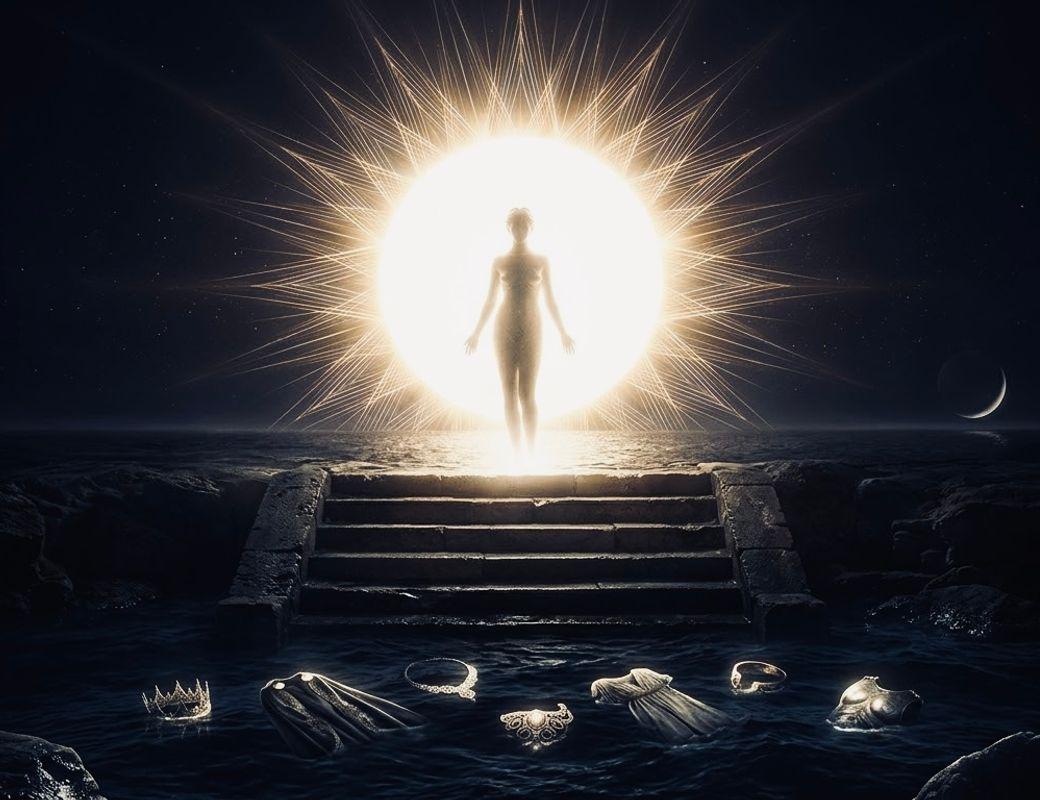
The Longest Solar Eclipse of the Century
The Longest Solar Eclipse of the Century: When Time Stands Still and the Sky Remembers
Article · 4 min read · ·
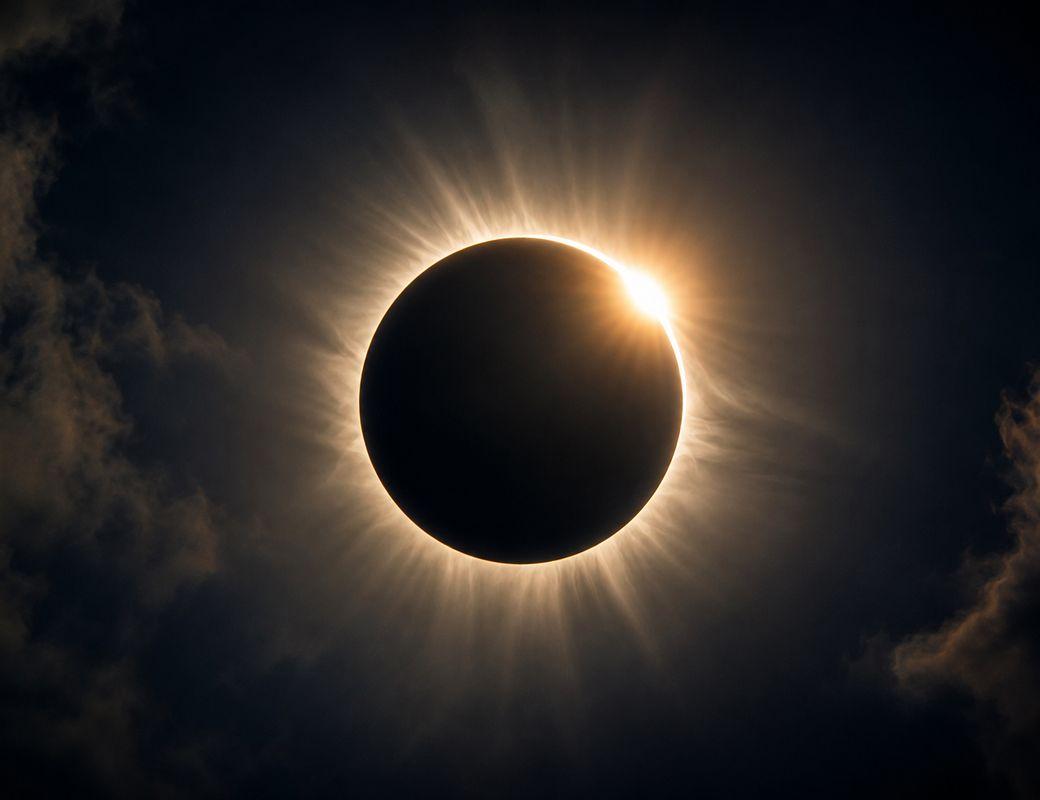
There are astronomical phenomena that can be explained with equations, orbits, and celestial mechanics. And then there are those events that, even when understood by science, seem to awaken something more ancient in the human soul: an ancestral memory written in shadow.
The longest solar eclipse of the century promises to be one of those moments.
For several extraordinary minutes, the Moon will completely cover the Sun's face, plunging entire regions of the planet into an impossible darkness at midday. Birds will fall silent. The temperature will drop. Shadows will become strange, and the horizon will take on the appearance of a circular twilight. It will be an instant when the everyday order seems to suspend itself.
Astronomy describes it as a precise alignment between Earth, the Moon, and the Sun. Yet for millions of people, the eclipse's meaning reaches far beyond orbital calculations.
The Eclipse That Won't Return to Earth Until 2126
This celestial encounter will take place on August 2nd, a date that already holds a special aura for many sky watchers. Not only is it the longest solar eclipse of the century; it's also a phenomenon whose extraordinary configuration won't repeat itself until August 2nd, 2126.
The Ancient Language of Shadows
Since ancient times, civilizations have observed eclipses with a mixture of fascination and reverence.
Priests, astronomers, and sages from different cultures saw in them signs of transformation. Not because they necessarily heralded misfortune, as some popular myths suggest, but because they broke the usual rhythm of the world.
The Sun, universal symbol of consciousness, identity, and life force, temporarily disappears. Light yields to darkness. The visible becomes invisible.
In symbolic terms, the eclipse represents a portal between states of consciousness: the meeting between what we show the world and what remains hidden in the depths of the psyche.
A Threshold Between Worlds
Esoteric traditions consider eclipses moments of energetic acceleration. They're seen as turning points where certain cycles conclude and others begin.
During a solar eclipse, these currents say, everyday reality becomes more permeable. Old structures can weaken, allowing new possibilities to emerge.
This isn't necessarily magic in the popular sense of the term, but rather an invitation to observe our internal movements with attention.
What aspects of our lives need transformation?
What patterns do we repeat without questioning them?
What truths have remained hidden beneath the constant light of our routines?
The eclipse's shadow seems to pose these questions with singular intensity.
The Secret Language of the Corona
One of the most breathtaking moments occurs during totality, when the brilliant solar corona appears around the Moon's dark disk.
For scientists, it's the Sun's outer atmosphere, a natural laboratory of extreme temperatures and magnetic phenomena not yet fully understood.
For more contemplative observers, the image possesses an almost archetypal power: a light that emerges precisely from darkness.
It's a visual and spiritual paradox.
The eclipse reminds us that absence can reveal; that silence can communicate; that sometimes what we believe lost is simply waiting for a new form of manifestation.
Time Suspended
Those who have witnessed a total eclipse often describe a sensation that words struggle to capture.
They don't speak solely of a visual spectacle.
They speak of an altered perception.
During those minutes, time seems to slow down. The mind stops racing after obligations and worries. A strange presence emerges, an awareness of the moment we rarely experience in modern life.
Perhaps that's the true mystical dimension of the eclipse.
Not the promise of prophecies or destinies written in the stars, but the possibility of remembering something essential: our belonging to an immense, mysterious, and deeply interconnected cosmos.
When the Light Returns
And then, as suddenly as the darkness arrived, light will return.
A flash will appear at the lunar edge. The corona will disappear. The day will resume its course.
But for many observers, something will have changed.
Eclipses don't transform the outer world in visible ways. They transform the gaze with which we behold it.
The longest solar eclipse of the century will undoubtedly be an extraordinary astronomical event. Yet its greatest legacy might reside in another, less measurable dimension: the ability to remind us that even the Sun, eternal symbol of permanence, agrees to disappear for an instant to reveal the beauty of shadow.
And perhaps there, in that brief encounter between light and darkness, lies one of the universe's oldest teachings: every cycle has an ending, every night holds a promise, and every shadow, however deep it may seem, is inevitably born from light. ✨🌑☀️
Responses
No responses yet — start the conversation.