SAMHAIN
Between two worlds
Article · 4 min read · ·
May 1st, 2026 | Hemisphere
The Celts divided the year in two: the half of light and the half of darkness. Samhain was the threshold between them. A date when ordinary time stopped functioning in the usual way, and what had been separated came together again.
On this night, the veil between the living and the ancestors grows thin. This is the tradition. But what does it mean for those who don't believe in ghosts and yet still feel that something about this time of year weighs differently?
What the Veil Really Is
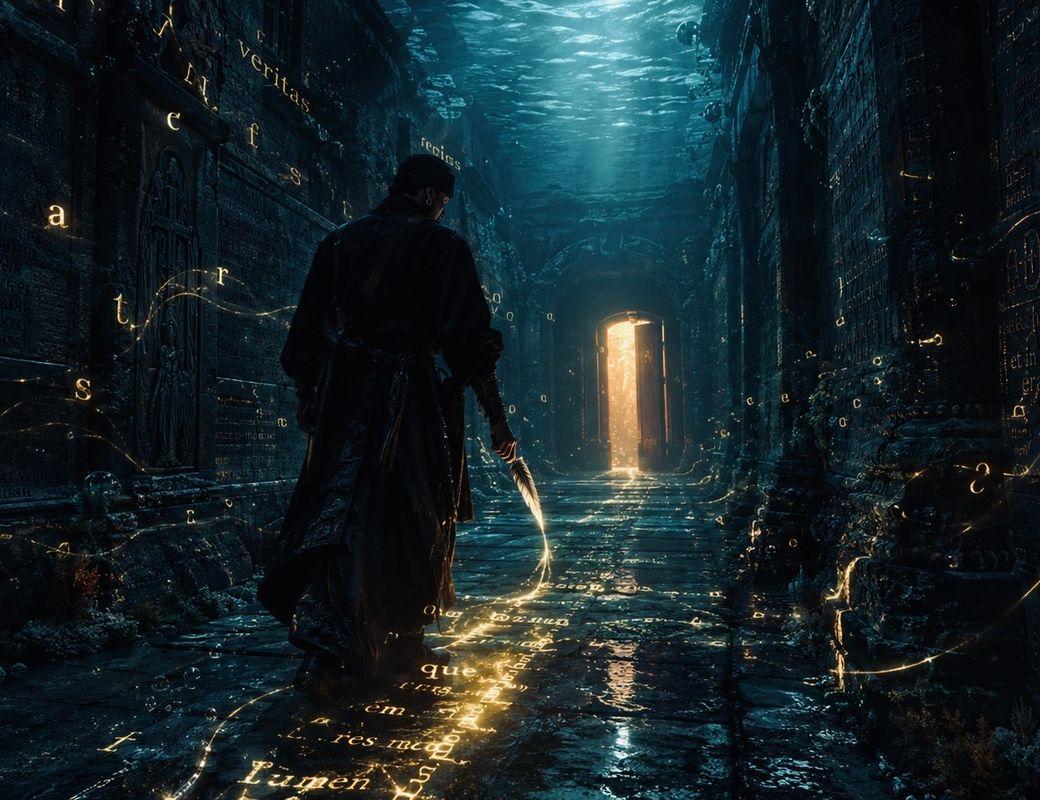
The traditions that observed Samhain seriously were never talking only about literal dead. They were talking about everything that was suppressed, buried, left unresolved. The ancestors we carry in gestures we make without knowing why. The patterns that repeat without our conscious understanding of their origin. The parts of ourselves that were left behind because they wouldn't fit in the space the world offered.
When autumn advances in the southern hemisphere and energy descends from leaves to roots, something analogous happens internally in those who pay attention. Life withdraws. Samhain is the lowest point of this movement, and low points have a concrete characteristic: they reveal what the surface was covering.
The Oldest Myth About This Descent
Long before the Celts named this threshold, the Sumerians already knew what it required.
Inanna was queen of heaven and earth. Yet she chose to descend to the Kur, the underworld ruled by her sister Ereshkigal.
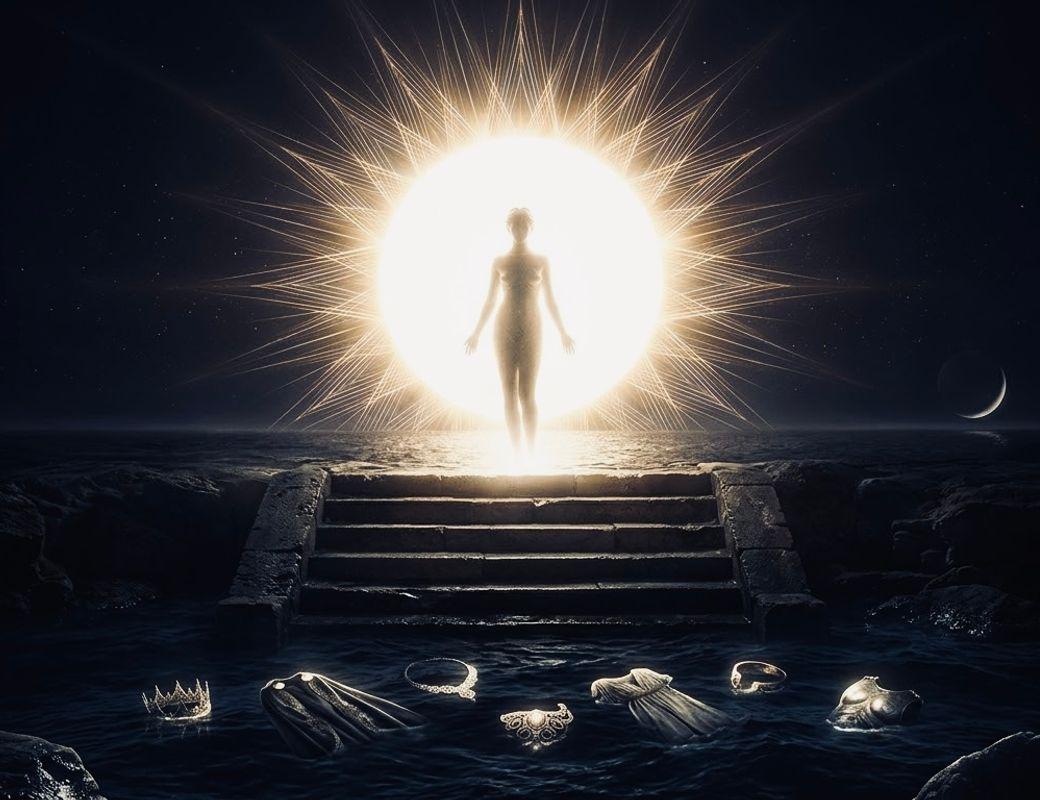
At each of the seven gates she crossed, she was stripped of something: her crown, her cloak, her necklace, her ornaments, her garments, until she reached the throne with nothing. Without title. Without power. Without the form that defined her.
The myth is four thousand years old. What it describes is the mechanics of any real loss. Every time someone crosses through a rupture that cannot be circumvented, the process is this: each gate removes something you used to know who you were. There is a point where nothing remains except what cannot be taken.
Inanna did not descend as punishment. She descended because there was something at the bottom that heaven alone could not give her: knowledge of what lies beneath. She returned. Bearing the mark of the seven gates, different from what she was before descending. More whole, not less.
Samhain carries this memory. Certain things can only be learned when the ornaments have been removed. 🥀
What We Carry Without Realizing
There are three layers of the past that Samhain addresses.
The lineage: those who came before, whose incomplete stories keep showing up in the choices of those who came after. A grandmother who could never say what she knew. A great-grandfather whose burden traveled unnamed through generations. In the act of consciously honoring this lineage, part of what it carries can be recognized and, with time, integrated.
What was left behind in you: versions of yourself that needed to be left so that life could continue. The child who learned early that feeling too much was dangerous. The dream shelved out of practical necessity. Samhain doesn't ask you to return to what was left behind. It asks you to acknowledge it honestly before moving forward.
What this year transformed: relationships, phases, illusions about yourself or others. The grief that daily life didn't make room to be fully lived. This date offers a place for that.
The Real Practice
Celtic traditions had concrete form, not abstract.
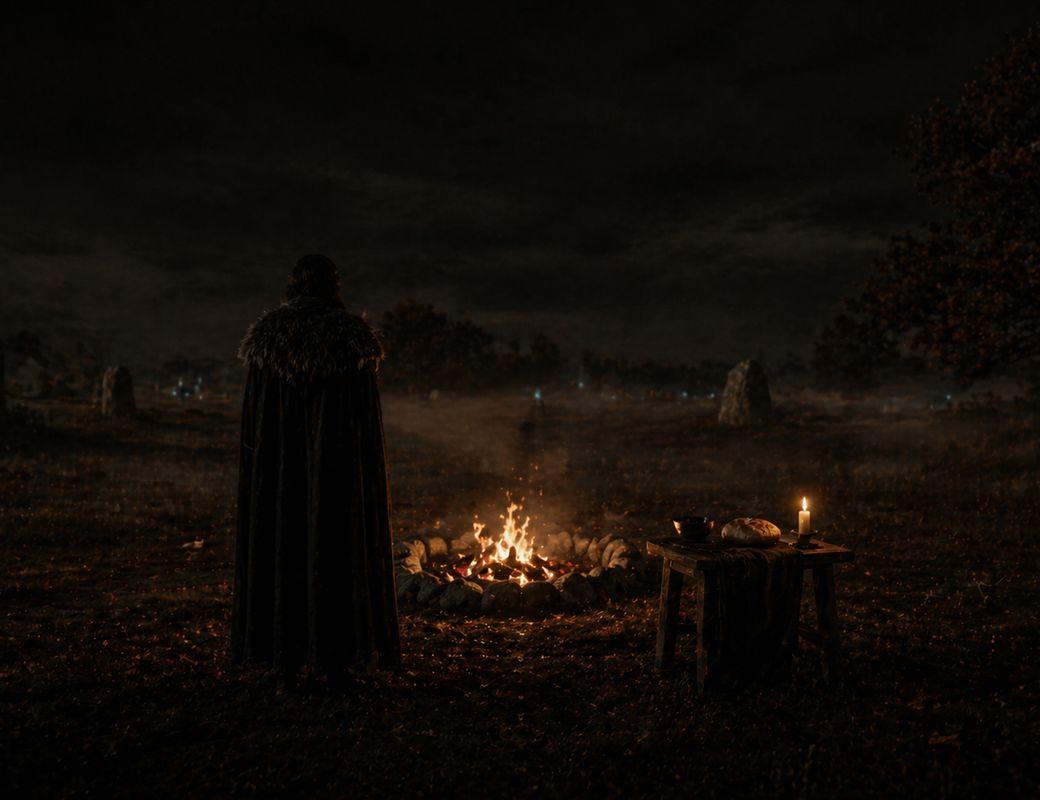
A bonfire lit on this night marks what was harvested but no longer serves. A written note, an object, an intention spoken aloud. Fire functions as a marker: here remains what does not continue with me.
A table set for the ancestors is not superstition. It is memory with intention. Food, water, a candle, silence. Without unnecessary elaboration.
Noise keeps the veil thick. Deliberate silence on this eve has a real effect on what you can perceive in these days.
How to Work with This Date
Name what this year transformed. Without euphemism. What ended, what was lost, what you abandoned or were forced to let go.
Naming is not ruminating. It is giving the cycle the closure it needs before it turns.
Sit with an ancestor. Someone from the lineage who carried something that still appears in you. Without elaborate ritual. With real attention.
Examine what remains open. What was left unfinished in this cycle will appear somehow in these days. Pay attention to what insists on returning.
Light something. A candle, any flame. Here I acknowledge what was left behind before moving forward.
Reflection
What is not acknowledged does not disappear. It keeps operating beneath the surface, shaping choices that seem to come from nowhere. The cultures that took Samhain seriously knew this in a practical way, not philosophical.
Inanna returned from the Kur with something that did not exist before the descent. The tradition doesn't say the descent was good. It says it was necessary. And it says that whoever crosses the seven gates with awareness returns more whole than they left.
O que você ainda não olhou de frente está esperando que você tenha tempo.