PHS Series | Week 2, Monday
How You Were Designed to Be Fed: Understanding Determination
Article · 8 min read · ·
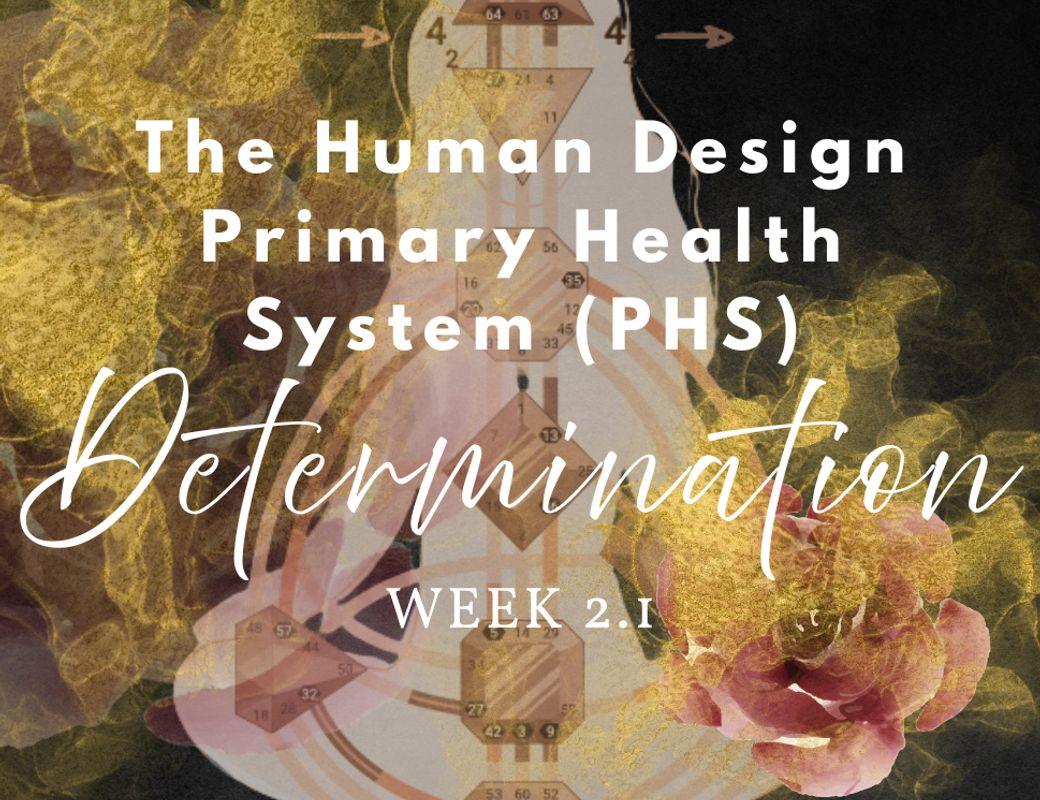
Your body has always known how it wants to eat. The problem is that almost nothing in your life has ever asked it.
The family table said: six o’clock, everyone together, finish what is on your plate. The diet culture said: small meals, frequent, keep your metabolism running. The wellness industry said: intermittent fasting, or food omission eating, or eating by blood type, or eating by season, or some combination of all of these layered on top of each other until the simple act of nourishing yourself became a project requiring research. Somewhere underneath all of that instruction, the body has been sending a quieter signal. Determination is the name Human Design gives to that signal.
It is the upper left arrow in your chart, and it governs what Ra Uru Hu called the regulatory function: the specific way your body is designed to process nutrition, and by extension, experience itself. Determination is not merely about food in the narrow sense as the same mechanism that governs how you absorb a meal also governs how you absorb information, sensation, and the events of your day. The gut and the mind are not running separate programmes. They are running the same one.
The Six Determinations
Determination is divided into six types, each corresponding to one of the six Colours in the system. Within each Colour there are two tones: one left-facing and one right-facing, active or receptive, giving twelve possible Determination configurations in total. Your chart will show you which one is yours. What follows is a description of all six, with enough texture to let you begin to feel whether a given description resonates in the body rather than just in the mind.
Colour 1: Appetite
Appetite Determination comes in two expressions: Consecutive (left) and Alternating (right).
Consecutive Appetite people are designed to eat one food at a time, or one type of food at a time, working through it completely before moving to the next. The classic image is a plate where everything is eaten separately rather than mixed. This is not a quirk or a fussiness. It is a digestive intelligence that works sequentially, extracting fully from one source before it can properly receive another. Mixing foods, eating complex multi-ingredient dishes, or grazing across many options simultaneously tends to create a low-level digestive noise that quietly depletes energy over time.
Alternating Appetite people are the reverse. They are designed to eat variety, to rotate, to move between different foods within a meal and across meals over time. Their digestive system is most efficient when it is not doing the same thing twice in a row. For Alternating Appetite, eating the same meal every day in the name of health or simplicity works against their biology. Their body needs the stimulation of difference to fully engage its digestive intelligence.
Colour 2: Taste
Taste Determination comes as Open Taste (left) and Closed Taste (right).
Open Taste people are designed to eat with variety and without restriction of flavour profile. They digest best when their palate is genuinely engaged and when they are free to follow what actually appeals to them in the moment. For Open Taste, a rigid dietary framework that eliminates entire categories of flavour tends to create a subtle but persistent sense of deprivation that interferes with the body’s willingness to receive nourishment properly.
Closed Taste people are designed for a consistent, familiar diet. The body actually relaxes into food it recognises. For Closed Taste, the fashionable pursuit of novel ingredients, fusion cuisines, or constantly rotating meal plans can be genuinely dysregulating. The ideal is not monotony exactly, but a reliable range of foods that the body trusts. Eating out constantly, or being in environments where the food is always unfamiliar, tends to be quietly exhausting for Closed Taste, even when the food is excellent.
Colour 3: Thirst
Thirst Determination comes as Hot (left) and Cold (right), and it refers to the temperature at which the body optimally receives food and liquid, not the temperature of the environment, and not what the body seems to want in the moment of craving.
Hot Thirst people are designed to receive warm and hot food and drink. Their digestive system, and their overall regulatory system, functions most efficiently when what enters the body is at a warm temperature. This remains true even in summer, even in hot climates. The temperature preference is built into the body’s chemistry, not into the weather.
Cold Thirst people are designed for cool and cold food and drink. Their bodies receive nourishment most effectively when it arrives at a lower temperature. Room temperature or cooler is generally the range. This does not mean they cannot eat hot food, but the body’s optimal absorption happens when the thermal quality of the nourishment matches its inherent design.
Colour 4: Sound
Sound Determination comes as High Sound (left) and Low Sound (right), and it describes the acoustic environment the nervous system needs during eating and nourishment for digestion to actually work.
High Sound people are designed to eat in environments with life and activity around them. Background conversation, music, the ambient noise of a restaurant or a kitchen full of people: these are not distractions for High Sound. They are part of the digestive environment. Eating alone in silence tends to feel somehow incomplete for High Sound people, as though something necessary is missing, and over time, habitual silent solitary eating can contribute to a low-level sense of flatness or depletion.
Low Sound people are designed to eat in quiet. The nervous system of Low Sound needs relative stillness to properly engage its digestive function. Eating with the television on, in loud restaurants, or in emotionally charged conversations interferes with the body’s capacity to absorb. For Low Sound people, taking meals in calm environments is not a luxury. It is maintenance.
Colour 5: Light
Light Determination comes as Direct Light (left) and Indirect Light (right), and it describes the relationship between natural light cycles and the body’s optimal time for nourishment.
Direct Light people are designed to eat during daylight hours. Their metabolism is calibrated to the arc of the sun, and their digestive capacity is strongest when they are eating within daylight. This does not mean they cannot eat after dark, but the body’s primary receptivity to nourishment runs in alignment with natural light. Late night eating tends to feel heavier or less satisfying for Direct Light, not simply because of cultural mythology about not eating after eight o’clock, but because the body’s rhythm genuinely runs differently after sundown.
Indirect Light people are designed to eat outside of peak daylight, in the early morning before the sun is fully up, in the evening and into night, or in lower natural light conditions. For Indirect Light, the high midday meal that is often celebrated as optimal in nutrition frameworks can be oddly unsatisfying or difficult to digest. The body is simply more receptive to nourishment when the light conditions are softer.
Colour 6: Touch
Touch Determination comes as Calm (left) and Nervous (right), and it describes the quality of environmental stimulation the body needs around food and nourishment.
Calm Touch people are designed to eat in physically settled, sensory-quiet environments. Not necessarily silent, and not necessarily formal, but physically calm. Eating while rushed, eating standing up, eating in environments with a great deal of physical movement or sensory stimulation, tends to disrupt the regulatory function for Calm Touch people in ways that are not always immediately obvious but accumulate over time as fatigue or digestive sensitivity.
Nervous Touch people are designed to eat with a degree of movement and stimulation in their environment. This is the person who genuinely digests better when there is a certain kind of aliveness in the atmosphere around them. Highly controlled, excessively still or sanitised eating environments can feel oppressive to Nervous Touch in ways that affect digestion without the person being able to name why. They need the world to be slightly in motion around them when they eat.
Working With Your Determination
Finding your Determination in your chart is the beginning, not the end. The actual work is the slow, patient experiment of noticing what your body does when you align with it, and what your body does when you do not.
Most people find they have already been living aspects of their correct Determination without naming it. The person who has always preferred eating alone in quiet and felt vaguely guilty about it. The person who has always eaten better at dinner than lunch and wondered if there was something wrong with their metabolism. The person who genuinely thrives in a loud kitchen with people around them and has been told they have bad habits.
These are not bad habits. They are, in most cases, the body following its own intelligence against the cultural noise telling it to do otherwise.
Begin simply. Find your Determination type in your chart. For one week, give your body more of what it is designed for, without forcing it, without turning it into a discipline. Notice what shifts. Notice what feels like relief.
The body has always known. We are only now beginning to listen.
Responses (2)


More from the Magazine

¿A QUÉ SABE TU OTOÑO?
Hay estaciones que se viven con los ojos, pero el otoño está hecho para saborearlo con el alma.
1 Week of prAna | Vol. 4: 🗺️ Scorpio Stellium Mission
— The Reality Scanner, the luxury of silence, information detox, and the fertile void

Welcome to Scorpio Season
A Time of Transformation, Rebirth, and Personal Power