Irish-Canadian Traditions: The Aurora Borealis
Liminal Light in a Diaspora Tradition
Article · 4 min read · ·
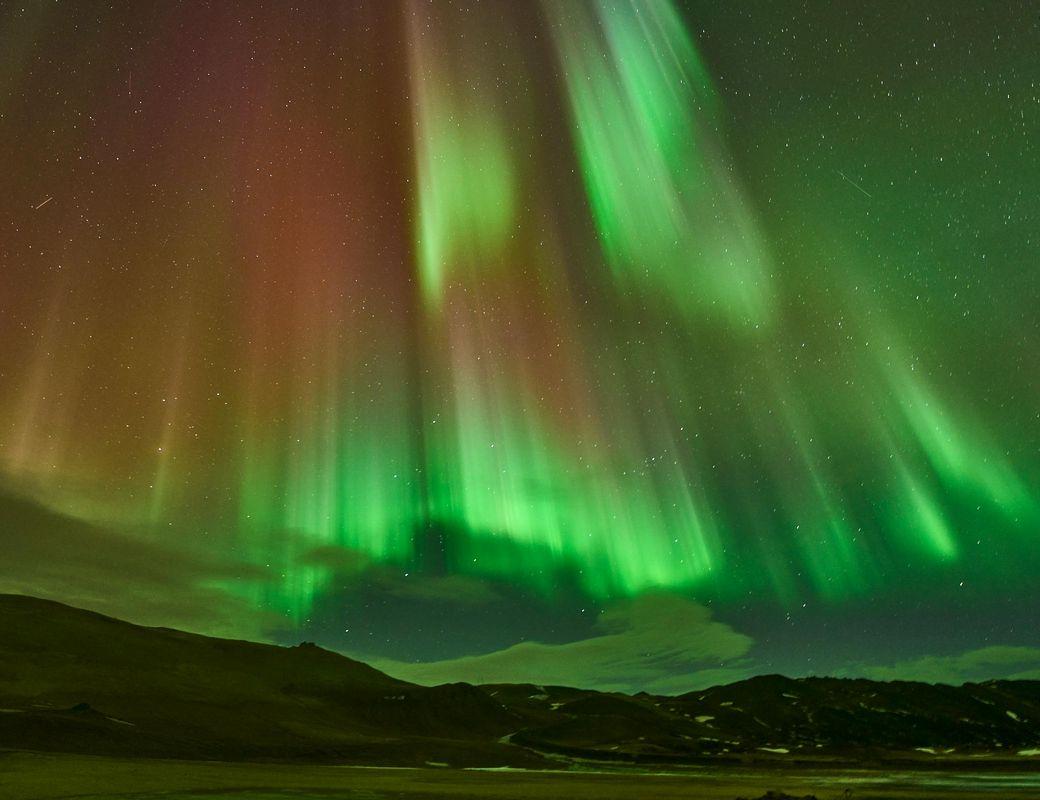
The Northern Lights
Lately, the activity in the sky over here in Western Canada has been extraordinary. The Aurora Borealis has taken over the night, turning the sky itself into a living, moving presence.
In my own tradition, both nature and the sky have always mattered. The land grounds me; the sky invites me to look beyond what is immediately visible. One anchors. The other opens.
I’ve long been fascinated by the things I use instinctively in my practice; by asking whether they are ancestral, inherited through tradition, or whether they are responses shaped by where I live and what I witness.
This question is where my practice shifts from being solely Irish to something more honest: Irish-Canadian.
The Northern Lights and Irish-Canadian Tradition
Not inherited, but lived
The Northern Lights are not part of original Irish tradition.
Ireland sits far enough south that auroral displays were historically rare and unpredictable. Because of this, they never developed a consistent place in Irish folklore, seasonal observance, or ritual practice. There are no traditional Irish festivals, charms, or mythic figures centered on the aurora.
Naming that truth matters.
But it is not the end of the story.
For those of us living on the land now called Canada, the Northern Lights are not rare anomalies. They are part of the living sky. They return again and again, shaped by latitude, season, and solar activity. Over time, repeated presence becomes relationship.
The Northern Lights hold meaning in many cultures who live beneath them. In this piece, I am not drawing from Indigenous cosmologies, but writing from within an Irish-Canadian tradition shaped by lived experience, restraint, and attentiveness to place.
And relationship between cultures is where tradition begins.
Irish tradition was never static
One of the most persistent misunderstandings about Irish tradition is the belief that it must be preserved through exact replication. Historically, this was never the case.
Irish practice adapted continuously to:
-
land and weather
-
agricultural conditions
-
political disruption and migration
-
household need
What made a practice “Irish” was not sameness across centuries, but a shared orientation: attentiveness, restraint, endurance, and responsiveness to place.
Irish tradition did not ask people to ignore where they lived.
It asked them to listen carefully to it.
Diaspora creates new tradition; not dilution
Irish-Canadian tradition is not a weakened version of Irish tradition. It is a diaspora tradition (Britannica, ND), shaped by different winters, different skies, and different forms of endurance.
Living in Canada means living with:
-
longer, harsher winters
-
wider horizons
-
deeper cold
-
and, in many regions, frequent auroral activity
To pretend these conditions are irrelevant would contradict the very foundations of Irish practice, which has always been grounded in what the land requires.
The Northern Lights become meaningful here not because they were inherited; but because they are experienced repeatedly.
The Northern Lights as Irish-Canadian experience
In an Irish-Canadian context, the Northern Lights are not retroactively made Irish. They are not folded into Irish mythology, renamed, or claimed as ancient symbols.
Instead, they are understood as local atmosphere; part of the environmental reality that shapes spiritual attention.
From this perspective, the aurora is:
-
not a message
-
not a prophecy
-
not a call to ritual action
It is a reminder of scale.
Irish tradition has always respected forces that exceed human control. The Northern Lights fit comfortably into that worldview: powerful, beautiful, and indifferent to human meaning-making.
What ethical integration looks like
Integrating the Northern Lights into Irish-Canadian tradition does not mean borrowing from Indigenous cosmologies or assigning meanings that do not belong to us.
Instead, it means:
-
acknowledging the lights as part of the land we live on
-
responding with observation rather than ownership
-
allowing experience to shape practice without overwriting history
An Irish-Canadian witch might:
-
witness the lights silently
-
note emotional or bodily response without interpretation
-
mark the night as unusual, not directive
-
return afterward to Irish seasonal anchors such as hearth, solstice, and winter endurance
The structure remains Irish.
The context is Canadian.
Why repetition matters
In Irish tradition, what appears once is noticed.
What appears again becomes pattern.
Over generations of Irish people living in Canada, the Northern Lights have moved from anomaly to familiar interruption. That repetition changes how they are held. Not as spectacle, but as presence.
This is how new tradition forms:
-
not through invention
-
not through appropriation
-
but through sustained relationship
Irish-Canadian tradition emerges where memory and place meet.
A tradition that can hold two truths
It is possible, and necessary, to hold both of these truths at once:
The Northern Lights are not part of original Irish tradition.
The Northern Lights are part of Irish-Canadian lived experience.
One does not negate the other.
Irish tradition survives not by resisting change, but by meeting it with integrity. Irish-Canadian practice honors lineage without denying land.
Closing reflection
Tradition does not live only in the past.
It lives where people endure, adapt, and continue.
The Northern Lights do not need to be made Irish to belong in Irish-Canadian practice. They belong because they are here, because they return, because they shape the night we live under.
To witness without claiming
is not a loss of tradition.
It is how tradition stays alive.
Go forward in good faith ❤️🍀
Responses
No responses yet — start the conversation.