Fireball Season: The Taurids and the Folklore of Falling Stars
Some meteor showers arrive like a crowd. The Taurids arrive like a single voice in a quiet room.
Article · 13 min read · ·
The Southern Taurids peak on the night of November 4 into the morning of November 5, 2026, with the night of November 5 into November 6 also worth watching. The Northern Taurids follow on November 11 into November 12. Neither shower fills the sky. Under ideal conditions, you might see around five meteors an hour. That is not a failure of the shower. It is the point of it.
The Taurids are slow. Their meteors enter the atmosphere at roughly 27 kilometers per second, slower than many other showers, and that slowness is what makes them memorable. Instead of a quick flicker at the edge of vision, a Taurid can draw a long, bright line across the sky, linger, and sometimes flare into a fireball bright enough to make you stop mid-sentence. People who watch the sky every year often say the same thing about the Taurids: you do not count them. You wait for them.
That waiting is part of the season. Early November nights are longer now. The air has a bite to it, even on the Gulf Coast, where the humidity finally loosens its hold and the sky feels higher and clearer. The moon helps this year, too. On November 5, the moon is a thin waning crescent, only about a quarter lit or less, and it does not rise until the early morning hours. That means the hours around midnight are dark in a way they are not always in November. You do not have to fight moonlight to see a faint streak. You just have to be patient, and warm enough to stay out.
Where the Taurids come from
The Taurids come from Comet 2P/Encke, a short-period comet that loops around the sun about every three years. As it travels, it sheds dust and small bits of rock. Earth passes through that debris trail every autumn. Most of the particles are tiny, no bigger than grains of sand or small pebbles, but when they hit the upper atmosphere at tens of thousands of miles an hour, the air in front of them compresses and heats until the particle glows and burns. That glow is the meteor.
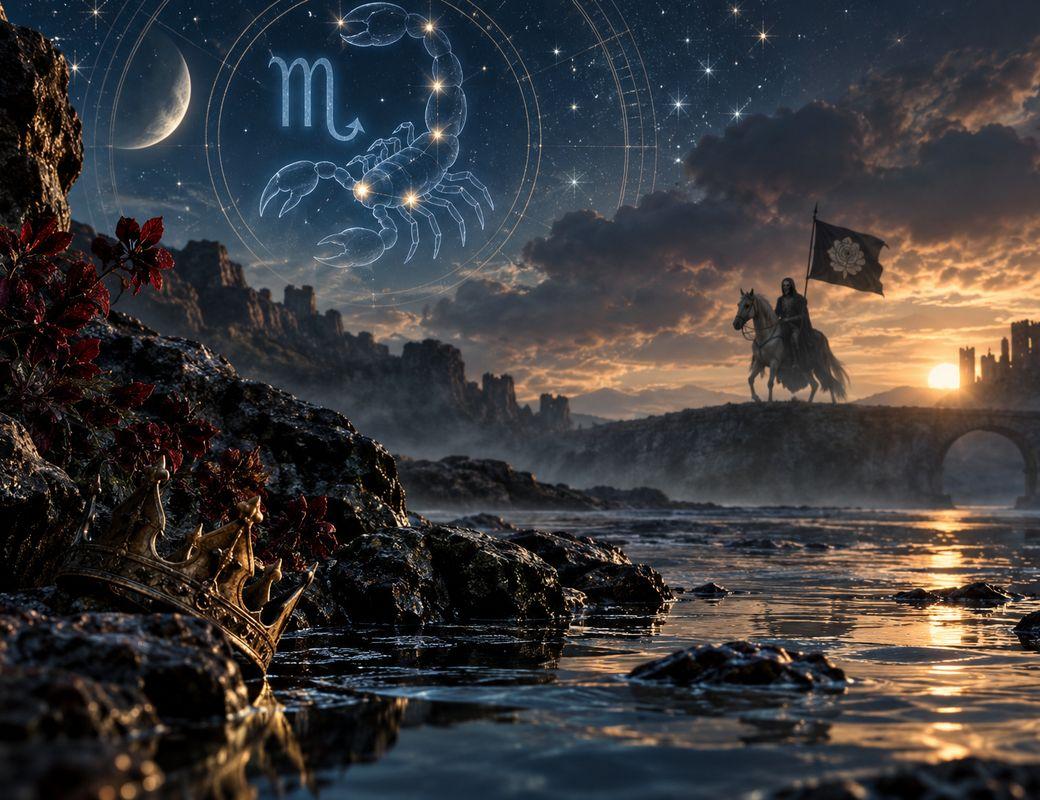
The shower is named for Taurus, the Bull, because the meteors appear to radiate from that constellation. The radiant is a trick of perspective, the same way snowflakes seem to rush from a single point when you drive through falling snow. The meteors themselves are spread all over the sky. You do not need to stare at Taurus to see one. In fact, you will see more if you do not. Lie back, look up at a wide patch of sky, and let your eyes take in as much of it as they can.
Taurus rises in the evening and climbs higher after midnight, which is why the best Taurid watching usually happens in the hours after midnight. The shower has a long, broad season, running from September into late November for the southern branch, but the fireball-rich part peaks in early November. Around Halloween and into the first week of November, fireball reports often rise. That is where the nickname Halloween fireballs comes from, and it fits. There is something fitting about bright, slow fireballs in the week when the year turns toward winter and the dark half settles in.
The Taurids are also known for producing fireballs in certain years more than others, when Earth passes through a denser swarm of larger particles in the stream. Astronomers call this the Taurid swarm, and it is one reason the shower has a reputation that outruns its hourly rate. You can watch for an hour and see only two or three meteors, and then one of them can be so bright and so slow that it feels like the whole night was arranged around it.
A sky that asks you to wait
Most of modern life trains us out of waiting. We refresh, we scroll, we expect the next thing to arrive on a schedule. Meteor watching, especially Taurid watching, does the opposite. It asks you to go outside, get cold, and do nothing useful for a while.
That is part of why falling stars have always carried so much meaning. A meteor is brief, unplanned, and impossible to summon on demand. You cannot schedule a fireball the way you schedule a meeting. You can only put yourself in the right place, at the right time, with your eyes open, and hope the sky cooperates. That combination, effort plus uncertainty plus beauty, is exactly the shape of a wish.
People have told stories about falling stars for as long as they have watched them. In many old stories, a falling star was a soul traveling, a god passing by, a tear falling from heaven, or a crack opening briefly between the world we live in and whatever lies beyond it. The details change from culture to culture, but the feeling underneath them is remarkably steady: something rare and bright has crossed the sky, and for a second, the distance between what is and what could be feels thinner.
That is why the tradition of wishing on a falling star has lasted. It is not really about believing the star will grant the wish, at least not in the way a vending machine grants a snack. It is about naming what you want, out loud or in your own head, at a moment when you are already paying attention. A wish made while watching the sky is different from a wish made while rushing through a day. It has room around it. It has quiet. It has the sense that you are small, and that smallness is not a punishment. It is a relief.
The folklore of the wish
The most common piece of falling star folklore is also the simplest: make a wish, and do not tell anyone what it is.
There are many explanations for the secrecy rule, and they all point in the same direction. In some stories, speaking a wish aloud lets it escape, like air from a balloon. In others, a wish told too soon loses its power because it becomes a conversation instead of a promise. In still others, keeping the wish private protects it from doubt, including your own. A wish you have not defended to anyone else does not have to sound reasonable yet. It can stay tender and unfinished, the way most real hopes are before they become plans.
Another thread in the folklore is timing. The wish has to be made while the star is still falling, before it fades. That urgency is part of the magic. You do not get to draft and redraft. You get a few seconds, and you have to know, or at least guess, what matters most to you right now. People who practice this tradition often say the hardest part is not the watching. It is the choosing. When a fireball streaks across the sky and you have only a breath to answer, what comes out of you first is often more honest than anything you would write in a journal after an hour of thinking.
There are older stories, too, that treat falling stars less like wish machines and more like messages. In some traditions, a bright meteor was read as a sign, a warning, an announcement, or a visit. A king might see one and take it as an omen for his reign. A traveler might see one and take it as a blessing for the road ahead. A grieving person might see one and feel, for a moment, that someone they lost was still nearby, still moving, still bright. None of these readings agree with each other, and that is not a flaw in the folklore. It is the point. A falling star does not come with instructions. It comes with light, and people have always filled the space around that light with the story they needed most.
That is worth remembering in November, when the Taurids are slow enough to actually watch. A fast meteor is gone before you can think. A Taurid fireball gives you time. You can watch it travel, watch it flare, watch it fade, and still be standing there afterward with your wish half-formed on your tongue. The sky is not in a hurry, even if the rest of your life is.
It is also worth remembering that wishing on a star has never belonged to only one kind of person. Children do it, and so do sailors, farmers, soldiers, parents up late with a sick child, and people standing in their own backyards at midnight because they could not sleep. The wish is not a test of belief. It is a small, human habit: see something beautiful and rare, and let it remind you of what you are hoping for. You do not have to believe the star heard you for the practice to be useful. Naming a hope clearly, even once, changes how you carry it the next morning.
What to look for on November 4 and 5
If you go out for the Taurids, go out with the right expectations. This is not a shower that rewards counting. It rewards staying.
Find the darkest sky you can reach safely and easily, away from porch lights and streetlights if you can. A backyard, a quiet field edge, a porch with the lights off, all of these work. You do not need a telescope, binoculars, or any special equipment. In fact, equipment can get in the way, because it narrows what you can see. Your eyes, given time, are the best tool for this shower.
Give your eyes at least twenty minutes to adjust to the dark. That is the part most people skip, and it is the part that matters most. In the first few minutes outside, you will see only the brightest stars. After twenty minutes, the sky fills in. Faint stars appear, the Milky Way thickens if your sky is dark enough, and a Taurid that would have been invisible at minute five becomes unmistakable at minute twenty-five. Put your phone away, or at least turn the screen down and face it away from you. One bright screen can undo twenty minutes of dark adaptation in a second.
Dress warmer than you think you need to. November nights cool fast once you stop moving, and a watcher who is shivering is a watcher who goes inside early. Bring a blanket, a chair that lets you lie back, or just a thick coat and a patch of ground. Bring something warm to drink if you like. Make it comfortable, because comfort is what lets you stay.
Look up, not at one point, but at a wide stretch of sky. Taurids can appear anywhere, though they will seem to come from the direction of Taurus. After midnight, Taurus is high, and the shower is at its best. The moon, thin and late rising, will not wash the sky out around midnight. That is a gift this year. Many Taurid peaks happen under a brighter moon. This one does not.
If you see a fireball, you will know it. It will be brighter than the other meteors, slower, and it may leave a glowing trail that hangs in the sky for a second or two after the head has gone. Some fireballs flare and split. Some seem to crawl across the sky. Do not try to photograph it unless your camera is already set up. By the time you find your phone, it will be gone. Just watch. The memory of a fireball you actually saw is better than a blurry photo of one you almost caught.
A simple midnight wish ritual
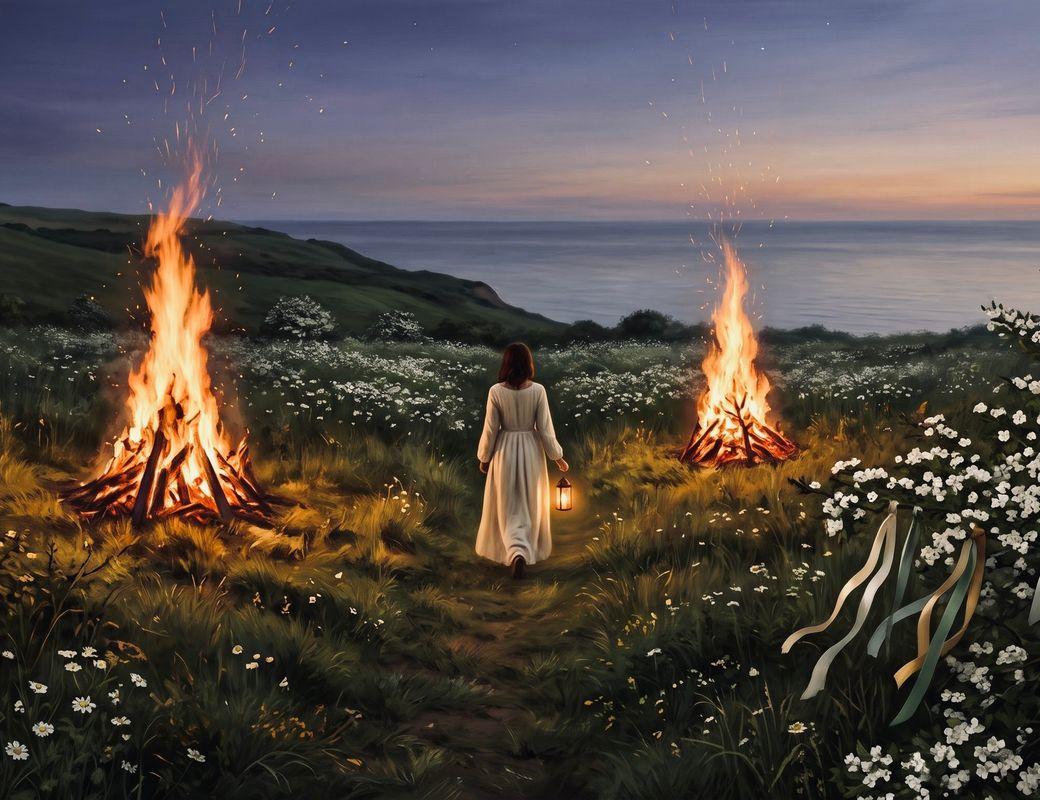
You do not need special tools for this, and you do not need to stay out all night. The ritual below takes about twenty minutes, and it works whether you see a fireball or not. Seeing one is a gift, not a requirement. The ritual is the watching itself.
First, pick your spot before midnight. Somewhere you feel safe and comfortable, close to home, where you can sit or lie back and see a wide patch of sky. A backyard, a porch, or a window with a clear view all count. Set out a blanket and a warm drink. Turn your phone screen down or leave it inside. Give your eyes time to adjust.
Second, settle in and watch for a while without an agenda. Notice the stars that are already there. Notice the quiet. If your mind is busy, let it be busy. You are not trying to empty your head. You are just giving the night a chance to get your attention.
Third, when you are ready, name one wish. Just one. Say it quietly, in your head or under your breath, in plain words. It can be big or small. It can be for yourself or for someone else. It can be a hope you have carried for years, or something that only became clear tonight. Do not polish it. The first honest version is the right one.
Fourth, write it down if you want to. A scrap of paper and a pencil are enough. Write the wish in one sentence, fold the paper once, and keep it somewhere safe, a pocket, a journal, a windowsill. You do not have to show it to anyone. Keeping it private is part of the old tradition, and it also gives the wish room to stay yours for a while.
Fifth, close the ritual simply. Thank the sky, out loud or silently, for the night, whether or not a meteor appeared. Go inside, warm up, and rest. In the morning, pick one small, concrete step that moves toward the wish, even a tiny one. Send the message, make the call, open the document, take the walk. The star marks the moment. The step is yours.
That last part matters, because wishes can become a way of waiting forever for permission. The Taurids, slow and patient, suggest a different rhythm. Watch, name what you want, and then do the next small thing. A fireball is bright, but it is brief. A life changes in the quiet steps after the light fades.
Fireball season, in the end
On November 4 and 5, the sky will do what it does every year, whether anyone is watching or not. Dust from an old comet will burn high above Texas and everywhere else on Earth, and a few of those burning grains will be bright enough to stop a person in their tracks. Most people will miss them, because they will be inside, asleep, or looking at a screen. A few will be outside, cold, patient, and looking up, and they will be rewarded with something no screen can reproduce: a line of light, drawn slowly across the dark, that belongs to no one and is given to everyone who happens to see it.
Go out if you can. Dress warm. Give your eyes time. Make one wish, keep it close, and take one small step toward it in the morning. That is fireball season, and that is enough.
Responses
No responses yet — start the conversation.