BELTANE FESTIVAL
THE FIRE THAT USHERS IN THE BRIGHT HALF OF THE YEAR
Article · 7 min read · ·
November 2026 | Southern Hemisphere: Sun at around 9° of Scorpio | Midpoint between the equinox and solstice: around November 7
The Fire of Uisneach
At Uisneach, a hill in the center of Ireland, medieval Irish legends say that a druid lit the first Beltane bonfire and kept it burning for seven years. The legend cannot be verified, but excavations at the site have uncovered evidence of large fires and very ancient ritual activity.
In the 17th century, historian Geoffrey Keating described a large gathering at Uisneach every Beltane. Scholar Ronald Hutton notes that Keating, or his source, may have mixed the legend with what is written in a medieval glossary, so the account should be treated with caution. It's a good place to start: Beltane has more layers of legend, historical record, and reinterpretation than a brief summary might suggest.
What Is Beltane?
Beltane, or Bealtaine in Irish, is the Gaelic festival of the first day of May, which marked the beginning of summer. Historically, it was observed in Ireland, Scotland, and the Isle of Man. It's one of the four seasonal Gaelic festivals, alongside Samhain (November 1), Imbolc (February 1), and Lughnasadh (August 1).
The Gaelic calendar divided the year into two halves. Samhain ushered in winter and the start of the year. Beltane ushered in summer and the middle of the year. One scholar suggests this division dates back to a time when these peoples were mainly pastoralists: in May, cattle were taken to summer pastures. One of the festival's old names, Cétshamhain, probably means “first of summer.”
The Name
The most widely cited explanation for the name comes from Proto-Celtic *belo-te(p)niā, meaning “bright fire.” The first element is related to the English word “bale,” as in “bale-fire,” and carries the idea of something white or luminous. Medieval Irish texts offer another interpretation, “fire of Bel,” linking the word to a god called Bel or Bil. Cormac's Glossary also suggests “fire of good fortune.” Modern scholars debate all these explanations, and the etymology remains unsettled.
In Irish and Scottish Gaelic, the first day of May is also called “the bright or yellow day of Beltane,” Lá Buidhe Bealtaine. Yellow appears again later, in the flowers.
What the Medieval Sources Say
The earliest record describing the festival appears in the Sanas Cormaic, an early 10th-century glossary attributed to Cormac mac Cuilennáin, king and bishop of Cashel. It says that, to protect cattle from disease, druids lit two fires “with great incantations” and had the animals pass between them. Another Irish text, the Tochmarc Emire, confirms that Bealtaine fell on the first day of May and marked the beginning of summer.
There is an important caveat. These texts were written by Christian authors, centuries after the practices they describe, and some scholars suggest that the glossary tried to associate the druids' fires with the biblical god Baal. These are indirect accounts, and any reconstruction of what people did in ancient times remains partly hypothetical.
Customs Recorded in Folklore
From the late 18th century to the mid-20th century, folklorists recorded many Beltane customs in Ireland, Scotland, and the Isle of Man. Bonfires were lit on hills. People and cattle walked around or between the flames, and sometimes jumped over fires or embers for luck and protection. On the Isle of Man, care was taken to ensure the smoke passed over people and animals. In many places, household fires were put out and relit from the communal bonfire.
Flowers played an important role. Yellow and white flowers, such as primroses, hawthorn, and gorse, were placed at doors and windows, a custom documented in the 19th century. They were probably used because they called fire to mind. In parts of Ireland, people also made a May Bush: a hawthorn bush decorated with flowers, ribbons, colorful shells, and rush candles. People visited holy wells, and Beltane morning dew was thought to bring beauty and preserve youth.
Beltane Today and the Wheel of the Year
By the 20th century, public Beltane celebrations had already lost momentum, and some customs survived as local cultural events. One modern example is the Beltane Fire Festival in Edinburgh, created in 1988 by a small group of enthusiasts with academic support from the University of Edinburgh's School of Scottish Studies. It takes place on the night of April 30 on Calton Hill as a participatory art event. It's a contemporary recreation inspired by tradition, not an unbroken continuation of it.
The so-called Wheel of the Year, with eight festivals that include solstices and equinoxes, is also a 20th-century creation, popularized by neopagan movements such as Wicca. It combines the four Gaelic festivals with the solar dates. It's a modern way of organizing the year, and no single ancient calendar corresponds to it.
The Date in the Southern Hemisphere
The Gaelic festival dates were set for the seasons in Ireland and Scotland. In the Southern Hemisphere, many neopagan practitioners celebrate Beltane on November 1 so the festival matches the actual season. In November, it's late spring in this half of the world: long days, rising temperatures, blooming gardens, and planting underway.
The season varies considerably from place to place. Brazil, for example, ranges from equatorial to subtropical climates, so you can adjust your seasonal reading to what you notice around you: what's blooming, what's growing, and how long the daylight lasts.
The Sky Around the Date
On November 1, the Sun is around 9° of Scorpio, a sign it entered on October 23. The exact midpoint between the September equinox and December solstice, when the Sun reaches 15° of Scorpio, occurs around November 7. Festival dates follow the calendar, which is why there's a difference of a few days.
Mercury and Venus are still retrograde and turn direct on November 13 and 14. The New Moon in Scorpio takes place on November 9 at 16°53'. In astrological terms, this could make it a better time to check on what's already been planted than to launch lots of new initiatives. That's one possible interpretation among others.
Four Fires and the Fixed Signs
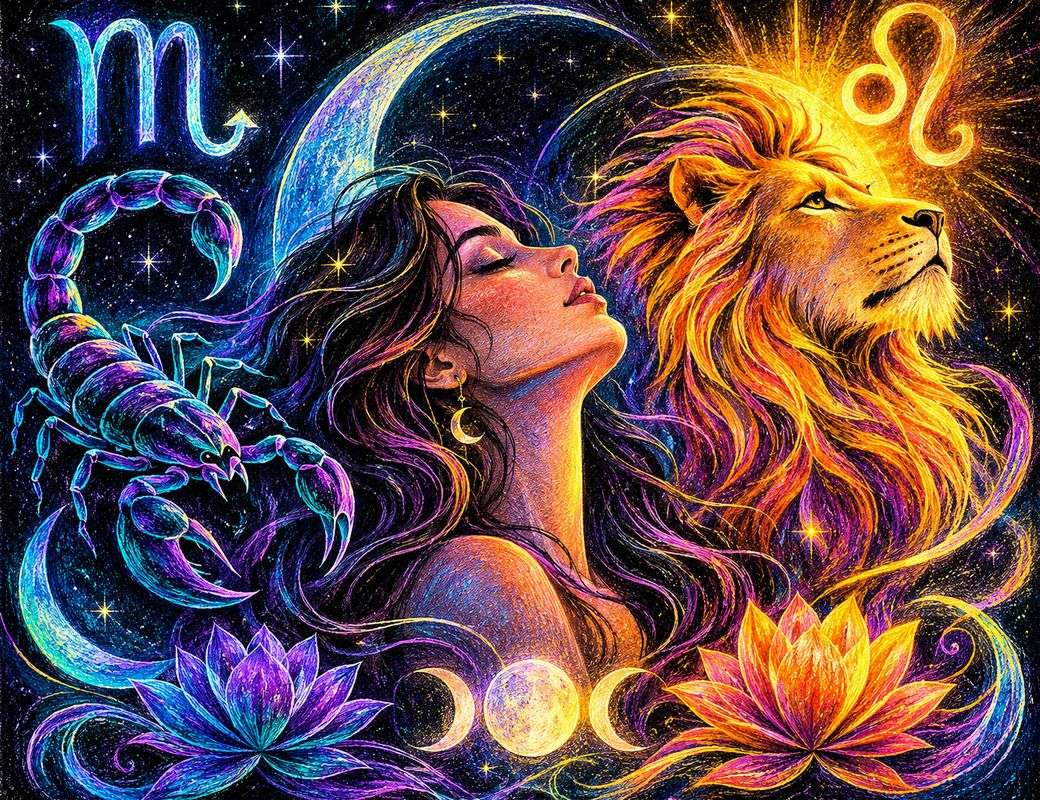
The four Gaelic festivals fall near the seasonal midpoints. In the tropical zodiac, these points correspond to 15° of the four fixed signs: Taurus, Leo, Scorpio, and Aquarius. For those in the Southern Hemisphere who shift the dates by six months, the sequence goes like this: Samhain on May 1, with the Sun in Taurus; Imbolc on August 1, with the Sun in Leo; Beltane on November 1, with the Sun in Scorpio; and Lughnasadh on February 1, with the Sun in Aquarius.
The Western esoteric tradition connects the four fixed signs with the four creatures in Ezekiel's vision: the bull, the lion, the eagle, and the human. If Samhain invited you to look back at what had passed, and Imbolc to recognize what was already growing unseen, Beltane arrives when there's enough light and warmth for growth to be seen and shared.
The Esoteric Meaning: The Threshold
The Encyclopaedia Britannica notes that, in Irish tradition, Samhain and Beltane were seen as critical moments when the boundaries between the human world and the otherworld became more blurred. Samhain opened the dark half of the year. Beltane opened the light half.
Symbolically, passing between two bonfires can be seen as crossing a threshold: leaving one period behind and entering another, protected by a communal act. In Western esotericism, fire is often associated with will and action, but the act described in the sources is protective: lighting fires to safeguard the cattle, homes, and crops. Today's interpretations that emphasize fertility, the celebration of life, and togetherness belong mainly to the 20th-century neopagan tradition, which reinterpreted the ancient sources. 🥀
How to Work with Beltane Symbolically
Take stock of what's growing. Projects, habits, relationships, studies. Write down what is already showing signs of life and what still needs care.
Light a flame safely. A candle in a sturdy holder, away from curtains and paper, is enough to serve the symbolic purpose. If you're lighting an outdoor bonfire, first check whether it's allowed and safe where you live.
Use yellow or white flowers. Traditionally, they were placed at doors and windows. A vase by your front door or on the table keeps the image alive.
Bring something living close by. Potted herbs, seeds, or a seedling. In the Southern Hemisphere, November is planting season.
Share a meal. Beltane celebrations were communal and included food. A simple get-together with someone you like keeps the idea alive.
Honor your own pace. If the day doesn't bring much energy, a walk outdoors is enough. Celebrating isn't an obligation.
Reflection
Beltane's fire had a practical purpose: protecting the cattle, homes, and crops at the start of the season when everything needs to grow. Today, we can read the gesture as a question about what deserves protection.
Of everything you've been planting throughout the year, what is warm enough now to be shared? And what still needs time protected from view?
Lighting a fire at the start of the bright season can be a way of saying you trust what's to come.
Responses
No responses yet — start the conversation.