🔴 𝓑𝓵𝓸𝓸𝓭 𝓜𝓸𝓸𝓷 03/03
𝚃𝚘𝚝𝚊𝚕 𝙻𝚞𝚗𝚊𝚛 𝙴𝚌𝚕𝚒𝚙𝚜𝚎 03/03
Article · 2 min read · ·
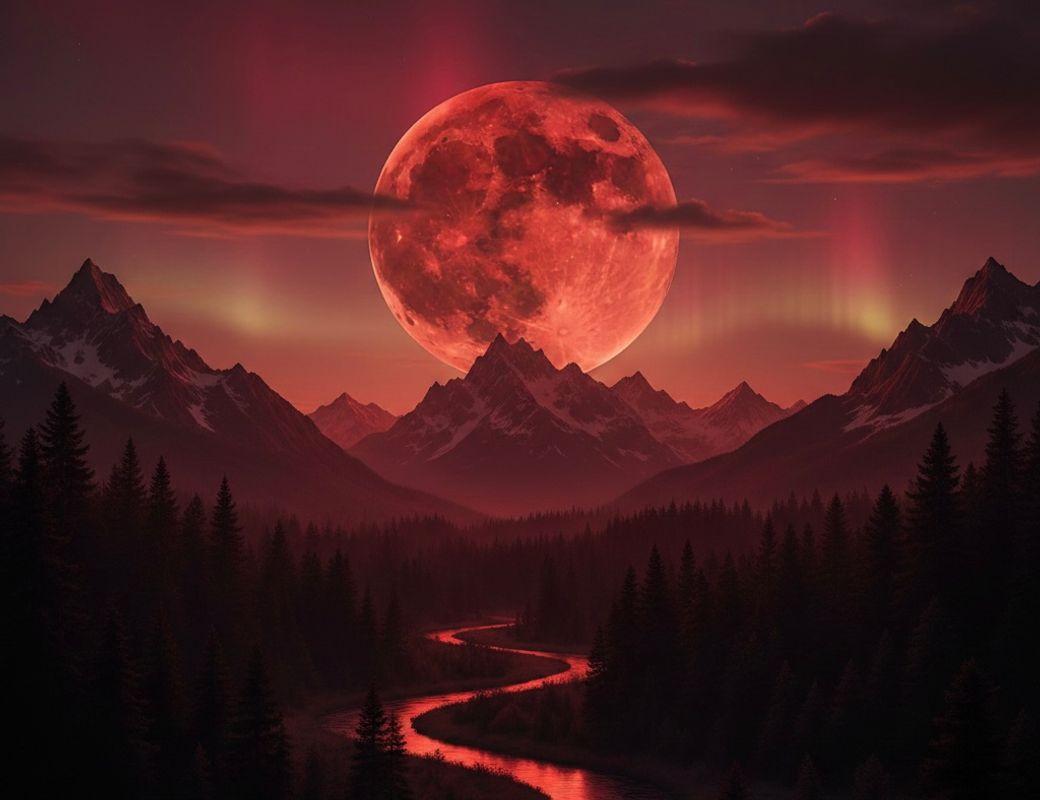
In the early hours of March 3, 2026, the sky will gift us with an extraordinary phenomenon: a total lunar eclipse, popularly known as a "Blood Moon."
During this event, the full Moon passes through Earth's shadow and takes on a deep reddish hue—a spectacle that captures the attention of astronomers and spiritual seekers alike.
⸻
The eclipse begins late in the evening of March 2, extending into the early hours of March 3, 2026. The totality phase—when the Moon becomes completely immersed in Earth's shadow and takes on its characteristic reddish tone—lasts approximately 58 minutes.
For those in the Eastern US time zone:
• Totality: approximately between 06:04 and 07:02 (local time) on the morning of March 3.
This window is the most striking time for observation—the Moon will appear to have an intense, almost tangible color in the night sky.
⸻
This eclipse will be visible to the naked eye across much of the globe, provided the sky is clear and cloudless.
Best regions for viewing:
- North and Central America—especially parts of Mexico, the US, and Canada, where the phenomenon can be seen before dawn.
- East Asia and Australia—where the eclipse occurs at night.
- Pacific and Oceania—excellent visibility throughout the night.
In many parts of southern and southeastern South America, portions of the eclipse can also be seen, particularly during the partial phases.
Unfortunately, across much of Europe and Africa the event will not be visible.
⸻
🔭 Observing the Blood Moon through a telescope
The lunar eclipse is safe to observe with the naked eye—unlike solar eclipses, there is no risk to your eyes.
Tips 👇
1. Find a dark location away from major city lights—this enhances the Moon's contrast on the horizon.
2. Check the Moon's stage before it rises. In regions where the Moon is still low or setting, part of the totality may coincide with sunrise or sunset.
3. Bring a chair or blanket, as the observation may extend for hours as Earth's shadow moves.
A telescope (or binoculars) magnifies details of the lunar surface—craters, shadows, and the eclipse's progression—even though they're not essential to enjoy the event.
How to focus:
- Aim the telescope at the full Moon before totality begins to adjust the focus.
- As the Moon enters Earth's shadow, gradually adjust to capture the transition from white light to deep reddish tone.
- A mid-aperture telescope (for example, 4–6 inches / 100–150 mm) is sufficient to clearly observe the color changes and lunar detail.
⸻
The Moon turns red during a total lunar eclipse because Earth blocks the direct sunlight that normally illuminates the Moon. However, Earth's atmosphere acts as a filter: it refracts (bends) the sunlight, allowing longer wavelengths—especially reds and oranges—to be cast onto the lunar surface.
Thus, the Moon "bleeds" this warm tone, creating the well-known Blood Moon.
Light on your path ☀︎︎
𝒫ℴ𝓇
𝒮𝒶𝓃𝓉 𖦹
Responses
No responses yet — start the conversation.
More from the Magazine

¿A QUÉ SABE TU OTOÑO?
Hay estaciones que se viven con los ojos, pero el otoño está hecho para saborearlo con el alma.
1 Week of prAna | Vol. 4: 🗺️ Scorpio Stellium Mission
— The Reality Scanner, the luxury of silence, information detox, and the fertile void
Welcome to Scorpio Season
A Time of Transformation, Rebirth, and Personal Power